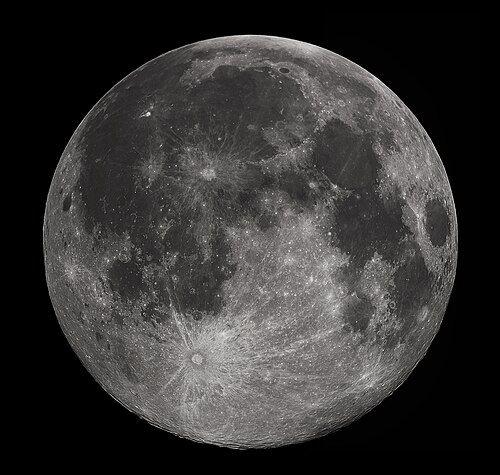
Materials covered in this trivia questions quiz
Study Hint 1
Question: In the context of Galilean moons, what historically significant discovery did their observation enable in 1610?
Trivia Question Study Fact: Discovered in 1610 with the invention of the telescope, the Galilean moons – Ganymede, Callisto, Io, and Europa – were the first celestial bodies found to orbit a planet other than Earth, marking a significant shift in understanding of the Solar System and challenging the long-held belief that Earth was the center of all orbital motion.
Trivia Question Explanation: The Galilean moons were the first objects discovered to orbit a planet other than Earth, demonstrating that not everything revolved around our planet and expanding the known Solar System beyond the classical planets.
Return to Question
Study Hint 2
Question: In the context of Lunar craters, the official recognition and dating of these formations by the International Astronomical Union primarily serves to…
Trivia Question Study Fact: The Moon's heavily cratered surface is a direct result of countless impacts from space debris over billions of years, with over 9,000 craters officially recognized by the International Astronomical Union as of current surveys. A significant portion of these craters, over 1,600, have been radiometrically dated, providing insights into the Moon's impact history.
Trivia Question Explanation: Dating lunar craters allows scientists to understand when impacts occurred, building a chronological record of the Moon’s bombardment history and providing clues about the early solar system.
Return to Question
Study Hint 3
Question: In the context of *Somnium*, the Moon is presented not merely as a celestial body, but as what kind of location?
Trivia Question Study Fact: Johannes Kepler's 1608 novel *Somnium* details a fictional journey to the Moon, or 'Levania,' as it's called within the narrative, and offers a detailed, imaginative description of what the Earth would appear like from a lunar perspective, making it a pioneering work in lunar astronomy and early science fiction.
Trivia Question Explanation: Within *Somnium*, the Moon is imaginatively depicted as the island of Levania, and the novel focuses on describing the appearance of Earth as seen from this lunar location.
Return to Question
Study Hint 4
Question: In the context of crusts (geology), the Moon is considered to have formed its solid outer layer primarily through what geological processes?
Trivia Question Study Fact: The crust of a planetary body, including the Moon, is defined as the outermost solid shell. While typically distinguished by chemical composition, for icy satellites like some moons, the crust is defined by its physical state – being solid rather than liquid – in relation to the underlying mantle.
Trivia Question Explanation: The Moon's crust, like those of Earth, Mercury, Venus, and Mars, initially formed from igneous processes – the cooling and solidification of molten rock – and was then further shaped by erosion, impact cratering, volcanism, and sedimentation.
Return to Question
Study Hint 5
Question: In the context of the Space Race, advancements in achieving lunar missions were primarily considered important because of their connection to…
Trivia Question Study Fact: The Space Race between the United States and the Soviet Union wasn't solely about exploring space; it was deeply intertwined with the Cold War and the development of ballistic missile technology. Demonstrating spaceflight capability was viewed as crucial for national security, specifically regarding the ability to launch intercontinental ballistic missiles and conduct satellite reconnaissance, and also served as a symbol of ideological superiority.
Trivia Question Explanation: The Space Race was fueled by the Cold War and the desire to prove technological dominance, particularly in areas like ballistic missile capabilities and satellite reconnaissance, making lunar missions a demonstration of national power.
Return to Question
Study Hint 6
Question: In the context of Geophysical studies, the Moon is considered…
Trivia Question Study Fact: Geophysics, while traditionally focused on Earth's solid components like its shape, gravitational fields, and internal structure, has expanded to encompass studies of other celestial bodies, including the Moon, and phenomena extending beyond the solid Earth, such as atmospheric electricity and fluid dynamics.
Trivia Question Explanation: Modern geophysics extends its scope to include studying analogous problems associated with the Moon and other planets, allowing for comparative planetology and a broader understanding of geophysical processes.
Return to Question
Study Hint 7
Question: In the context of tides, the Moon is considered…
Trivia Question Study Fact: Tides, the cyclical rise and fall of sea levels, are primarily caused by the gravitational pull of the Moon on Earth, with the Sun contributing to a lesser extent. This gravitational interaction, combined with the orbital movements of Earth and the Moon, generates these predictable, yet variable, patterns in ocean water levels.
Trivia Question Explanation: The Moon's gravitational force is the dominant factor in creating tides, as its proximity to Earth exerts a stronger pull on ocean waters than the Sun does, resulting in the cyclical rise and fall of sea levels.
Return to Question
Study Hint 8
Question: In the context of the Hadean Eon, the formation of the Moon is considered to be a result of what major event?
Trivia Question Study Fact: During the Hadean Eon, a significant interplanetary collision occurred that is widely believed to have resulted in the formation of Earth's Moon. This event took place early in the Hadean, which spanned from approximately 4.6 to 4.031 billion years ago, marking the beginning of Earth's geological history.
Trivia Question Explanation: The source material indicates that the prevailing scientific hypothesis attributes the Moon's formation to a significant collision between Earth and another celestial body during the Hadean Eon.
Return to Question
Study Hint 9
Question: In the context of the Late Heavy Bombardment, evidence supporting this hypothesized event is most directly derived from the study of what?
Trivia Question Study Fact: The Late Heavy Bombardment, a period of intense asteroid and comet impacts approximately 4.1 to 3.8 billion years ago, is largely inferred from the analysis of lunar samples. Isotopic dating of moon rocks revealed that a significant number were melted by impact events within a relatively short timeframe, indicating a surge in impacts across the inner Solar System, including on the Moon.
Trivia Question Explanation: The isotopic dating of rocks brought back from the Moon by the Apollo missions showed a concentration of impact-related melting events within a specific timeframe, providing key evidence for a period of increased impacts known as the Late Heavy Bombardment.
Return to Question
Study Hint 10
Question: In the context of Europa, a moon of Jupiter, what primary geological process is responsible for maintaining a relatively young surface despite the expected accumulation of impact craters?
Trivia Question Study Fact: Europa, one of Jupiter's Galilean moons, is notable for its relatively young surface compared to other icy moons in the solar system. This youthful appearance is largely attributed to the process of tidal heating, a result of its orbital relationship with Jupiter, which constantly flexes and warms the moon's interior.
Trivia Question Explanation: Europa's surface is remarkably young for its age, and this is due to tidal heating. Jupiter's gravity constantly stretches and compresses Europa, generating internal heat that prevents the surface from becoming heavily cratered and drives geological activity.
Return to Question