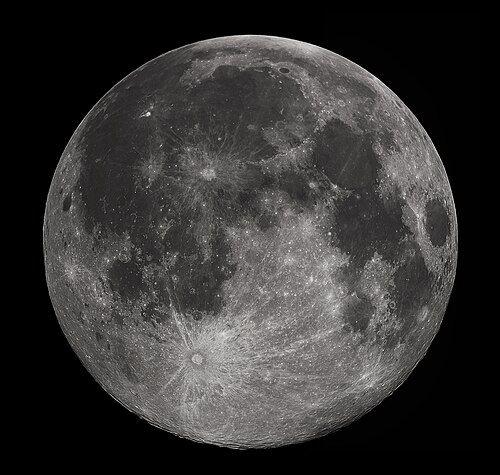
Materials covered in this trivia questions quiz
Study Hint 1
Question: In the context of atmospheric formation, which combination of planetary characteristics most strongly supports the long-term retention of an atmosphere?
Trivia Question Study Fact: Atmospheres are formed through accretion of matter or outgassing of volatiles during an astronomical object's early development. The composition of an atmosphere can then be altered by chemical interactions with the surface and photochemical reactions with sunlight. A planet's ability to retain its atmosphere is directly related to its gravitational force and temperature, with higher gravity and lower temperatures promoting atmospheric retention.
Trivia Question Explanation: A strong gravitational field prevents atmospheric gases from escaping into space, while lower temperatures reduce the kinetic energy of gas molecules, making them less likely to overcome the planet's gravity and dissipate.
Return to Question
Study Hint 2
Question: In the context of nebulae, the formation of the Moon is considered…
Trivia Question Study Fact: Nebulae are expansive regions within interstellar space where stars and planetary systems originate from the gravitational collapse of gas and dust. Within these nebulae, the material coalesces, eventually forming stars, and the leftover matter can then contribute to the creation of planets and other components of a planetary system. The Orion Nebula, a prominent example, is large enough to appear twice the angular diameter of the Moon when viewed from Earth.
Trivia Question Explanation: Nebulae are the birthplaces of stars and planetary systems; after stars form, the remaining material within the nebula can coalesce to create planets, moons, and other planetary system objects.
Return to Question
Study Hint 3
Question: In the context of Mercury, its surface features are most closely compared to which other celestial body?
Trivia Question Study Fact: The surface of Mercury shares notable similarities with Earth's Moon, exhibiting a heavily cratered landscape, expansive rupes formed by thrust faults, and bright ray systems created by ejected material from impacts. These features suggest comparable geological processes have shaped both celestial bodies.
Trivia Question Explanation: Mercury's surface is characterized by heavy cratering, rupes, and ray systems, all of which are also prominent features on the surface of Earth's Moon, indicating similar formation and impact histories.
Return to Question
Study Hint 4
Question: In the context of terrestrial planets, which of the following celestial bodies is sometimes also considered to fit this classification based on a geophysical definition?
Trivia Question Study Fact: While traditionally defined as planets composed of silicate, rocks, or metals, the classification of 'terrestrial planet' can extend to planetary-mass moons like Earth's Moon, Io, and sometimes Europa, according to astronomers utilizing a geophysical definition of a planet. This broadens the category beyond the inner planets of our solar system.
Trivia Question Explanation: Astronomers employing a geophysical definition of a planet sometimes include planetary-mass moons like Europa alongside the traditional terrestrial planets, due to their rocky composition and solid surface.
Return to Question
Study Hint 5
Question: In the context of Geocentrism, the apparent daily motion of the Sun, Moon, and stars was understood to mean they all…
Trivia Question Study Fact: Within the geocentric model, both the Sun and the Moon were believed to orbit Earth, appearing to revolve around it daily alongside the stars. This perception stemmed from the observation that, from an Earth-bound perspective, these celestial bodies all exhibit apparent daily motion around our planet.
Trivia Question Explanation: Geocentrism posited Earth as the center of the universe, and observations of the Sun, Moon, and stars all showed them completing a full revolution around Earth approximately every 24 hours from the perspective of observers on Earth.
Return to Question
Study Hint 6
Question: In the context of Ceres, the Moon is considered to be…
Trivia Question Study Fact: Ceres, a dwarf planet located in the asteroid belt, is significantly smaller than Earth's Moon; its diameter is approximately one-quarter of the Moon's size. This relatively small size contributes to its faintness, making it generally invisible to the naked eye even at its brightest.
Trivia Question Explanation: Because Ceres's diameter is about a quarter that of the Moon, the Moon must be four times larger in diameter than Ceres.
Return to Question
Study Hint 7
Question: In the context of Gravitational_perturbation, the Moon's orbital path is considered…
Trivia Question Study Fact: The Moon's orbit isn't perfectly elliptical due to gravitational perturbations – disturbances caused by forces beyond the Earth's gravity alone. These forces include the gravitational influence of the Sun and other planets, atmospheric drag (though minimal for the Moon), and even irregularities in the Earth's shape, all contributing to variations in its expected path.
Trivia Question Explanation: The Moon's orbit is constantly being altered by the gravitational pull of the Sun and other planets, as well as irregularities in the Earth's shape, which are all examples of gravitational perturbations.
Return to Question
Study Hint 8
Question: In the context of diffuse nebulae, the Moon is considered relevant because…
Trivia Question Study Fact: Nebulae, vast interstellar clouds of gas and dust, are significant sites of star and planet formation. Within these nebulae, denser regions develop from accumulating matter, eventually collapsing under gravity to create stars, with the remaining material potentially forming planets and planetary systems. The Orion Nebula, a particularly bright example, occupies an area in the sky twice the angular diameter of the Moon.
Trivia Question Explanation: The Orion Nebula, a prominent nebula visible from Earth, spans an area in the sky equivalent to twice the angular diameter of the full Moon, providing a scale for its immense size.
Return to Question
Study Hint 9
Question: In the context of PSR B1257+12, a millisecond pulsar, one of its orbiting planets is distinguished by its exceptionally low mass. Approximately how does the mass of planet PSR B1257+12 A compare to that of Earth’s Moon?
Trivia Question Study Fact: PSR B1257+12, a rapidly rotating pulsar located 2,300 light-years away, is notable for possessing a planetary system including three planets. One of these planets, designated PSR B1257+12 A (also known as Draugr), is remarkably small, possessing a mass only slightly greater than twice that of Earth’s Moon.
Trivia Question Explanation: Planet PSR B1257+12 A is described as having somewhat less than twice the mass of Earth's Moon, making it the lowest-mass planet discovered by any observational technique at the time of its discovery.
Return to Question
Study Hint 10
Question: In the context of Moonlight, the primary source of illumination is considered…
Trivia Question Study Fact: Moonlight, while appearing as a unique illumination, is primarily composed of sunlight reflected off the Moon's surface. A smaller component of moonlight also originates from Earthlight, which is sunlight reflected off Earth and then onto the Moon.
Trivia Question Explanation: The Moon does not produce its own light; instead, it reflects light from the Sun, making sunlight the dominant component of moonlight.
Return to Question