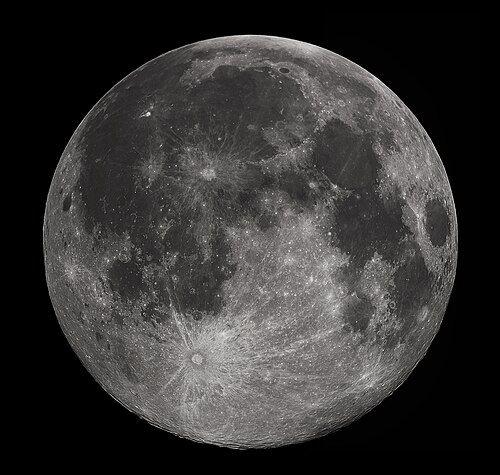
Materials covered in this trivia questions quiz
Study Hint 1
Question: In the context of classical planets, the Moon is considered…
Trivia Question Study Fact: Ancient Greek astronomers identified seven celestial bodies as 'classical planets' – objects visible to the naked eye that appeared to wander among the fixed stars. These included the Sun, Moon, Venus, Jupiter, Mercury, Mars, and Saturn, and the term 'planet' itself originates from the Greek word for 'wanderer' due to their movement across the celestial sphere.
Trivia Question Explanation: The Moon was one of the seven classical planets recognized by ancient astronomers because it appeared to move across the sky relative to the fixed stars, leading to the term 'planet' meaning 'wanderer' in Greek.
Return to Question
Study Hint 2
Question: In the context of geocentrism, how was the Moon’s apparent movement in the sky typically understood?
Trivia Question Study Fact: Within the geocentric model, the Moon, along with the Sun, stars, and other planets, was believed to orbit Earth, appearing to revolve around it approximately once per day alongside the Sun and stars due to diurnal motion.
Trivia Question Explanation: Geocentric models posited that the Moon, like the Sun and stars, appeared to circle Earth daily due to the Earth being the center of the universe and the phenomenon of diurnal motion.
Return to Question
Study Hint 3
Question: In the context of epicycles, the Moon’s apparent changes in speed and direction were explained by its movement along…
Trivia Question Study Fact: Ancient astronomers utilized the concept of an epicycle – a smaller circle whose center moves along the circumference of a larger circle – to account for observed irregularities in the movements of celestial bodies like the Moon, including its varying speeds and instances of apparent retrograde motion. This model was refined over centuries by figures like Apollonius, Hipparchus, and Ptolemy.
Trivia Question Explanation: The epicycle model proposed that celestial bodies, including the Moon, moved on small circles (epicycles) whose centers moved along larger circles (deferents), explaining variations in their observed speeds and the phenomenon of apparent retrograde motion.
Return to Question
Study Hint 4
Question: In the context of *musica universalis*, the Moon is considered to participate in…
Trivia Question Study Fact: The concept of *musica universalis*, originating with the Pythagoreans, proposed that the movements of celestial bodies like the Sun, Moon, and planets were governed by mathematical ratios that corresponded to harmonious musical intervals. This wasn't intended as audible music, but rather a cosmic order perceivable by the soul.
Trivia Question Explanation: The *musica universalis* theory posited that the movements of celestial bodies, including the Moon, followed mathematical ratios that created a harmonious, though inaudible, cosmic order.
Return to Question
Study Hint 5
Question: In the context of planets, the original meaning of the word 'planet' – derived from the Greek 'planḗtai' – referred to celestial bodies that were distinguished by their apparent motion. Which of the following was also included among these 'wanderers' in ancient times?
Trivia Question Study Fact: Historically, the term 'planet' originated from the Greek word for 'wanderers' and was initially used to describe not only the bodies we now recognize as planets (Mercury, Venus, Mars, Jupiter, and Saturn) but also the Sun and Moon, as these appeared to move across the starry sky. This early understanding predates the modern definition of a planet as orbiting a star.
Trivia Question Explanation: The term 'planet' comes from the Greek word for 'wanderers,' and ancient astronomers applied this term to the Sun, Moon, and the five visible planets because they moved differently from the seemingly fixed stars.
Return to Question
Study Hint 6
Question: In the context of Apollonius (crater), the Moon’s surface is characterized by variations in reflectivity. What feature of the Apollonius crater’s interior suggests a history of volcanic activity and a relatively recent resurfacing?
Trivia Question Study Fact: Apollonius is a lunar impact crater situated on the Moon, specifically near the Mare Fecunditatis, and its interior floor exhibits a low reflectivity (albedo) due to past lava flows, indicating a relatively smooth and younger surface compared to other lunar features.
Trivia Question Explanation: The crater's interior floor has a low albedo, meaning it reflects less light, which is a characteristic of areas covered by dark-colored lava flows that have smoothed out the original surface.
Return to Question
Study Hint 7
Question: In the context of *The Blue Marble* photograph, the Apollo 17 mission was specifically traveling towards which celestial body?
Trivia Question Study Fact: The iconic photograph known as *The Blue Marble* was captured during the Apollo 17 mission while en route to the Moon in December 1972. This image, taken from approximately 29,400 kilometers away, provided a unique full-disk view of Earth, including previously obscured views of the Southern Hemisphere and its polar ice cap.
Trivia Question Explanation: The photograph *The Blue Marble* was taken by the Apollo 17 spacecraft as it journeyed to the Moon, making the Moon the destination of that mission.
Return to Question
Study Hint 8
Question: In the context of Hindu iconography, the crescent moon worn by Shiva is primarily considered a symbol of…
Trivia Question Study Fact: A crescent shape is a symbol frequently associated with the Moon, particularly representing its appearance during the first quarter lunar phase (often called a sickle moon). Beyond its astronomical representation, the crescent also holds cultural significance, notably in Hindu iconography where it adorns the deity Shiva, symbolizing his dominion over time and the cyclical nature of creation and destruction.
Trivia Question Explanation: The crescent moon on Shiva’s head represents his power over time and embodies his dualistic role in the universe, encompassing both the creation and destruction necessary for continued cosmic cycles.
Return to Question
Study Hint 9
Question: In the context of lava domes, what distinguishes the potential formations observed on the Moon from those commonly found on Earth?
Trivia Question Study Fact: While lava domes on Earth are typically formed from viscous lava with high silica content like rhyolite or dacite, the potential existence of similar structures on the Moon suggests that volcanic processes, even with differing compositions, can create dome-shaped formations across various celestial bodies. These lunar domes, if confirmed, would represent a unique geological feature distinct from Earth's silica-rich domes.
Trivia Question Explanation: The source text indicates that while Earth's preserved lava domes are typically high in silica, the potential lunar domes are suggested to be formed by processes that could involve basaltic lava, differing from the typical composition of Earth's domes.
Return to Question
Study Hint 10
Question: In the context of the asteroid belt, the Moon is considered…
Trivia Question Study Fact: The asteroid belt, located between Mars and Jupiter, contains numerous irregularly shaped rocky bodies. While collectively substantial in mass, the total mass of all asteroids in the main belt is only approximately 3% of the Moon's mass, making the Moon significantly more massive.
Trivia Question Explanation: The asteroid belt's total mass is estimated to be only 3% of the Moon's mass, meaning the Moon is approximately 33 times more massive than the entire asteroid belt.
Return to Question