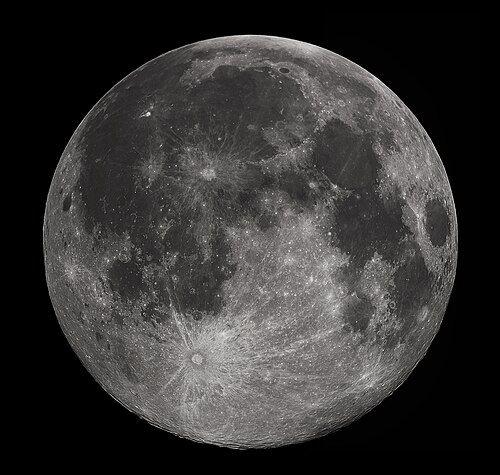
Materials covered in this trivia questions quiz
Study Hint 1
Question: In the context of calendars, how does a lunar calendar differ from a solar calendar in determining the length of a year?
Trivia Question Study Fact: Lunar calendars are based on the cycles of the Moon's phases, specifically synodic months or lunations, which are approximately 29.5 days long. This results in a lunar year of roughly 354 days, making it significantly shorter than a solar year and causing lunar months to cycle through all seasons over a 33-34 year period.
Trivia Question Explanation: Lunar calendars track time by the cycles of the Moon, resulting in a year approximately 11-12 days shorter than a solar year, which is based on the Earth's orbit around the Sun.
Return to Question
Study Hint 2
Question: In the context of Lunar_months, a lunar month is fundamentally determined by the Moon's relationship to what celestial event?
Trivia Question Study Fact: Lunar months, as used in lunar calendars, are defined by the period between similar alignments of the Earth, Moon, and Sun – specifically, either two successive new moons or two successive full moons. This means a lunar month isn't a fixed duration, and its start can be defined in different ways.
Trivia Question Explanation: A lunar month is defined as the time between two similar syzygies, which are alignments of the Sun, Earth, and Moon resulting in new or full moons, establishing the basis for timekeeping in lunar calendars.
Return to Question
Study Hint 3
Question: In the context of Mesopotamian mythology, the moon was primarily personified by which deity?
Trivia Question Study Fact: In Mesopotamian mythology, Sin (also known as Suen or Nanna) is the deity representing the Moon. This god was associated with various symbols of lunar phases, such as the crescent, and was sometimes considered a king of the gods, though this view wasn't universally accepted. Beyond his celestial role, Sin also had connections to earthly activities like cattle herding and even judging the dead in the underworld.
Trivia Question Explanation: Nanna-Suen, also known as Sin, was the Mesopotamian god directly representing the moon, and the various names were used interchangeably throughout the Early Dynastic period.
Return to Question
Study Hint 4
Question: In the context of Zodiac signs, where is the Moon always located?
Trivia Question Study Fact: The zodiac is a region of the sky centered around the ecliptic – the Sun's apparent path – and is divided into twelve signs. Both the Moon and the brightest planets are visible within this belt, as they orbit within roughly the same plane as the Sun and Earth. This means the Moon's path across the sky will always fall within the boundaries of one of the twelve zodiac signs.
Trivia Question Explanation: The zodiac is defined as the region of the sky where the Sun, Moon, and brightest planets appear, and it is divided into twelve signs. Because the Moon orbits within roughly the same plane as the Earth and Sun, its path always falls within the boundaries of one of these signs.
Return to Question
Study Hint 5
Question: In the context of Jupiter, the Moon is considered to be…
Trivia Question Study Fact: Jupiter is the third-brightest natural object visible from Earth, appearing in the night sky after the Moon and Venus. This brightness has allowed it to be observed since prehistoric times, and it is named after the Roman god Jupiter.
Trivia Question Explanation: Jupiter is noted as the third-brightest natural object in Earth’s night sky, following the Moon and Venus, meaning the Moon is brighter than Jupiter when observed from Earth.
Return to Question
Study Hint 6
Question: In the context of Titan, Saturn's largest moon, its atmospheric density is considered…
Trivia Question Study Fact: Titan, Saturn's largest moon, is unique in the Solar System for possessing a dense atmosphere—even denser than Earth's—and is the only known celestial body besides Earth with confirmed stable surface liquids, despite its significantly lower mass compared to Mercury due to its composition of mostly ice.
Trivia Question Explanation: Titan stands out in the Solar System because its atmosphere is not only present but also significantly denser than Earth's, creating unique conditions on its surface.
Return to Question
Study Hint 7
Question: In the context of Air, Earth's atmosphere is considered essential for which of the following broader planetary functions?
Trivia Question Study Fact: Earth's atmosphere, composed of gases like nitrogen and oxygen, acts as a crucial protective layer, shielding the planet from harmful solar radiation and meteoroids. This atmospheric buffer, along with its heat-retention properties, creates stable temperature conditions and provides the necessary environment for life to thrive, including supporting conditions on the Moon by influencing Earth's overall climate.
Trivia Question Explanation: The atmosphere shields Earth from harmful radiation, reduces temperature extremes, and redistributes heat, all of which are vital for sustaining life and maintaining a habitable climate.
Return to Question
Study Hint 8
Question: In the context of calendars, how does a lunar calendar differ from a solar calendar?
Trivia Question Study Fact: The organization of days into calendars often utilizes either the Sun's annual cycle, resulting in consistent seasons, or the Moon's lunar phase, creating calendars based on the Moon's changing appearance.
Trivia Question Explanation: Lunar calendars structure dates according to the cyclical changes in the Moon's appearance, known as lunar phases, while solar calendars are based on the Sun's annual cycle.
Return to Question
Study Hint 9
Question: In the context of planetary surfaces, what term is specifically used to describe non-liquid areas found on these surfaces?
Trivia Question Study Fact: A planetary surface is defined as the point where solid or liquid material of astronomical objects, like planets and moons, interacts with the atmosphere or outer space. This surface, often referred to as 'land' or 'ground', is a key area of study in planetary geology and related fields, and is specifically present on bodies that have a distinct crust meeting a planetary boundary layer.
Trivia Question Explanation: The definition of a planetary surface includes the designation of non-liquid areas as 'land' or 'ground', distinguishing them from liquid or gaseous regions and establishing a fundamental aspect of surface geology.
Return to Question
Study Hint 10
Question: In the context of Earth's atmosphere, what is a primary function related to safeguarding the planet and its inhabitants?
Trivia Question Study Fact: Earth's atmosphere acts as a crucial protective layer, shielding the planet's surface from harmful elements of outer space, including most meteoroids and damaging ultraviolet solar radiation. This protective function is essential for maintaining conditions suitable for life and allowing evolution to occur.
Trivia Question Explanation: The atmosphere serves as a protective buffer, intercepting most meteoroids before they reach the surface and absorbing much of the harmful ultraviolet radiation emitted by the sun, which is vital for life on Earth.
Return to Question