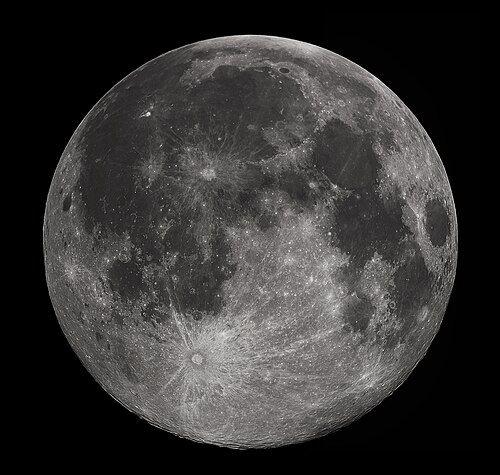
Materials covered in this trivia questions quiz
Study Hint 1
Question: In the context of the night sky, the Moon's appearance is most directly related to…
Trivia Question Study Fact: The night sky's visibility of the Moon is dependent on the Sun being below the horizon, as the Moon becomes observable when direct sunlight is absent and the sky darkens. This creates a timeframe between sunset and sunrise where celestial objects like the Moon are visible.
Trivia Question Explanation: The Moon is visible in the night sky specifically because it reflects sunlight, and this reflection is only observable when the Sun has set below the horizon, creating darkness.
Return to Question
Study Hint 2
Question: In the context of Egyptian astronomy, what primary function did the observation of lunar phases and planetary movements serve?
Trivia Question Study Fact: Within Egyptian astronomy, the observation of celestial bodies, including the Sun, Moon, and planets, was crucial for determining the timing of religious festivals and establishing the hours of night. Temple astrologers meticulously tracked conjunctions, risings, and lunar phases to maintain this calendar and schedule.
Trivia Question Explanation: Ancient Egyptian astrologers carefully monitored the movements of celestial bodies to create a calendar that dictated the timing of religious ceremonies and the division of the night into specific hours.
Return to Question
Study Hint 3
Question: In the context of celestial navigation, the Moon is considered…
Trivia Question Study Fact: Celestial navigation, a traditional method of determining position, relies on precise angular measurements between celestial bodies like the Sun, stars, and even the Moon, and the horizon. This allows navigators to calculate their location independently of estimations or modern technologies like satellite systems, and can even be used to determine accurate time when a clock is unavailable through methods like lunar distance calculations.
Trivia Question Explanation: The Moon, along with the Sun and stars, is utilized in celestial navigation because its position can be accurately measured relative to the horizon, providing data for calculating a navigator's position and even precise time using techniques like the lunar distance method.
Return to Question
Study Hint 4
Question: In the context of Earth's geological history, the Moon is believed to have originated from what process occurring relatively soon after Earth's formation?
Trivia Question Study Fact: Around 4.54 billion years ago, Earth and the Moon formed from the same primordial material within the solar nebula. The Moon's formation is hypothesized to have occurred shortly after Earth's crust began to solidify, potentially resulting from a massive impact between Earth and another celestial body.
Trivia Question Explanation: The prevailing theory suggests the Moon formed from debris ejected after a Mars-sized object collided with the early Earth, a period shortly after the planet’s initial cooling and crust formation.
Return to Question
Study Hint 5
Question: In the context of tides, the Moon is considered…
Trivia Question Study Fact: Tides, the cyclical rise and fall of sea levels, are primarily caused by the gravitational pull of the Moon on Earth, with the Sun contributing to a lesser extent. This gravitational interaction, combined with the orbital movements of Earth and the Moon, generates the predictable patterns observed in tidal fluctuations.
Trivia Question Explanation: The Moon's gravitational force is the dominant factor in creating tides, as its proximity to Earth exerts a stronger pull on the oceans than the Sun does, resulting in the cyclical rise and fall of sea levels.
Return to Question
Study Hint 6
Question: In the context of atmospheres, which planetary characteristic is most crucial for a celestial body, like the Moon, to maintain a substantial gaseous envelope over extended periods?
Trivia Question Study Fact: An astronomical object's atmosphere is held in place by its gravity, and its composition can change over time due to interactions with its surface, sunlight, and the solar wind. A planet's ability to retain an atmosphere is directly related to the strength of its gravity and its temperature – higher gravity and lower temperatures promote atmospheric retention.
Trivia Question Explanation: A planet's gravity dictates its ability to hold onto atmospheric gases, while lower temperatures reduce the rate at which these gases escape into space, thus influencing long-term atmospheric retention.
Return to Question
Study Hint 7
Question: In the context of prime meridians, how does the Moon's system for measuring longitude differ from that of most other bodies in the Solar System?
Trivia Question Study Fact: Similar to Earth, the Moon utilizes a prime meridian to define its longitudinal coordinate system, measuring longitudes from 0° east and west. However, unlike most other bodies in our solar system, the Moon shares Earth's prograde rotation, resulting in the use of west longitudes alongside east longitudes for measuring its surface.
Trivia Question Explanation: The Moon, like Earth, rotates in a prograde direction, meaning its rotation aligns with its orbit around the Sun. This characteristic leads to the use of both east and west longitudes for mapping its surface, a convention shared with Earth but distinct from many other Solar System bodies.
Return to Question
Study Hint 8
Question: In the context of ground stations, what portion of the electromagnetic spectrum is primarily used for establishing telecommunications links with spacecraft?
Trivia Question Study Fact: Ground stations, essential for communicating with spacecraft, utilize radio waves – specifically in the super high frequency and extremely high frequency bands (like microwaves) – to establish telecommunications links. These stations can be positioned on Earth's surface or even within its atmosphere, enabling both transmission to and reception from spacecraft and astronomical sources.
Trivia Question Explanation: Ground stations rely on radio waves within the super high frequency and extremely high frequency bands, including microwaves, to effectively transmit and receive signals to and from spacecraft due to their ability to travel long distances and penetrate atmospheric conditions.
Return to Question
Study Hint 9
Question: In the context of Night, the cyclical changes in how much of the Moon appears illuminated from Earth are directly caused by…
Trivia Question Study Fact: The Moon's rotation is tidally locked with Earth, meaning one side perpetually faces our planet. As the Moon orbits, different portions of its near side experience nightfall, and these changing shadowed areas are what create the lunar phases visible from Earth.
Trivia Question Explanation: The Moon rotates on its axis at the same rate that it orbits Earth, resulting in the same side always facing us. As the Moon orbits, the amount of this near side illuminated by the Sun changes, creating the lunar phases we observe during nighttime.
Return to Question
Study Hint 10
Question: In the context of Earth, the Moon is considered unique due to a phenomenon resulting from gravitational interaction that affects both bodies, but most visibly impacts the Moon's rotation and Earth's oceans. What is this phenomenon?
Trivia Question Study Fact: The Moon is gravitationally bound to Earth, and this mutual attraction creates tidal forces. These forces are the primary cause of Earth's tides, and have also resulted in the Moon becoming tidally locked with Earth, meaning the same side of the Moon always faces our planet.
Trivia Question Explanation: The Moon's gravitational interaction with Earth generates tidal forces, which drive Earth's tides and have caused the Moon to become tidally locked, always presenting the same face to Earth.
Return to Question