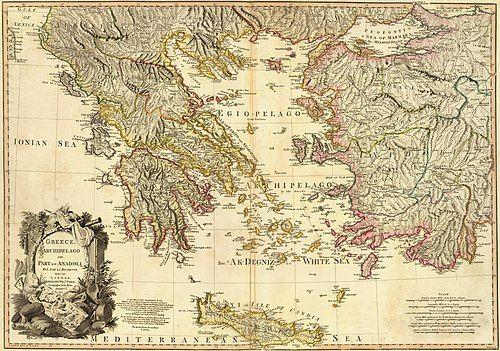
Materials covered in this trivia questions quiz
Study Hint 1
Question: In the context of Olympia, Greece, Ancient Greek athletic competitions are considered to have primarily functioned as…
Trivia Question Study Fact: Ancient Olympia, located on the Peloponnese peninsula, served as a central Panhellenic religious sanctuary in Ancient Greece, most notably hosting the Olympic Games every four years for centuries. These games, dedicated to Zeus, fostered a sense of shared Greek identity by attracting participants and spectators from across the Greek world.
Trivia Question Explanation: The Olympic Games were held at Olympia as a religious sanctuary dedicated to Zeus, and they drew participants from across the Greek world, contributing to a shared cultural identity and sense of unity among the Greeks.
Return to Question
Study Hint 2
Question: In the context of Yalta, Ancient Greece is considered…
Trivia Question Study Fact: The modern city of Yalta, a popular resort destination on the Crimean Peninsula, was originally founded as the ancient Greek colony of Yalita. Greek settlers established Yalita seeking a sheltered landing spot along the Black Sea coast, choosing a location within a deep bay protected by the Ai-Petri mountain range.
Trivia Question Explanation: Historical records indicate that the city of Yalta developed from the ancient Greek colony of Yalita, established by Greek settlers searching for a secure harbor on the Crimean Peninsula.
Return to Question
Study Hint 3
Question: In the context of Poti, Ancient Greece is considered…
Trivia Question Study Fact: The modern Georgian city of Poti was constructed near the location of Phasis, an ancient Greek colony. The name 'Poti' itself is derived from 'Phasis,' demonstrating a direct linguistic and geographical connection between the ancient Greek presence and the city's subsequent development.
Trivia Question Explanation: Phasis, an ancient Greek colony, predates the modern city of Poti, and the city's name is a direct adaptation of the ancient colony's name, illustrating a clear historical link.
Return to Question
Study Hint 4
Question: In the context of a basileus, which of the following best describes the meaning of the related term 'basileia'?
Trivia Question Study Fact: The Greek term 'basileus,' often translated as 'monarch' in English, was a title used by various rulers throughout history, including those in ancient Greece, the Byzantine Empire, and modern Greece. The term's influence extends beyond titles, with 'basileia' signifying concepts like sovereignty, royalty, and kingdom.
Trivia Question Explanation: The provided text explicitly states that 'basileia' has meanings such as 'sovereignty', 'royalty', 'kingdom', 'reign', 'dominion' and 'authority,' demonstrating its broader significance beyond just a title.
Return to Question
Study Hint 5
Question: In the context of the expansion of Macedonia under Philip II, what was a key component of his strategy for solidifying control over newly conquered territories?
Trivia Question Study Fact: During his expansion across the region, Philip II of Macedonia not only reformed the Macedonian army, particularly emphasizing the Macedonian phalanx, but also strategically founded new cities in his conquered territories. These cities, like Philippi, Philippopolis, and Heraclea, served to consolidate his control and project Macedonian influence throughout Thrace and Illyria.
Trivia Question Explanation: Philip II actively founded new cities, such as Philippi and Philippopolis, in conquered territories to establish Macedonian control, facilitate administration, and demonstrate his power.
Return to Question
Study Hint 6
Question: In the context of the Argead dynasty, the historical origins of this Macedonian royal house are most closely linked to which region of ancient Greece?
Trivia Question Study Fact: The Argead dynasty, rulers of the ancient kingdom of Macedon from approximately 700 to 310 BC, traced their origins to the city of Argos in the Peloponnese region of Southern Greece. This connection to Argos is reflected in their alternative name, the Temenid dynasty, and their claimed descent from the legendary hero Heracles through Temenus, a king of Argos.
Trivia Question Explanation: The Argead dynasty’s tradition, as recorded in ancient Greek historiography, specifically identifies Argos, located in the Peloponnese, as the origin point of their lineage and the source of their name.
Return to Question
Study Hint 7
Question: In the context of the Ancient Macedonian army, what factor most significantly contributed to its rise in prominence within Ancient Greece?
Trivia Question Study Fact: Prior to Philip II's reforms, the Kingdom of Macedon was considered a relatively minor power within Ancient Greece. Philip II's innovations, including establishing military service as a full-time occupation and adopting advancements from military thinkers like Epaminondas and Iphicrates, transformed the Macedonian army into one of the most formidable military forces of its time.
Trivia Question Explanation: Philip II's shift to a professional, full-time army allowed for consistent training and cohesion, a key factor in transforming Macedon from a second-rate power into a dominant force capable of conquering vast territories.
Return to Question
Study Hint 8
Question: In the context of Hegemony, Ancient Greece distinguished itself by applying the term to a specific type of power dynamic between which political entities?
Trivia Question Study Fact: Within the context of Ancient Greece, the term 'hegemony' specifically described the political and military control one city-state exerted over others, signifying a dominant position within a network of independent poleis. This wasn't simply about power, but a recognized leadership role within the Greek world.
Trivia Question Explanation: Hegemony in Ancient Greece referred to the dominance of a leading city-state over others, establishing a system of influence and control within the Greek world, rather than a traditional empire or religious hierarchy.
Return to Question
Study Hint 9
Question: In the context of the Wars of Alexander the Great, Ancient Greece is considered…
Trivia Question Study Fact: Alexander the Great’s military campaigns, originating from Ancient Greece, extended far beyond its borders, ultimately leading to the conquest of the Achaemenid Empire and territories as distant as the Indus Valley, but his sudden death resulted in fragmentation and conflict among his generals in the Wars of the Diadochi.
Trivia Question Explanation: Alexander III of Macedon launched his conquests from his homeland of Macedonia, which was a region within Ancient Greece, before expanding his empire eastward.
Return to Question
Study Hint 10
Question: In the context of the Battle of Thebes, Alexander the Great's position as hegemon of the League of Corinth primarily served to justify his actions by ensuring the continued subjugation of which group?
Trivia Question Study Fact: Following Alexander the Great's campaigns in Illyria and Thrace, he returned to Boeotia in 335 BC to confront Thebes. This action was prompted by Alexander's role as hegemon of the League of Corinth, requiring him to maintain control over the Greek city-states, which necessitated suppressing any potential uprisings or resistance.
Trivia Question Explanation: Alexander's authority as hegemon of the League of Corinth obligated him to maintain order and prevent rebellion among the Greek city-states, leading him to quell unrest in Thebes to reinforce Macedonian dominance.
Return to Question