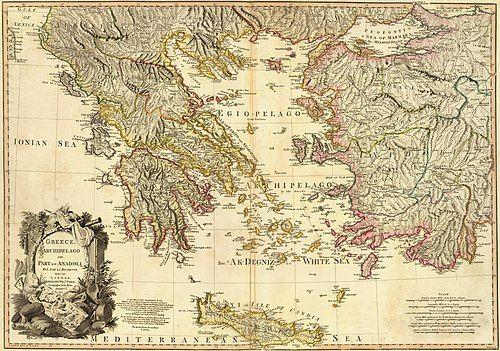
Materials covered in this trivia questions quiz
Study Hint 1
Question: In the context of Ancient Greece, the term 'isonomia' was initially used by historians to describe what type of governance?
Trivia Question Study Fact: The concept of 'isonomia,' meaning equality before the law, was a term utilized by ancient Greek historians like Herodotus and Thucydides to describe forms of popular government. Later revived in English, the term emphasizes the consistent and impartial application of laws to all citizens, a principle championed by economists like Friedrich Hayek.
Trivia Question Explanation: Ancient Greek writers, including Herodotus and Thucydides, employed 'isonomia' to denote a system of governance where the populace held significant power and legal principles were applied equally to all.
Return to Question
Study Hint 2
Question: In the context of Greek city-states, what was the primary criterion for a settlement to be considered a Greek city, even if it wasn't a sovereign polis?
Trivia Question Study Fact: Ancient Greek city-states, known as poleis, frequently established colonies beyond the borders of Greece itself. While many of these overseas colonies eventually integrated into other languages and cultures, they were included in lists of Greek cities if, at some point, a significant portion of their population or ruling class spoke Greek, or if they contributed to the broader Hellenic culture of the region.
Trivia Question Explanation: The definition of a Greek city extended beyond purely political or geographical boundaries; a settlement could be considered Greek if it exhibited a notable Greek linguistic or cultural impact, even if temporary or partial.
Return to Question
Study Hint 3
Question: In the context of Polemarch, Ancient Greece is considered to have initially established this role to address what evolving need within its city-states?
Trivia Question Study Fact: In ancient Greek city-states, the polemarch was a high-ranking military official whose title combines the Greek words for 'war' (polemos) and 'ruler' (archon), effectively meaning 'warleader'. Originally, the role likely emerged to transfer military command from the king, and in Athens, the polemarch served as the commander-in-chief of the city's armed forces, holding a position of prominence alongside other key archons.
Trivia Question Explanation: The position of polemarch arose as a means to delegate the responsibility of leading the army away from the king, indicating a shift in military organization within ancient Greek city-states.
Return to Question
Study Hint 4
Question: In the context of the archon basileus, Ancient Greek governance considered what primary characteristic to be inherent in the role’s designation?
Trivia Question Study Fact: In Ancient Greece, the title 'archon basileus' represented a unique combination of roles, signifying an individual who held both the authority of a magistrate, responsible for civic administration, and the power of a king or sovereign, indicating ultimate leadership and control.
Trivia Question Explanation: The term 'archon basileus' is directly formed from 'archon,' meaning magistrate, and 'basileus,' signifying a king or sovereign, thus indicating a combined function of both judicial and regal power.
Return to Question
Study Hint 5
Question: In the context of Hippias, Ancient Greece experienced a period of rule characterized by a family maintaining power through non-democratic means. What was the name given to this family of rulers?
Trivia Question Study Fact: Hippias, the last tyrant of Athens, belonged to the Peisistratids, a family that consecutively held power in Athens during the 6th century BC. This lineage of rulers demonstrates a period of autocratic governance within Ancient Greece, preceding the development of Athenian democracy.
Trivia Question Explanation: Hippias was a member of the Peisistratid family, who were a succession of tyrants ruling Athens before the establishment of its democracy, with his father Pisistratus being a prominent member.
Return to Question
Study Hint 6
Question: In the context of the archons of Athens, what characteristic primarily distinguished the eponymous archon from the polemarch and archon basileus?
Trivia Question Study Fact: In Classical Athens, the system of nine archons included the eponymous archon, who held the highest political office and was distinguished by the practice of lending his name to the year in which he served, a system analogous to the Roman consular years.
Trivia Question Explanation: The eponymous archon’s unique role was to provide the name for the year in which they held office, a practice mirroring the Roman system of dating years by the consuls.
Return to Question
Study Hint 7
Question: In the context of the Aetolian League, Ancient Greece witnessed a significant shift in power dynamics following the League’s victory at Delphi in 279 BC. What was a key consequence of this victory?
Trivia Question Study Fact: The Aetolian League, initially viewed with disdain by other Greeks during the Classical period, rose to prominence in the Hellenistic era by defeating the Gauls in 279 BC and subsequently expanding its control over much of central Greece, incorporating numerous city-states into its confederation. This expansion included cities as far south as Crete.
Trivia Question Explanation: After defeating the Gauls at Delphi, the Aetolian League experienced a period of growth, steadily gaining territory and incorporating cities from across central Greece and even extending to Crete, demonstrating a significant increase in its power and influence.
Return to Question
Study Hint 8
Question: In the context of the history of philosophy, Ancient Greece is considered significant primarily for what initial philosophical pursuit?
Trivia Question Study Fact: The initial exploration of fundamental cosmic principles within the history of philosophy is directly linked to Ancient Greece, marking the genesis of Western philosophical thought. This early focus extended beyond purely rational argumentation to encompass elements of myth, religious traditions, and established lore.
Trivia Question Explanation: Early Western philosophical development in Ancient Greece centered on investigating the basic structure and composition of the universe, laying the groundwork for subsequent philosophical explorations.
Return to Question
Study Hint 9
Question: In the context of Ancient Greek philosophy, which of the following fields, alongside ethics and metaphysics, was considered a core area of inquiry during its initial development?
Trivia Question Study Fact: Emerging in the 6th century BC, Ancient Greek philosophy encompassed a remarkably broad range of disciplines, extending beyond abstract thought to include practical fields like astronomy, mathematics, biology, and rhetoric, demonstrating a holistic approach to understanding the world.
Trivia Question Explanation: The provided text explicitly states that Ancient Greek philosophy dealt with a wide variety of subjects, including astronomy, alongside other fields like ethics and metaphysics, reflecting a comprehensive exploration of knowledge.
Return to Question
Study Hint 10
Question: In the context of Socratic dialogue, Ancient Greece is considered…
Trivia Question Study Fact: Socratic dialogue, originating in Ancient Greece around the 4th century BC, is a literary genre primarily preserved through the writings of Plato and Xenophon. These dialogues feature Socrates as a central figure engaging in philosophical discussions, utilizing a method of inquiry focused on moral and philosophical problems, but the genre doesn't necessarily require his direct participation.
Trivia Question Explanation: Socratic dialogues emerged in Greece during the early fourth century BC, and the earliest surviving examples were penned by Greek authors like Plato and Xenophon, establishing the region as the genre’s birthplace.
Return to Question