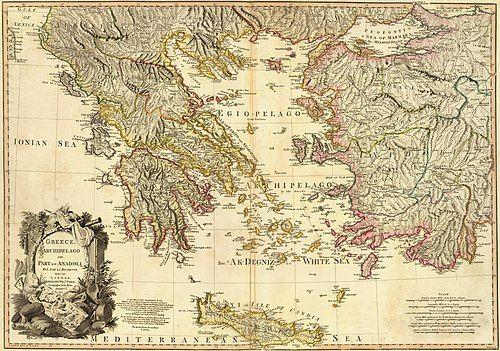
Materials covered in this trivia questions quiz
Study Hint 1
Question: In the context of Athenian democracy, who was explicitly excluded from participating in the political system?
Trivia Question Study Fact: Athenian democracy, originating around the 6th century BC, wasn't unique among Greek city-states; numerous others adopted similar democratic constitutions, with potentially half of the over one thousand Greek cities operating as democracies by the late 4th century BC. Participation in Athenian democracy was limited to adult, free male citizens, representing roughly 30% of the total adult population.
Trivia Question Explanation: Athenian democracy, while groundbreaking, was not universally inclusive; political participation was restricted to adult, free male citizens, specifically excluding metics (resident foreigners), women, and enslaved people.
Return to Question
Study Hint 2
Question: In the context of Greek mathematics, what fundamentally differentiated it from mathematical practices of earlier civilizations?
Trivia Question Study Fact: While preceding civilizations made mathematical advancements, Ancient Greek mathematics distinguished itself through the development of mathematics as a theoretical discipline and the systematic use of deductive reasoning and mathematical proofs. This shift marked a significant departure from earlier approaches to mathematical understanding.
Trivia Question Explanation: Ancient Greek mathematicians pioneered the use of deductive reasoning and mathematical proofs, establishing a theoretical foundation for mathematics that was distinct from the more practical or empirical approaches of earlier civilizations.
Return to Question
Study Hint 3
Question: In the context of Philip II of Macedon, Ancient Greece experienced a significant shift in power dynamics primarily due to what factor?
Trivia Question Study Fact: Philip II of Macedon transformed Macedon from a kingdom on the periphery of classical Greece into a dominant power within 25 years. This rise was achieved through military reforms, including the creation of the Macedonian phalanx and effective use of siege weaponry, alongside strategic diplomacy and alliances.
Trivia Question Explanation: Philip II’s success in dominating Greece stemmed from his reformation of the Macedonian army, including the phalanx, combined arms tactics, and siege weaponry, coupled with skillful diplomacy and marriage alliances.
Return to Question
Study Hint 4
Question: In the context of the League of Corinth, Ancient Greece’s unification under Macedonian leadership primarily served what purpose?
Trivia Question Study Fact: The League of Corinth, established by Philip II of Macedon, aimed to unite Greek city-states under Macedonian leadership, not to foster complete Greek independence, but rather to create a unified military force for a planned invasion of the Achaemenid Empire. This alliance allowed Philip and later Alexander the Great to mobilize a pan-Hellenic army.
Trivia Question Explanation: Philip II of Macedon formed the League of Corinth to consolidate Greek military strength and launch an invasion of the Persian Achaemenid Empire, leveraging a unified Hellenic force under his command.
Return to Question
Study Hint 5
Question: In the context of Alexander the Great, what immediate action did he take after assuming leadership of Macedon, demonstrating his authority over Ancient Greece?
Trivia Question Study Fact: Following his ascension to the throne of Macedon in 336 BC, Alexander the Great initiated a campaign in the Balkans to reassert control over regions like Thrace and Illyria. This was followed by a military action against Thebes, a Greek city which ultimately resulted in its destruction.
Trivia Question Explanation: The text explicitly states that shortly after becoming king, Alexander launched a campaign in the Balkans to regain control of Thrace and Illyria, showcasing his authority over the Greek territories.
Return to Question
Study Hint 6
Question: In the context of Greek culture, which of the following empires demonstrably contributed to its evolution *after* the Classical period?
Trivia Question Study Fact: Throughout its long history, Greek culture has not remained static, but has been continually shaped by successive civilizations – from the Minoans and Mycenaeans to the Romans, Byzantines, and even later empires like the Ottomans and Venetians – each leaving a distinct mark on its traditions and beliefs.
Trivia Question Explanation: The Roman Empire directly followed and was heavily influenced by Classical Greece, adopting and adapting many aspects of Greek culture, philosophy, and governance, thus contributing to the ongoing evolution of Greek culture.
Return to Question
Study Hint 7
Question: In the context of the Roman Republic, how is its political organization generally considered to differ from that of Ancient Greece?
Trivia Question Study Fact: During the Roman Republic, political organization evolved concurrently with direct democracy in Ancient Greece, featuring annual magistracies and a senate; however, the Roman system functioned as an elective oligarchy dominated by powerful families, differing significantly from the democratic ideals present in Greece.
Trivia Question Explanation: While the Roman Republic and Ancient Greece saw political development around the same time, Rome’s system was characterized by powerful families holding most senior positions through annual elections, making it an oligarchy rather than a direct democracy like some Greek city-states.
Return to Question
Study Hint 8
Question: In the context of Ancient_Greek_religion, how did the ancient Greeks generally view their religious practices compared to the modern understanding of 'religion'?
Trivia Question Study Fact: Ancient Greeks did not conceptualize 'religion' as a distinct category, lacking a specific word for it in their language. Instead, their religious life was characterized by shared shrines, sacrifices, and customs among the Hellenes, indicating a unified system of worship rather than separate, defined religions.
Trivia Question Explanation: Ancient Greek religious life was not categorized into separate 'religions' as we understand them today; instead, it was characterized by common shrines, sacrifices, and customs shared among the Hellenes, demonstrating a cohesive religious framework.
Return to Question
Study Hint 9
Question: In the context of Ancient Greek deities, what unique substance circulated in their veins, contributing to their immortality and differentiating them from humans?
Trivia Question Study Fact: In ancient Greece, deities were not simply abstract concepts but were envisioned as beings with human-like qualities, including emotions and physical appearances, though often idealized. A key distinction between gods and humans lay in their immortality, which was sustained by ichor flowing in their veins instead of blood, and their ability to influence mortal affairs through control over natural events and human outcomes.
Trivia Question Explanation: Ancient Greek beliefs held that deities possessed ichor in their veins instead of blood, and this substance, derived from their diet, was essential to their immortality and divine nature.
Return to Question
Study Hint 10
Question: In the context of Mycenaean Greece, the development of a distinctively Greek civilization was most directly stimulated by interactions with which other culture?
Trivia Question Study Fact: During the Mycenaean period (approximately 1750 to 1050 BC), Ancient Greece saw the emergence of a distinctively Greek civilization characterized by palatial states, urban organization, artistic achievements, and a writing system. This development was significantly influenced by contact with the Minoan civilization of Crete and other Mediterranean cultures, leading to a more sophisticated sociopolitical structure.
Trivia Question Explanation: The source text explicitly states that the Mycenaeans were influenced by their contact with the Minoan civilization of Crete and other Mediterranean cultures, which spurred the development of a more sophisticated Greek culture.
Return to Question