Sulfur in the context of Organosulfur compounds


Sulfur in the context of Organosulfur compounds

Sulfur Study page number 1 of 9

Play TriviaQuestions Online!

or

Skip to study material about Sulfur in the context of "Organosulfur compounds"


⭐ Core Definition: Sulfur

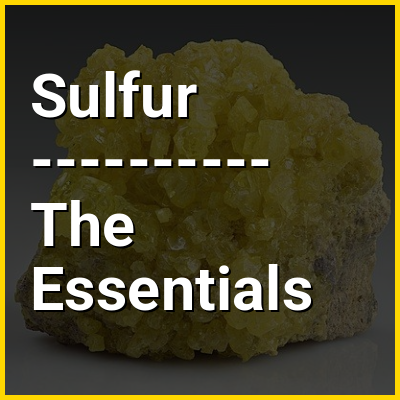
Sulfur (American spelling and the preferred IUPAC name) or sulphur (Commonwealth spelling) is a chemical element; it has symbol S and atomic number 16. It is abundant, multivalent and nonmetallic. Under normal conditions, sulfur atoms form cyclic octatomic molecules with the chemical formula S8. Elemental sulfur is a bright yellow, crystalline solid at room temperature.

Sulfur is the tenth most abundant element by mass in the universe and the fifth most common on Earth. Though sometimes found in pure, native form, sulfur on Earth usually occurs as sulfide and sulfate minerals. Being abundant in native form, sulfur was known in ancient times, being mentioned for its uses in ancient India, ancient Greece, China, and ancient Egypt. Historically and in literature sulfur is also called brimstone, which means "burning stone". Almost all elemental sulfur is produced as a byproduct of removing sulfur-containing contaminants from natural gas and petroleum. The greatest commercial use of the element is the production of sulfuric acid for sulfate and phosphate fertilizers, and other chemical processes. Sulfur is used in matches, insecticides, and fungicides. Many sulfur compounds are odoriferous, and the smells of odorized natural gas, skunk scent, bad breath, grapefruit, and garlic are due to organosulfur compounds. Hydrogen sulfide gives the characteristic odor to rotting eggs and other biological processes.
↓ Menu
HINT:

In this Dossier

Sulfur in the context of Gunpowder

Gunpowder, also commonly known as black powder to distinguish it from modern smokeless powder, is the earliest known chemical explosive. It consists of a mixture of sulfur, charcoal (which is mostly carbon), and potassium nitrate (saltpeter). The sulfur and charcoal act as fuels, while the saltpeter is an oxidizer. Gunpowder has been widely used as a propellant in firearms, artillery, rocketry, and pyrotechnics, including use as a blasting agent for explosives in quarrying, mining, building pipelines, tunnels, and roads.

Gunpowder is classified as a low explosive because of its relatively slow decomposition rate, low ignition temperature and consequently low brisance (breaking/shattering). Low explosives deflagrate—burning at subsonic speeds—whereas high explosives detonate, producing a supersonic shockwave. Ignition of gunpowder packed behind a projectile generates enough pressure to force the shot from the muzzle at high speed, but usually not enough force to rupture the gun barrel. It thus makes a good propellant but is less suitable for shattering rock or fortifications with its low-yield explosive power. Nonetheless, it was widely used to fill fused artillery shells (and used in mining and civil engineering projects) until the second half of the 19th century, when the first high explosives were put into use.

View the full Wikipedia page for Gunpowder
↑ Return to Menu

Sulfur in the context of Mining

Mining is the extraction of valuable geological materials and minerals from the surface of the Earth. Mining is required to obtain most materials that cannot be grown through agricultural processes, or feasibly created artificially in a laboratory or factory. Ores recovered by mining include metals, coal, oil shale, gemstones, limestone, chalk, dimension stone, rock salt, potash, gravel, and clay. The ore must be a rock or mineral that contains a valuable constituent, can be extracted or mined and sold for profit. Mining in a wider sense includes extraction of any non-renewable resource such as petroleum, natural gas, or even water.

Modern mining processes involve prospecting for ore bodies, analysis of the profit potential of a proposed mine, extraction of the desired materials, and final reclamation or restoration of the land after the mine is closed. Mining materials are often obtained from ore bodies, lodes, veins, seams, reefs, or placer deposits. The exploitation of these deposits for raw materials is dependent on investment, labor, energy, refining, and transportation cost.

View the full Wikipedia page for Mining
↑ Return to Menu

Sulfur in the context of Anaerobe

An anaerobic organism or anaerobe is any organism that does not require molecular oxygen for its growth. It may react negatively or even die in the presence of free oxygen. Anaerobic organisms do not use oxygen as a terminal electron acceptor in their respiration process to produce energy, but a less powerful oxidizing agent, such as nitrate, ferric ion, Mn(IV), sulfate or bicarbonate anions. In contrast, an aerobic organism (aerobe) is an organism that requires a sufficiently oxygenated environment to respire, produce its energy, and thrive. Because the anaerobic energy production was the first mechanism to be used by living microorganisms in their evolution and is much less efficient than the aerobic pathway, anaerobes are practically, de facto, always unicellular organisms (e.g. bacteria and archaea (prokaryotes), or protozoans (eukaryotes). However, a minuscule multicellular organism, with an exceptionally rare metabolism and surviving in a hypersaline brine pool in the darkness of the bottom of the Mediterranean Sea, has been recently discovered. Meanwhile, it remains a scientific curiosity, as the much higher energy requirements of most multicellular organisms cannot be met by anaerobic respiration. Most fungi (eukaryotes) are obligate aerobes, requiring oxygen to survive and grow; however, some species, such as the Chytridiomycota that reside in the rumen of cattle, are obligate anaerobes; for these species, anaerobic respiration is used because oxygen would disrupt their metabolism or kill them. The deep seafloor and its underlying unconsolidated sediments ranks among the largest potential habitats for anaerobic microorganisms on Earth. Moreover, chemoautotroph microbes also thrive around hydrothermal vents, discharging hot water on the ocean seabed near mid-ocean ridges, where anaerobic conditions prevail. These microbes produce energy in the absence of sunlight or oxygen through a process called anaerobic respiration, whereby inorganic compounds and ions such as protons (H), elemental sulfur and its derivatives (SO2−4, S2O2−3), or ferric ions, are reduced to drive oxidative phosphorylation.

View the full Wikipedia page for Anaerobe
↑ Return to Menu

Sulfur in the context of Japanese mining industry

Mining in Japan is minimal because Japan does not possess many on-shore mineral resources. Many of the on-shore minerals have already been mined to the point that it has become less expensive to import minerals. There are small deposits of coal, oil, iron and minerals in the Japanese archipelago. Japan is scarce in critical natural resources and has been heavily dependent on imported energy and raw materials. There are major deep sea mineral resources in the seabed of Japan. This is not mined yet due to technological obstacles for deep sea mining.

In 2019, Japan was the 2nd largest world producer of iodine, 4th largest worldwide producer of bismuth, the world's 9th largest producer of sulfur and the 10th largest producer of gypsum.

View the full Wikipedia page for Japanese mining industry
↑ Return to Menu

Sulfur in the context of Raw material

A raw material, also known as a feedstock, unprocessed material, or primary commodity, is a basic material that is used to produce goods, finished goods, energy, or intermediate materials/Intermediate goods that are feedstock for future finished products. As feedstock, the term connotes these materials are bottleneck assets and are required to produce other products.

The term raw material denotes materials in unprocessed or minimally processed states such as raw latex, crude oil, cotton, coal, raw biomass, iron ore, plastic, air, logs, and water. The term secondary raw material denotes waste material which has been recycled and injected back into use as productive material.

View the full Wikipedia page for Raw material
↑ Return to Menu

Sulfur in the context of Arsenic

Arsenic is a chemical element; it has symbol As and atomic number 33. It is a metalloid and one of the pnictogens, and therefore shares many properties with its group 15 neighbors phosphorus and antimony. Arsenic is notoriously toxic. It occurs naturally in many minerals, usually in combination with sulfur and metals, but also as a pure elemental crystal. It has various allotropes, but only the grey form, which has a metallic appearance, is important to industry.

The primary use of arsenic is in alloys of lead (for example, in car batteries and ammunition). Arsenic is also a common n-type dopant in semiconductor electronic devices, and a component of the III–V compound semiconductor gallium arsenide. Arsenic and its compounds, especially the trioxide, are used in the production of pesticides, treated wood products, herbicides, and insecticides. These applications are declining with the increasing recognition of the persistent toxicity of arsenic and its compounds.

View the full Wikipedia page for Arsenic
↑ Return to Menu

Sulfur in the context of Coal

Coal is a combustible black or brownish-black sedimentary rock, formed as rock strata called coal seams. Coal is mostly carbon with variable amounts of other elements, chiefly hydrogen, sulfur, oxygen, and nitrogen. It is a type of fossil fuel, formed when dead plant matter decays into peat which is converted into coal by the heat and pressure of deep burial over millions of years. Vast deposits of coal originate in former wetlands called coal forests that covered much of the Earth's tropical land areas during the late Carboniferous (Pennsylvanian) and Permian times.

Coal is used primarily as a fuel. While coal has been known and used for thousands of years, its usage was limited until the Industrial Revolution. With the invention of the steam engine, coal consumption increased. In 2020, coal supplied about a quarter of the world's primary energy and over a third of its electricity. Some iron and steel-making and other industrial processes burn coal.

View the full Wikipedia page for Coal
↑ Return to Menu

Sulfur in the context of Ocean acidification

Ocean acidification is the ongoing decrease in the pH of the Earth's ocean. Between 1950 and 2020, the average pH of the ocean surface fell from approximately 8.15 to 8.05. Carbon dioxide emissions from human activities are the primary cause of ocean acidification, with atmospheric carbon dioxide (CO2) levels exceeding 422 ppm (as of 2024). CO2 from the atmosphere is absorbed by the oceans. This chemical reaction produces carbonic acid (H2CO3) which dissociates into a bicarbonate ion (HCO3) and a hydrogen ion (H). The presence of free hydrogen ions (H) lowers the pH of the ocean, increasing acidity (this does not mean that seawater is acidic yet; it is still alkaline, with a pH higher than 8). Marine calcifying organisms, such as mollusks and corals, are especially vulnerable because they rely on calcium carbonate to build shells and skeletons.

A change in pH by 0.1 represents a 26% increase in hydrogen ion concentration in the world's oceans (the pH scale is logarithmic, so a change of one in pH units is equivalent to a tenfold change in hydrogen ion concentration). Sea-surface pH and carbonate saturation states vary depending on ocean depth and location. Colder and higher latitude waters are capable of absorbing more CO2. This can cause acidity to rise, lowering the pH and carbonate saturation levels in these areas. There are several other factors that influence the atmosphere-ocean CO2 exchange, and thus local ocean acidification. These include ocean currents and upwelling zones, proximity to large continental rivers, sea ice coverage, and atmospheric exchange with nitrogen and sulfur from fossil fuel burning and agriculture.

View the full Wikipedia page for Ocean acidification
↑ Return to Menu

Sulfur in the context of Marine ecosystem

Marine ecosystems are the largest of Earth's aquatic ecosystems and exist in waters that have a high salt content. These systems contrast with freshwater ecosystems, which have a lower salt content. Marine waters cover more than 70% of the surface of the Earth and account for more than 97% of Earth's water supply and 90% of habitable space on Earth. Seawater has an average salinity of 35 parts per thousand of water. Actual salinity varies among different marine ecosystems. Marine ecosystems can be divided into many zones depending upon water depth and shoreline features. The oceanic zone is the vast open part of the ocean where animals such as whales, sharks, and tuna live. The benthic zone consists of substrates below water where many invertebrates live. The intertidal zone is the area between high and low tides. Other near-shore (neritic) zones can include mudflats, seagrass meadows, mangroves, rocky intertidal systems, salt marshes, coral reefs, kelp forests and lagoons. In the deep water, hydrothermal vents may occur where chemosynthetic sulfur bacteria form the base of the food web.

Marine ecosystems are characterized by the biological community of organisms that they are associated with and their physical environment. Classes of organisms found in marine ecosystems include brown algae, dinoflagellates, corals, cephalopods, echinoderms, and sharks.

View the full Wikipedia page for Marine ecosystem
↑ Return to Menu

Sulfur in the context of Photosynthesis

Photosynthesis (/ˌftəˈsɪnθəsɪs/ FOH-tə-SINTH-ə-sis) is a system of biological processes by which photopigment-bearing autotrophic organisms, such as most plants, algae and cyanobacteria, convert light energy — typically from sunlight — into the chemical energy necessary to fuel their metabolism. The term photosynthesis usually refers to oxygenic photosynthesis, a process that releases oxygen as a byproduct of water splitting. Photosynthetic organisms store the converted chemical energy within the bonds of intracellular organic compounds (complex compounds containing carbon), typically carbohydrates like sugars (mainly glucose, fructose and sucrose), starches, phytoglycogen and cellulose. When needing to use this stored energy, an organism's cells then metabolize the organic compounds through cellular respiration. Photosynthesis plays a critical role in producing and maintaining the oxygen content of the Earth's atmosphere, and it supplies most of the biological energy necessary for complex life on Earth.

Some organisms also perform anoxygenic photosynthesis, which does not produce oxygen. Some bacteria (e.g. purple bacteria) uses bacteriochlorophyll to split hydrogen sulfide as a reductant instead of water, releasing sulfur instead of oxygen, which was a dominant form of photosynthesis in the euxinic Canfield oceans during the Boring Billion. Archaea such as Halobacterium also perform a type of non-carbon-fixing anoxygenic photosynthesis, where the simpler photopigment retinal and its microbial rhodopsin derivatives are used to absorb green light and produce a proton (hydron) gradient across the cell membrane, and the subsequent ion movement powers transmembrane proton pumps to directly synthesize adenosine triphosphate (ATP), the "energy currency" of cells. Such archaeal photosynthesis might have been the earliest form of photosynthesis that evolved on Earth, as far back as the Paleoarchean, preceding that of cyanobacteria (see Purple Earth hypothesis).

View the full Wikipedia page for Photosynthesis
↑ Return to Menu

Sulfur in the context of Solar wind

The solar wind is a stream of charged particles released from the Sun's outermost atmospheric layer, the corona. This plasma mostly consists of electrons, protons and alpha particles with kinetic energy between 0.5 and 10 keV. The composition of the solar wind plasma also includes a mixture of particle species found in the solar plasma: trace amounts of heavy ions and atomic nuclei of elements such as carbon, nitrogen, oxygen, neon, magnesium, silicon, sulfur, and iron. There are also rarer traces of some other nuclei and isotopes such as phosphorus, titanium, chromium, and nickel's isotopes Ni, Ni, and Ni. Superimposed with the solar-wind plasma is the interplanetary magnetic field. The solar wind varies in density, temperature and speed over time and over solar latitude and longitude. Its particles can escape the Sun's gravity because of their high energy resulting from the high temperature of the corona, which in turn is a result of the coronal magnetic field. The boundary separating the corona from the solar wind is called the Alfvén surface.

At a distance of more than a few solar radii from the Sun, the solar wind reaches speeds of 250–750 km/s and is supersonic, meaning it moves faster than the speed of fast magnetosonic waves. The flow of the solar wind is no longer supersonic at the termination shock. Other related phenomena include the aurora (northern and southern lights), comet tails that always point away from the Sun, and geomagnetic storms that can change the direction of magnetic field lines.

View the full Wikipedia page for Solar wind
↑ Return to Menu

Sulfur in the context of Contrail

Contrails (/ˈkɒntrlz/; short for "condensation trails") or vapour trails are line-shaped clouds produced by aircraft engine exhaust or changes in air pressure, typically at aircraft cruising altitudes several kilometres/miles above the Earth's surface. They are composed primarily of water, in the form of ice crystals. The combination of water vapor in aircraft engine exhaust and the low ambient temperatures at high altitudes cause the trails' formation.

Impurities in the engine exhaust from the fuel, including soot and sulfur compounds (0.05% by weight in jet fuel) provide some of the particles that serve as cloud condensation nuclei for water droplet growth in the exhaust. If water droplets form, they can freeze to form ice particles that compose a contrail. Their formation can also be triggered by changes in air pressure in wingtip vortices, or in the air over the entire wing surface. Contrails, and other clouds caused directly by human activity, are called homogenitus.

View the full Wikipedia page for Contrail
↑ Return to Menu

Sulfur in the context of Ijen

The Ijen volcano complex is a group of composite volcanoes located on the border between Banyuwangi Regency and Bondowoso Regency of East Java, Indonesia. It is known for its blue fire, acidic crater lake, and labour-intensive sulfur mining.

It is inside an eponymous larger caldera Ijen, which is about 20 kilometres (12 mi) wide. The Gunung Merapi stratovolcano is the highest point of that complex. The name "Gunung Merapi" means 'mountain of fire' in the Indonesian language; Mount Merapi in central Java and Marapi in Sumatra have the same etymology.

View the full Wikipedia page for Ijen
↑ Return to Menu

Sulfur in the context of Polythiazyl

Polythiazyl (polymeric sulfur nitride), (SN)x, is an electrically conductive, gold- or bronze-colored polymer with metallic luster. It was the first conductive inorganic polymer discovered and was also found to be a superconductor at very low temperatures (below 0.26 K). It is a fibrous solid, described as "lustrous golden on the faces and dark blue-black", depending on the orientation of the sample. It is air stable and insoluble in all solvents.

View the full Wikipedia page for Polythiazyl
↑ Return to Menu

Sulfur in the context of Jupiter

Jupiter is the fifth planet from the Sun and the largest in the Solar System. It is a gas giant with a mass nearly 2.5 times that of all the other planets in the Solar System combined and slightly less than one-thousandth the mass of the Sun. Its diameter is 11 times that of Earth and a tenth that of the Sun. Jupiter orbits the Sun at a distance of 5.20 AU (778.5 Gm), with an orbital period of 11.86 years. It is the third-brightest natural object in the Earth's night sky, after the Moon and Venus, and has been observed since prehistoric times. Its name derives from that of Jupiter, the chief deity of ancient Roman religion.

Jupiter was the first of the Sun's planets to form, and its inward migration during the primordial phase of the Solar System affected much of the formation history of the other planets. Jupiter's atmosphere consists of 76% hydrogen and 24% helium by mass, with a denser interior. It contains traces of the elements carbon, oxygen, sulfur, neon, and compounds such as ammonia, water vapour, phosphine, hydrogen sulfide, and hydrocarbons. Jupiter's helium abundance is 80% of the Sun's, similar to Saturn's composition.

View the full Wikipedia page for Jupiter
↑ Return to Menu

Sulfur in the context of Organic chemistry

Organic chemistry is a subdiscipline within chemistry involving the scientific study of the structure, properties, and reactions of organic compounds and organic materials, i.e., matter in its various forms that contain carbon atoms. Study of structure determines their structural formula. Study of properties includes physical and chemical properties, and evaluation of chemical reactivity to understand their behavior. The study of organic reactions includes the chemical synthesis of natural products, drugs, and polymers, and study of individual organic molecules in the laboratory and via theoretical (in silico) study.

The range of chemicals studied in organic chemistry includes hydrocarbons (compounds containing only carbon and hydrogen) as well as compounds based on carbon, but also containing other elements, especially oxygen, nitrogen, sulfur, phosphorus (included in many biochemicals) and the halogens. Organometallic chemistry is the study of compounds containing carbon–metal bonds.

View the full Wikipedia page for Organic chemistry
↑ Return to Menu

Sulfur in the context of Homonuclear

In chemistry, homonuclear molecules, or elemental molecules, or homonuclear species, are molecules composed of only one element. Homonuclear molecules may consist of various numbers of atoms. The size of the molecule an element can form depends on the element's properties, and some elements form molecules of more than one size. The most familiar homonuclear molecules are diatomic molecules, which consist of two atoms, although not all diatomic molecules are homonuclear. Homonuclear diatomic molecules include hydrogen (H2), oxygen (O2), nitrogen (N2) and all of the halogens. Ozone (O3) is a common triatomic homonuclear molecule. Homonuclear tetratomic molecules include arsenic (As4) and phosphorus (P4).

Allotropes are different chemical forms of the same element (not containing any other element). In that sense, allotropes are all homonuclear. Many elements have multiple allotropic forms. In addition to the most common form of gaseous oxygen, O2, and ozone, there are other allotropes of oxygen. Sulfur forms several allotropes containing different numbers of sulfur atoms, including diatomic, triatomic, hexatomic and octatomic (S2, S3, S6, S8) forms, though the first three are rare. The element carbon is known to have a number of homonuclear molecules, including diamond and graphite.

View the full Wikipedia page for Homonuclear
↑ Return to Menu

Sulfur in the context of Anaerobic respiration

Anaerobic respiration is respiration using electron acceptors other than molecular oxygen (O2) in its electron transport chain.

In aerobic organisms, electrons are shuttled to an electron transport chain, and the final electron acceptor is oxygen. Molecular oxygen is an excellent electron acceptor. Anaerobes instead use less-oxidizing substances such as nitrate (NO
3
), fumarate (C
4
H
2
O
4
), sulfate (SO
4
), or elemental sulfur (S). These terminal electron acceptors have smaller reduction potentials than O2. Less energy per oxidized molecule is released. Therefore, anaerobic respiration is less efficient than aerobic.

View the full Wikipedia page for Anaerobic respiration
↑ Return to Menu

Sulfur in the context of Hydrogen sulphide

Hydrogen sulfide (preferred IUPAC name and American English) or hydrogen sulphide (Commonwealth English) is a chemical compound with the formula H2S. It is a colorless hydrogen chalcogenide gas, and is toxic, corrosive, and flammable. Trace amounts in ambient atmosphere have a characteristic foul odor of rotten eggs. Swedish chemist Carl Wilhelm Scheele is credited with having discovered the chemical composition of purified hydrogen sulfide in 1777.

Hydrogen sulfide is toxic to humans and most other animals by inhibiting cellular respiration in a manner similar to hydrogen cyanide. When it is inhaled or its salts are ingested in high amounts, damage to organs occurs rapidly with symptoms ranging from breathing difficulties to convulsions and death. Despite this, the human body produces small amounts of this sulfide and its mineral salts, and uses it as a signalling molecule.

View the full Wikipedia page for Hydrogen sulphide
↑ Return to Menu