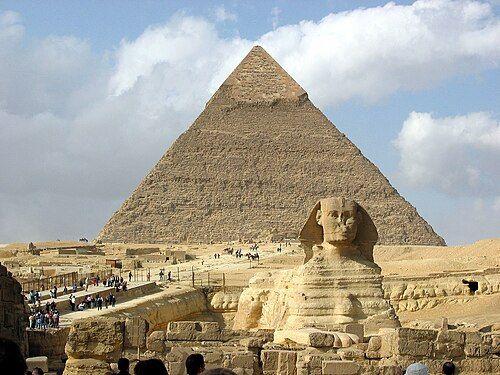
Materials covered in this trivia questions quiz
Study Hint 1
Question: In the context of the arts, how are civilizations fundamentally connected through artistic practices?
Trivia Question Study Fact: Across civilizations, the arts serve not only as a means of creative expression but also as a vital mechanism for transmitting cultural values, social identities, and accumulated human experiences through generations and across geographical boundaries. This transmission occurs through diverse media and increasingly complex forms developed through dedicated study and tradition.
Trivia Question Explanation: The arts function as a powerful medium for civilizations to share values, impressions, and experiences across time and space, fostering a connection beyond geographical boundaries and generations.
Return to Question
Study Hint 2
Question: In the context of 'cradles of civilization', which characteristic is essential for a location to be classified as such?
Trivia Question Study Fact: A 'cradle of civilization' isn't simply an early settlement, but a location where complex societies developed independently, characterized by features like statehood, social hierarchies, urbanization, and advanced communication systems—including writing and art—distinct from basic language. These early civilizations relied on agricultural surpluses to support specialized roles within their communities.
Trivia Question Explanation: A cradle of civilization is specifically defined as a place where civilization arose independently, meaning it wasn't heavily influenced by existing civilizations but developed its own state, social structure, cities, and communication methods.
Return to Question
Study Hint 3
Question: In the context of Urban Areas, the development of early predecessors during the Urban Revolution is most directly linked to the rise of what?
Trivia Question Study Fact: The emergence of early urban areas during the Urban Revolution of the 4th millennium BCE is considered a pivotal factor in the development of human civilization, marking a significant shift alongside activities like the exploitation of natural resources and ultimately influencing modern urban planning practices.
Trivia Question Explanation: The source text explicitly states that the development of early urban areas during the Urban Revolution led to the formation of human civilization, highlighting its foundational role in societal development.
Return to Question
Study Hint 4
Question: In the context of urban agglomeration, the development of early urban areas during the Urban Revolution is most directly linked to which subsequent societal advancement?
Trivia Question Study Fact: The emergence of early urban areas during the Urban Revolution of the 4th millennium BCE is considered a pivotal factor in the development of human civilization. This period marked a significant shift, with the formation of these settlements ultimately contributing to the practices of modern urban planning and influencing the broader human impact on the environment through activities like resource exploitation.
Trivia Question Explanation: The source text explicitly states that the development of early urban areas during the Urban Revolution led to the formation of human civilization, highlighting its foundational role in societal progression.
Return to Question
Study Hint 5
Question: In the context of human history, the development of accounting and writing systems is most directly linked to which societal transformation?
Trivia Question Study Fact: The transition from nomadic hunter-gatherer lifestyles to sedentary farming practices, spurred by the Neolithic Revolution in West Asia, was a crucial development in human history. This shift towards permanent settlements necessitated the creation of systems for accounting and writing, ultimately paving the way for the emergence of early civilizations and the subsequent development of complex societies.
Trivia Question Explanation: The source text explicitly states that the growing complexity of human societies, resulting from the shift to sedentary lifestyles and permanent settlements, necessitated the development of accounting and writing systems. This connection directly links these systems to the agricultural revolution and the rise of civilization.
Return to Question
Study Hint 6
Question: In the context of humans, civilization is most directly enabled by which defining characteristic?
Trivia Question Study Fact: Humans, as a species within the primate family, are distinguished by their advanced cognitive abilities stemming from a large brain-to-body mass ratio. This intelligence has been pivotal in the development of complex tools, social structures, and ultimately, the emergence of civilizations, allowing for adaptation to diverse environments and the creation of sophisticated cultural institutions.
Trivia Question Explanation: The development of civilizations relies on the ability to adapt, innovate, and create complex systems, all of which are facilitated by advanced cognitive skills and the creation of tools.
Return to Question
Study Hint 7
Question: In the context of civilization, what distinguishes it from earlier forms of human social organization, according to the definition provided?
Trivia Question Study Fact: While civilizations are defined by complex societal structures like state development and social stratification, a key characteristic is the evolution of symbolic communication systems extending beyond spoken or signed languages, most notably the development of writing systems.
Trivia Question Explanation: Civilizations are uniquely defined by their advancement in communication, specifically the creation and use of writing systems, which sets them apart from simpler societies that relied solely on spoken or signed language.
Return to Question
Study Hint 8
Question: In the context of Architecture, how have historical Civilizations been most consistently represented and remembered?
Trivia Question Study Fact: Architecture, originating in prehistoric times, serves as a cultural expression for civilizations globally. Historically, civilizations are often remembered and identified through their architectural accomplishments, with early theoretical writings like Vitruvius’s *De architectura* emphasizing the importance of durability, utility, and beauty in building design.
Trivia Question Explanation: Architectural works, in their material form as buildings and structures, frequently function as cultural symbols and are often what define and distinguish past civilizations for future generations.
Return to Question
Study Hint 9
Question: In the context of Transport, Civilization is considered to be directly influenced by the facilitation of what essential economic activity?
Trivia Question Study Fact: The intentional movement of goods, people, and animals – encompassing modes like land, air, and water – is fundamental to enabling trade, and this trade is, in turn, a critical component for the development and progression of civilizations.
Trivia Question Explanation: The movement of goods and people through various transport methods directly supports trade, and the source material explicitly states that trade is essential for the development of civilizations.
Return to Question
Study Hint 10
Question: In the context of the pre-Columbian era, civilizations are characterized by advancements that occurred before what pivotal event?
Trivia Question Study Fact: The pre-Columbian era in the Americas refers to the period before substantial European contact, beginning with the initial peopling of the continents and lasting until the arrival of explorers like Christopher Columbus in 1492. During this time, numerous Indigenous civilizations flourished, developing complex societies with permanent settlements, agriculture, and impressive architectural achievements, some of which were later documented by Europeans, while others are known today through archaeological discoveries and surviving oral traditions.
Trivia Question Explanation: The pre-Columbian era is specifically defined as the time period before significant European contact, which began with Christopher Columbus’s voyages in 1492 and subsequent colonization efforts.
Return to Question