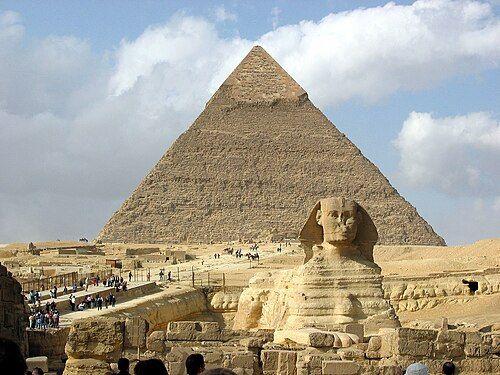
Materials covered in this trivia questions quiz
Study Hint 1
Question: In the context of Dilmun, civilization is considered to have been uniquely positioned due to its role in what ancient economic activity?
Trivia Question Study Fact: Dilmun, an ancient civilization in Eastern Arabia flourishing from the 3rd millennium BC, held a significant position as a crucial trade hub connecting Mesopotamia and the Indus Valley Civilization. This strategic location, coupled with access to resources like artesian springs, fostered strong commercial ties with Mesopotamia, so much so that Dilmun became integrated into Sumerian mythology as a paradisiacal realm.
Trivia Question Explanation: Dilmun’s geographical location in the Persian Gulf made it a vital link in the trade network connecting Mesopotamia and the Indus Valley Civilization, allowing for the exchange of goods and ideas between these regions.
Return to Question
Study Hint 2
Question: In the context of modern humans, what key physiological trait is most directly linked to the development of complex civilizations and advanced cognitive abilities?
Trivia Question Study Fact: Modern humans, or *Homo sapiens*, are distinguished from other primates by a unique combination of characteristics including hairlessness, bipedalism, and notably, a large brain relative to body size. This advanced brain capacity facilitates complex cognitive skills, enabling the development of tools, intricate social structures, and ultimately, the rise of civilizations.
Trivia Question Explanation: Humans possess a significantly larger brain-to-body mass ratio than other primates, which supports advanced cognitive functions like problem-solving, tool creation, and the establishment of complex social systems – all foundational elements of civilization.
Return to Question
Study Hint 3
Question: In the context of ancient ruins, which of the following is consistently identified as a contributing factor to their formation, alongside more dramatic events like war and natural disasters?
Trivia Question Study Fact: Ruins, representing the remnants of past civilizations, aren't solely the result of catastrophic events like natural disasters or warfare. Gradual processes such as weathering and scavenging, combined with factors like population decline and simple lack of maintenance, contribute significantly to the degradation of structures over time, ultimately leading to their ruinous state.
Trivia Question Explanation: The deterioration of structures into ruins is not always caused by sudden events; long-term processes like weathering – the breakdown of materials by exposure to the elements – and scavenging, where materials are removed for reuse, play a crucial role in the decay of buildings over time.
Return to Question
Study Hint 4
Question: In the context of Scheduled Castes and Scheduled Tribes, why does the Government of India generally prefer using the constitutionally recognized terms over alternative names like 'Dalit' or 'Adivasi'?
Trivia Question Study Fact: The Indian Constitution officially designates groups as 'Scheduled Castes' and 'Scheduled Tribes' to address socio-economic disadvantages, but alternative terms like 'Dalit' and 'Adivasi', while commonly used, carry historical connotations that can perpetuate negative stereotypes related to concepts like untouchability and distinctions between 'civilized' and 'uncivilized' groups. Consequently, the government prefers the constitutional terms in official contexts.
Trivia Question Explanation: Terms like 'Dalit' and 'Adivasi', while used by the communities themselves, have historically been linked to concepts like untouchability and the problematic distinction between 'civilized' and 'uncivilized' groups, which the government aims to avoid perpetuating through official language.
Return to Question
Study Hint 5
Question: In the context of the Late Shang, how did the practice of divination using oracle bones contribute to our understanding of early Chinese civilization?
Trivia Question Study Fact: The Late Shang period, representing the earliest literate civilization in China, provides significant historical corroboration for traditional Chinese king lists and historical accounts, such as those compiled by Sima Qian and the Bamboo Annals, through inscriptions found on oracle bones used for divination.
Trivia Question Explanation: Inscriptions on oracle bones, used for divination during the Late Shang period, detailed events like royal concerns and ancestor veneration, allowing modern scholars to confirm and expand upon king lists found in later historical texts like those of Sima Qian and the Bamboo Annals.
Return to Question
Study Hint 6
Question: In the context of Pre-Columbian America, Civilization development is best characterized by…
Trivia Question Study Fact: The pre-Columbian era in the Americas, spanning from the initial peopling of the continent to the arrival of Europeans in 1492, witnessed the development of numerous civilizations characterized by permanent settlements, complex social structures, and advancements in agriculture and architecture. While some of these civilizations declined before extensive European contact, others flourished during the early colonial period and were documented by European observers, though their records were often suppressed or destroyed.
Trivia Question Explanation: Pre-Columbian civilizations were distinguished by their ability to create lasting settlements, develop intricate social hierarchies, and implement advanced agricultural and architectural practices, demonstrating a shift away from solely nomadic lifestyles.
Return to Question
Study Hint 7
Question: In the context of the Valley of Mexico, which of the following best describes the historical significance of its interconnected lake system to the civilizations that flourished there?
Trivia Question Study Fact: The Valley of Mexico, a high-altitude plateau in central Mexico, historically contained five interconnected lakes – Zumpango, Xaltocan, Xochimilco, Chalco, and Texcoco – which collectively covered approximately 1,500 square kilometers. These lakes were crucial to the development of civilizations like the Aztec, who built their capital, Tenochtitlan, on an island in Lake Texcoco.
Trivia Question Explanation: The Valley of Mexico’s lakes were central to the development of pre-Columbian civilizations, notably the Aztec, who constructed their capital, Tenochtitlan, on an island within Lake Texcoco, demonstrating the lakes’ importance for settlement and resource availability.
Return to Question
Study Hint 8
Question: In the context of Archaic globalization, how were early civilizations fundamentally connected despite limited long-distance travel and communication?
Trivia Question Study Fact: Archaic globalization, spanning from the earliest civilizations to around 1600, involved the spread of ideas, social norms, and goods between communities and states, primarily through regional trade networks facilitated by sea lanes, rivers, and trade routes. This early form of globalization, though smaller in scale than modern globalization, established interconnected subsystems grouped into Western European, Middle Eastern, and Far Eastern circuits, laying the groundwork for future global interactions.
Trivia Question Explanation: Archaic globalization was characterized by the development of trade networks – sea lanes, rivers, and trade routes – that facilitated the exchange of not only goods and commodities, but also ideas, economic structures, political ideals, and social norms between different communities and states.
Return to Question
Study Hint 9
Question: In the context of transportation infrastructure, the development of civilizations is most directly enabled by which of the following?
Trivia Question Study Fact: Transportation infrastructure, encompassing elements like roads, railways, and waterways, plays a crucial role in facilitating trade, which is a foundational element for the growth and development of civilizations by enabling the exchange of goods and ideas between different regions.
Trivia Question Explanation: Civilizations rely on the exchange of goods and ideas, and transportation infrastructure provides the means for this exchange to occur, fostering economic growth and cultural development.
Return to Question