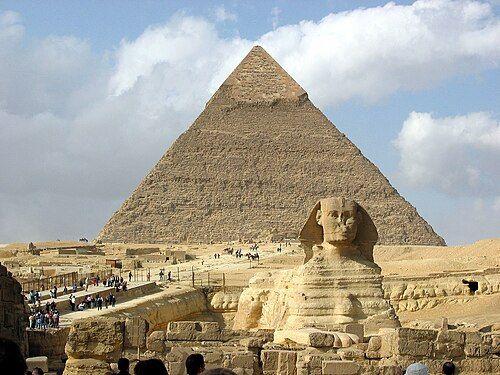
Materials covered in this trivia questions quiz
Study Hint 1
Question: In the context of Andean civilizations, what distinguishes them as a “pristine” civilization?
Trivia Question Study Fact: Andean civilizations, originating along the Pacific coast of South America, are considered 'pristine' civilizations – meaning they developed independently without significant external influence, making them one of only five such civilizations identified globally by scholars. This independent development occurred despite challenging environments like high mountains and arid deserts.
Trivia Question Explanation: Scholars classify Andean civilizations as 'pristine' because their development occurred largely in isolation, without being heavily shaped by other existing civilizations, making them one of only five such cultures worldwide.
Return to Question
Study Hint 2
Question: In the context of transportation, civilization is considered to be directly fostered by which of the following?
Trivia Question Study Fact: The development of civilizations is fundamentally linked to transport, as the intentional movement of goods and people via various modes – including land, air, water, and more – enables trade, which is a crucial component of societal advancement.
Trivia Question Explanation: Transport allows for the exchange of resources and products, which is essential for economic growth and the development of complex societies, ultimately contributing to the rise of civilizations.
Return to Question
Study Hint 3
Question: In the context of First_civilisations, a location being designated as a 'cradle of civilization' fundamentally indicates…
Trivia Question Study Fact: A 'cradle of civilization' isn't simply an old location, but a place where complex societies developed independently, characterized by features like statehood, social hierarchy, urbanization, and advanced communication systems—including writing and art—distinct from basic language. These early civilizations relied on agricultural surpluses to support their developing structures, with a possible exception in the Caral-Supe civilization which may have initially relied on marine resources.
Trivia Question Explanation: The defining characteristic of a 'cradle of civilization' is the independent emergence of complex societal features like statehood, social stratification, urbanization, and symbolic communication, rather than simply being an old or agriculturally rich area.
Return to Question
Study Hint 4
Question: In the context of the Holocene, the development of complex societies and a transition towards urban lifestyles is most directly linked to what broader environmental characteristic?
Trivia Question Study Fact: The Holocene epoch, beginning around 11,700 years ago, is characterized as an interglacial period within the Quaternary glacial cycles. This relatively warm period followed the Last Glacial Period and coincided with a significant rise in human populations, the development of civilizations, and a shift towards urban living, marking a substantial impact on Earth's ecosystems.
Trivia Question Explanation: The Holocene's warmer climate following the Last Glacial Period provided stable environmental conditions conducive to agriculture, population growth, and the development of civilizations, ultimately leading to increased urbanization.
Return to Question
Study Hint 5
Question: In the context of the gas industry, civilization’s reliance on petroleum is primarily attributed to its role as…
Trivia Question Study Fact: The petroleum industry, encompassing exploration, extraction, refining, and distribution of oil, provides essential raw materials for a vast array of products beyond fuels, including pharmaceuticals, plastics, and fertilizers, and is considered vital for maintaining modern industrial civilization due to its significant contribution to global energy consumption.
Trivia Question Explanation: Petroleum serves as a fundamental raw material for a wide range of products, including pharmaceuticals, plastics, and fertilizers, making it indispensable to numerous industries and modern life.
Return to Question
Study Hint 6
Question: In the context of built-up areas, civilization is considered to have been directly influenced by the development of which historical process?
Trivia Question Study Fact: The emergence of early urban areas during the 4th millennium BCE, a period known as the urban revolution, is fundamentally linked to the development of human civilization. These initial settlements, characterized by high population density and built infrastructure, provided the foundation for complex societal structures and, eventually, the practice of urban planning.
Trivia Question Explanation: The growth of early urban centers in the 4th millennium BCE marked a pivotal moment in human history, providing the necessary conditions for the formation of complex civilizations and the subsequent development of urban planning.
Return to Question
Study Hint 7
Question: In the context of human beings, civilization is most directly enabled by which characteristic?
Trivia Question Study Fact: Humans, as a species within the primate family, are distinguished by their advanced cognitive abilities, stemming from a large brain-to-body mass ratio. This intelligence has been pivotal in the development of complex tools, social structures, and ultimately, civilizations, allowing for successful adaptation to diverse environments.
Trivia Question Explanation: The development of civilizations is fundamentally linked to the capacity for complex thought, problem-solving, and the creation of tools, all of which are facilitated by the human brain's advanced cognitive abilities.
Return to Question
Study Hint 8
Question: In the context of urban space, civilization is considered to have been fundamentally shaped by…
Trivia Question Study Fact: The emergence of early urban areas during the Urban Revolution in the 4th millennium BCE is considered a foundational step in the development of human civilization, as concentrated populations and complex infrastructure facilitated advancements beyond those possible in rural settings and ultimately influenced modern urban planning.
Trivia Question Explanation: The development of early urban areas during the 4th millennium BCE provided the necessary conditions – population density, infrastructure, and social organization – for the rise of complex civilizations and the subsequent development of urban planning.
Return to Question
Study Hint 9
Question: In the context of agriculture, sedentary civilization is considered to have been most directly enabled by…
Trivia Question Study Fact: The development of agriculture, specifically the creation of food surpluses through the domestication of plants and animals, was a crucial element in the emergence of settled civilizations, allowing populations to concentrate in urban centers rather than constantly seeking food.
Trivia Question Explanation: The ability to produce more food than immediately needed – an economic surplus – allowed people to pursue specialized labor and establish permanent settlements, which are hallmarks of civilization.
Return to Question
Study Hint 10
Question: In the context of urban centers, civilization is considered to have been directly influenced by their development primarily due to…
Trivia Question Study Fact: The emergence of early urban centers during the Urban Revolution in the 4th millennium BCE is fundamentally linked to the development of human civilization, as concentrated populations and infrastructure allowed for complex societal structures and advancements beyond those possible in rural settings. This initial urbanization also laid the groundwork for the field of urban planning.
Trivia Question Explanation: The development of civilization was spurred by the ability to support larger, more complex societies, which was made possible by the concentrated populations and infrastructure found in early urban areas.
Return to Question