Anglo-Normans in the context of "Normans in Ireland"

Play Trivia Questions online!

or

Skip to study material about Anglo-Normans in the context of "Normans in Ireland"

Ad spacer

⭐ Core Definition: Anglo-Normans

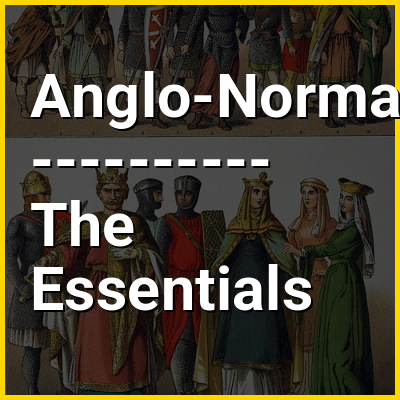
The Anglo-Normans (Norman: Anglo-Normaunds, Old English: Engel-Norðmandisca) were the medieval ruling class in the Kingdom of England following the Norman Conquest. They were primarily a combination of Normans, Bretons, Flemings, Frenchmen, Anglo-Saxons and Celtic Britons.

After the conquest the victorious Normans formed a ruling class in England, distinct from (although intermarrying with) the native Anglo-Saxon and Celtic populations. Over time, their language evolved from the continental Old Norman to the distinct Anglo-Norman language. Anglo-Normans quickly established control over all of England, as well as parts of Wales (the Welsh-Normans). After 1130, parts of southern and eastern Scotland came under Anglo-Norman rule (the Scots-Normans), in return for their support of David I's conquest. The Anglo-Norman invasion of Ireland from 1169 saw Anglo-Normans and Cambro-Normans conquer swaths of Ireland, becoming the Irish-Normans.
↓ Menu

>>>PUT SHARE BUTTONS HERE<<<

👉 Anglo-Normans in the context of Normans in Ireland

Norman Irish or Hiberno-Normans (Irish: Normánach; Old Irish: Gall 'foreigners') is a modern term for the descendants of Norman settlers who arrived during the Anglo-Norman invasion of Ireland in the 12th century. Most came from England and Wales. They are distinguished from the native Gaelic Irish, although some Normans eventually became Gaelicised. The Hiberno-Normans were a feudal aristocracy and merchant oligarchy which controlled the Lordship of Ireland. The Hiberno-Normans were associated with the Gregorian Reform of the Catholic Church in Ireland and contributed to the emergence of a Hiberno-English dialect.

Some of the most prominent Hiberno-Norman families were the Burkes (de Burghs), Butlers, and FitzGeralds. One of the most common Irish surnames, Walsh, derives from Welsh Normans who arrived in Ireland as part of this group. Some Norman families were said to have become "more Irish than the Irish themselves" by merging culturally and intermarrying with the Gaels.

↓ Explore More Topics
In this Dossier

Anglo-Normans in the context of Hamlet (place)

A hamlet is a human settlement that is smaller than a town or village. This is often simply an informal description of a smaller settlement or possibly a subdivision or satellite entity to a larger settlement. Sometimes, a hamlet is defined for official or administrative purposes.

The word and concept of a hamlet can be traced back to Norman England, where the Old French hamelet came to apply to small human settlements.

↑ Return to Menu

Anglo-Normans in the context of Cavendish family

The Cavendish (or de Cavendish) family (/ˈkævəndɪʃ/ KAV-ən-dish; /ˈkændɪʃ/ KAN-dish) is a British noble family, of Anglo-Norman origins (though with an Anglo-Saxon name, originally from a place-name in Suffolk). They rose to their highest prominence as Duke of Devonshire and Duke of Newcastle.

Leading branches have held high offices in English and then in British politics, especially since the Glorious Revolution of 1688 and the participation of William Cavendish (then Earl of Devonshire) in the Invitation to William, though the family appears to date to the Norman Conquest of England, with Cavendish being used (in one form or another) as a surname per se since the beginning of the 13th century. As a place-name, it is first recorded in 1086.

↑ Return to Menu

Anglo-Normans in the context of Scots law

Scots law (Scottish Gaelic: Lagh na h-Alba) is the legal system of Scotland. It is a hybrid or mixed legal system containing civil law and common law elements, that traces its roots to a number of different historical sources. Together with English law and Northern Irish law, it is one of the three legal systems of the United Kingdom. Scots law recognises four sources of law: legislation, legal precedent, specific academic writings, and custom. Legislation affecting Scotland and Scots law is passed by the Scottish Parliament on all areas of devolved responsibility, and the United Kingdom Parliament on reserved matters. Some legislation passed by the pre-1707 Parliament of Scotland is still also valid.

Early Scots law before the 12th century consisted of the different legal traditions of the various cultural groups who inhabited the country at the time, the Gaels in most of the country, with the Britons and Anglo-Saxons in some districts south of the Forth and with the Norse in the islands and north of the River Oykel. The introduction of feudalism from the 12th century and the expansion of the Kingdom of Scotland established the modern roots of Scots law, which was gradually influenced by other, especially Anglo-Norman and continental legal traditions. Although there was some indirect Roman law influence on Scots law, the direct influence of Roman law was slight up until around the 15th century. After this time, Roman law was often adopted in argument in court, in an adapted form, where there was no native Scots rule to settle a dispute; and Roman law was in this way partially received into Scots law.

↑ Return to Menu

Anglo-Normans in the context of Anglo-Norman language

Anglo-Norman (Norman: Anglo-Normaund; French: Anglo-normand), also known as Anglo-Norman French and part of the French of England (including Anglo-French) was a dialect of Old Norman that was used in England and, to a lesser extent, other places in Great Britain and Ireland during the Anglo-Norman period.

↑ Return to Menu

Anglo-Normans in the context of Scoto-Norman

The term Scoto-Norman (also Franco-Scottish or Franco-Gaelic) is used to describe people, families, institutions and archaeological artifacts that are partly Scottish (in some sense) and partly Anglo-Norman (in some sense), after the Norman Conquest. It is used to refer to people or things of Norman, Anglo-Norman, French or even Flemish or Breton origin, but who are associated with Scotland in the Middle Ages like Scoto-Anglo-Saxon. It is also used for any of these things where they exhibit syncretism between French or Anglo-French culture on the one hand and Gaelic culture on the other.

For instance, the Kings of Scotland between the reign of the David I and the Stewart period are often described as Scoto-Norman. A classic case of Gaelic and French cultural syncretism would be Lochlann, Lord of Galloway, who used both a Gaelic (Lochlann) and French name (Roland), and kept followers of both languages. Another example of a Scoto-Norman would be Robert the Bruce.

↑ Return to Menu

Anglo-Normans in the context of Anglo-Norman invasion of Ireland

The Anglo-Norman invasion of Ireland took place during the late 12th century, when Anglo-Normans and Cambro-Normans gradually conquered and acquired large swathes of land in Ireland over which the monarchs of England then claimed sovereignty. The Anglo-Normans claimed the invasion was sanctioned by the papal bull Laudabiliter. Gaelic Ireland then consisted of several kingdoms, with a High King claiming lordship over most of the other kings. The Anglo-Norman invasion was a watershed in Ireland's history, marking the beginning of almost 800 years of British presence in Ireland.

In May 1169, Anglo-Norman mercenaries landed in Ireland at the request of Diarmait mac Murchada (Dermot MacMurragh), the deposed King of Leinster, who sought their help in regaining his kingship. They achieved this within weeks and raided neighbouring kingdoms. This military intervention was sanctioned by King Henry II of England. In return, Diarmait had sworn loyalty to Henry and promised land to the Normans.

↑ Return to Menu

Anglo-Normans in the context of List of Latinised names

The Latinisation of names in the vernacular was a procedure deemed necessary for the sake of conformity by scribes and authors when incorporating references to such persons in Latin texts. The procedure was used in the era of the Roman Republic and Empire. It was used continuously by the Papacy from the earliest times, in religious tracts and in diplomatic and legal documents. It was used by the early European monasteries. Following the Norman Conquest of England, it was used by the Anglo-Norman clerics and scribes when drawing up charters. Its use was revived in the Renaissance when the new learning was written down in Latin and drew much on the work of Greek, Arabic and other non-Latin ancient authors. Contemporary Italian and European scholars also needed to be Latinised to be quoted in such treatises. The different eras produced their own styles and peculiarities. Sophistication was the trademark of the Renaissance Latinisers. The Anglo-Norman scribes on the other hand were not so learned, and often simply translated the vernacular name into Latin words based on similar sounds, without much effort to make sense or to avoid absurdity, which produced some strange results due to the complexity.

↑ Return to Menu