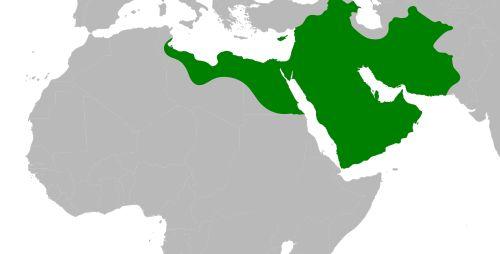
Materials covered in this trivia questions quiz
Study Hint 1
Question: In the context of the Rashidun Caliphate, the term 'rightly-guided' (Arabic: *rāshid*) specifically denotes what characteristic of this era according to Sunni Islamic belief?
Trivia Question Study Fact: The Rashidun Caliphate, spanning from 632 to 661 CE, comprises the reigns of Abu Bakr, Umar, Uthman, and Ali – the first four caliphs succeeding Muhammad. Within Sunni Islam, this period is regarded as a golden age of righteous governance, serving as a foundational example for future Islamic leadership and practice.
Trivia Question Explanation: Sunni Islam views the Rashidun Caliphate as a period of leadership that closely followed the teachings and example of Muhammad, establishing a standard for subsequent Islamic governance and religious practice.
Return to Question
Study Hint 2
Question: In the context of the Early Medieval Period, the Rashidun Caliphate is considered…
Trivia Question Study Fact: The Rashidun Caliphate emerged during the Early Medieval Period as a significant force, expanding its territory by conquering the southern portions of the Eastern Roman (Byzantine) Empire in the 7th century, marking a period of substantial geopolitical shift following the decline of the Western Roman Empire.
Trivia Question Explanation: During the 7th century, the Rashidun Caliphate expanded its influence by successfully conquering southern territories previously held by the Eastern Roman, or Byzantine, Empire, fundamentally altering the political landscape of the Early Medieval Period.
Return to Question
Study Hint 3
Question: In the context of the Arab–Byzantine wars, the initial territorial losses experienced by the Byzantine Empire during the 7th century were primarily a consequence of the expansion of which Caliphate?
Trivia Question Study Fact: During the 7th and 8th centuries, the expansion of the Rashidun Caliphate initiated a prolonged series of conflicts known as the Arab–Byzantine wars, resulting in the loss of significant Byzantine territory including Syria, Egypt, and parts of North Africa to the rapidly advancing Muslim armies. These early conquests established a fluctuating frontier that defined relations between the two powers for centuries.
Trivia Question Explanation: The Rashidun Caliphate launched the early Muslim conquests in the 630s, swiftly overrunning Byzantium’s southern provinces like Syria and Egypt, initiating the Arab–Byzantine wars and marking the first significant territorial losses for the Byzantines.
Return to Question
Study Hint 4
Question: In the context of Saudi Arabia’s history, the Rashidun Caliphate is considered…
Trivia Question Study Fact: The Arabian Peninsula, encompassing modern-day Saudi Arabia, served as the birthplace of Islam in the early 7th century with the prophet Muhammad uniting the region. Following Muhammad’s death, the resulting rapid expansion of Islamic rule led to the establishment of several powerful caliphates, including the Rashidun Caliphate, founded by dynasties originating from the region.
Trivia Question Explanation: Following the death of Muhammad, the Rashidun Caliphate emerged as one of the first major Islamic empires, and its founding dynasties originated from the area that now constitutes Saudi Arabia, rapidly expanding Islamic influence across a vast territory.
Return to Question
Study Hint 5
Question: In the context of Muslim states and dynasties, the Rashidun Caliphate is considered the first to be established by…
Trivia Question Study Fact: The Rashidun Caliphate emerged directly after the death of Muhammad in 632 CE, representing the first caliphate established by his successors and marking a significant expansion of the initial Islamic polity founded in Medina.
Trivia Question Explanation: The Rashidun Caliphate was founded not by Muhammad, but by the leaders who came directly after him, continuing the governance and expansion initiated during his lifetime.
Return to Question
Study Hint 6
Question: In the context of Caliphs, the Rashidun Caliphate is considered…
Trivia Question Study Fact: The institution of the caliphate emerged as a political and religious leadership role within Islam following the death of Muhammad, with the caliph considered his successor and a leader of the entire Muslim community (ummah). Historically, caliphates evolved into large, multi-ethnic empires, and several distinct caliphates have risen and fallen throughout Islamic history, including the Rashidun, Umayyad, Abbasid, and Ottoman Caliphates.
Trivia Question Explanation: The Rashidun Caliphate (632–661) is historically recognized as the first of the major caliphates, succeeding Muhammad and establishing a political structure for the expanding Muslim community.
Return to Question
Study Hint 7
Question: In the context of the Arab conquests, the unprecedented speed and extent of the Rashidun Caliphate’s territorial gains were significantly aided by what pre-existing condition affecting its neighboring empires?
Trivia Question Study Fact: The rapid expansion of the Rashidun Caliphate following Muhammad's establishment of the first Islamic state in Arabia led to the creation of a vast empire stretching from Iberia to India within a century. This expansion was facilitated by the weakened states of the Byzantine and Sasanian Empires, exhausted from prolonged conflict with each other, and by the ideological coherence and mobilization within the newly formed Islamic state.
Trivia Question Explanation: The Byzantine and Sasanian Empires had been engaged in prolonged and costly conflicts prior to the Arab conquests, leaving them militarily and economically weakened and vulnerable to the expansion of the Rashidun Caliphate.
Return to Question
Study Hint 8
Question: In the context of Late Antiquity, the Rashidun Caliphate is considered a consequence of which broader historical process?
Trivia Question Study Fact: The Rashidun Caliphate arose during Late Antiquity as a direct result of the political upheaval following the decline of the Sasanian Empire and the Western Roman Empire, coinciding with the Early Muslim conquests and a period of significant religious transformation with the canonization of the Quran.
Trivia Question Explanation: The Rashidun Caliphate emerged following the weakening of the Western Roman and Sasanian Empires, and its formation was directly linked to the Early Muslim conquests that occurred during this period of political transition.
Return to Question
Study Hint 9
Question: In the context of the Early Middle Ages, the Rashidun Caliphate is considered…
Trivia Question Study Fact: The Rashidun Caliphate emerged during the Early Middle Ages, a period marked by significant shifts in power following the decline of the Western Roman Empire. This expansion led to the Caliphate conquering the southern territories previously held by the Roman Empire, demonstrating a major geopolitical change within the context of early medieval Europe.
Trivia Question Explanation: The Rashidun Caliphate rose to prominence during the Early Middle Ages and significantly altered the political landscape by conquering the southern portions of the Roman Empire’s territory, as indicated by the expansion of power during this period.
Return to Question
Study Hint 10
Question: In the context of the House of Sasan, the Rashidun Caliphate is considered responsible for…
Trivia Question Study Fact: The Sasanian Empire, the last Persian dynasty to rule a significant portion of Western Asia, was conquered by the Rashidun Caliphate in 651 CE. Following this conquest, surviving members of the Sasanian imperial family sought refuge in the Tang Dynasty of China, where they were integrated into the Chinese imperial court and even adopted Chinese surnames like 'Li'.
Trivia Question Explanation: After the Rashidun Caliphate conquered the Sasanian Empire, the last Sasanian emperor Yazdegerd III was killed, prompting members of his family to flee eastward and seek asylum within the Tang Dynasty of China.
Return to Question