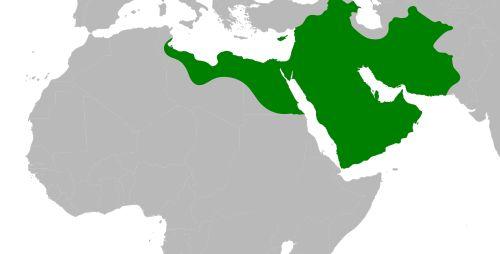
Materials covered in this trivia questions quiz
Study Hint 1
Question: In the context of Sunni Islam, the Rashidun Caliphate is considered…
Trivia Question Study Fact: The Rashidun Caliphate, spanning from 632 to 661 CE, comprises the reigns of Abu Bakr, Umar, Uthman, and Ali – the first four caliphs succeeding Muhammad. Within Sunni Islam, this period is regarded as a golden age of righteous governance, serving as a foundational example for future Islamic leadership and practice.
Trivia Question Explanation: Sunni Islam views the Rashidun Caliphate as a period of 'rightly-guided' rule, establishing a standard for subsequent caliphates and providing a religious precedent for leadership and practice.
Return to Question
Study Hint 2
Question: In the context of the first Islamic state established in Medina, the Rashidun Caliphate is considered…
Trivia Question Study Fact: Following the death of the Prophet Muhammad, the Rashidun Caliphate emerged as the first major Islamic state to succeed the initial political unity established in Medina. This caliphate, led by Muhammad’s companions – known as the Rightly Guided Caliphs – marked a period of significant territorial expansion and served as a foundational model for later Islamic empires like the Umayyad and Abbasid Caliphates.
Trivia Question Explanation: The Rashidun Caliphate was founded by Muhammad’s successors, the Rightly Guided Caliphs, after his death and distinguished itself through substantial territorial growth, building upon the foundation of the first Islamic state.
Return to Question
Study Hint 3
Question: In the context of Islamic state theories, the Rashidun Caliphate is considered…
Trivia Question Study Fact: The term 'Islamic state' historically refers to polities governed by sharia law, with early examples including the state established in Medina by Muhammad and the subsequent Arab caliphates like the Rashidun Caliphate and Umayyads. While rooted in classical Islamic governance, modern interpretations of the Islamic state also incorporate concepts developed in more recent times.
Trivia Question Explanation: The Rashidun Caliphate represents one of the first instances of governance based on Islamic principles following the prophet Muhammad, and is therefore cited as a historical example within the broader concept of the Islamic state.
Return to Question
Study Hint 4
Question: In the context of the Roman–Persian Wars, the Rashidun Caliphate is considered…
Trivia Question Study Fact: The prolonged Roman-Persian Wars, spanning nearly seven centuries, ultimately weakened both the Byzantine and Sasanian Empires, leaving them vulnerable to external forces. This vulnerability was exploited by the Rashidun Caliphate, whose subsequent conquests led to the collapse of the Sasanian Empire and a significant reduction in Byzantine territory.
Trivia Question Explanation: The lengthy conflicts between Rome and Persia exhausted both empires, creating an opportunity for the Rashidun Caliphate to launch successful conquests that ultimately led to the Sasanian Empire's fall and diminished the Byzantine Empire's holdings.
Return to Question
Study Hint 5
Question: In the context of the persecution of Zoroastrians, the Rashidun Caliphate’s governance differed from previous empires in its classification of Zoroastrians regarding religious status and legal protections?
Trivia Question Study Fact: Following the Rashidun Caliphate's conquest of the Sasanian Empire, Zoroastrians faced increasing discrimination and hardship. Unlike Jews and Christians, Zoroastrians were generally not considered 'People of the Book' within Islamic legal tradition, resulting in fewer protections and the imposition of taxes like the jizya. This treatment contributed to a significant emigration of Zoroastrians from Persia to India, where they found refuge and became known as the Parsi people.
Trivia Question Explanation: The source indicates that Zoroastrians were not generally classified as 'People of the Book' in the Quran, unlike Jews and Christians. This exclusion meant they lacked the legal protections and privileges granted to those groups, resulting in increased discrimination and contributing to their emigration from Persia.
Return to Question
Study Hint 6
Question: In the context of Zoroastrianism in India, the expansion of the Rashidun Caliphate is most directly associated with…
Trivia Question Study Fact: The expansion of the Rashidun Caliphate, specifically its annexation of the Sasanian Empire by 651 CE, triggered a significant migration of Zoroastrians from Persia to the Indian subcontinent, seeking refuge from religious persecution. This migration ultimately led to the establishment of the Parsi community in India, representing the oldest Zoroastrian population there.
Trivia Question Explanation: The Rashidun Caliphate’s conquest of the Sasanian Empire led to persecution of Zoroastrians, prompting many to seek refuge in India and establishing the Parsi community.
Return to Question
Study Hint 7
Question: In the context of Zoroastrianism in Iran, the Rashidun Caliphate is considered…
Trivia Question Study Fact: Prior to the 7th century CE, Zoroastrianism served as the state religion of Iran for over 1400 years, experiencing prominence under empires like the Achaemenids and Sasanians. However, the rise of the Rashidun Caliphate following the Arab conquest of Persia led to the decline of Zoroastrianism's official status and the beginning of its transformation into a religious minority within Iran.
Trivia Question Explanation: The Arab conquest of Persia, led by the Rashidun Caliphate, resulted in the fall of the Sasanian Empire and subsequently ended Zoroastrianism’s long-held position as the state religion of Iran, initiating a period of Islamization and religious shift.
Return to Question
Study Hint 8
Question: In the context of Al-Aqsa Mosque, the Rashidun Caliphate is most directly associated with what initial action regarding the site?
Trivia Question Study Fact: During the early years of the Rashidun Caliphate, the second caliph Umar initiated the construction of a small prayer hall, which eventually evolved into the Al-Aqsa Mosque, marking one of the earliest significant building projects undertaken during the caliphate's rule.
Trivia Question Explanation: Umar, the second caliph of the Rashidun Caliphate, is credited with building a small prayer hall that served as the foundation for the Al-Aqsa Mosque, representing an early Islamic presence and development at the site.
Return to Question
Study Hint 9
Question: In the context of Islamic history, the emergence of the Rashidun Caliphate directly followed what pivotal event?
Trivia Question Study Fact: Following the death of Muhammad in 632 CE, a period of disagreement arose among the Muslim community regarding his successor, ultimately leading to the establishment of the Rashidun Caliphate. This caliphate marked a significant transition in Islamic history, as it represented the first instance of a centralized political leadership within the rapidly expanding Muslim world, and oversaw the initial wave of Islamic conquests across the Arabian Peninsula and beyond.
Trivia Question Explanation: The source text explicitly states that disagreement over succession broke out immediately after Muhammad's death in 632 CE, leading to the formation of the Rashidun Caliphate.
Return to Question
Study Hint 10
Question: In the context of the Muslim conquest of the Maghreb, the Rashidun Caliphate’s prior military successes in the 640s AD directly enabled what subsequent action?
Trivia Question Study Fact: Following the Rashidun Caliphate's successful conquests of Mesopotamia, Syria, Egypt, and Armenia in the 640s AD, military expeditions were initiated westward into North Africa, marking the beginning of the Muslim conquest of the Maghreb and contributing to the broader spread of Islam.
Trivia Question Explanation: Having secured territories previously contested by the Byzantine and Sasanian Empires, the Rashidun Caliphate possessed the military capacity and momentum to extend its reach westward into North Africa, initiating the conquest of the Maghreb.
Return to Question