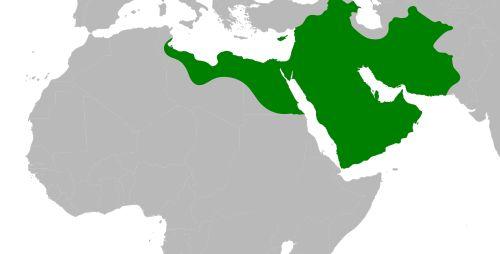
Materials covered in this trivia questions quiz
Study Hint 1
Question: In the context of Mu'awiya I, the Rashidun Caliphate is considered…
Trivia Question Study Fact: Mu'awiya I established the Umayyad Caliphate, marking a significant shift from the preceding Rashidun Caliphate. While the Rashidun caliphs were close companions of Muhammad, Mu'awiya was a later follower, having initially opposed Muhammad before converting after the conquest of Mecca.
Trivia Question Explanation: Mu'awiya I founded the Umayyad Caliphate after the death of the four Rashidun ('rightly-guided') caliphs, and unlike them, he was not an early companion of Muhammad.
Return to Question
Study Hint 2
Question: In the context of Fustat, the Rashidun Caliphate is considered responsible for…
Trivia Question Study Fact: Following the Muslim conquest of Egypt in 641 AD, the Rashidun Caliphate established Fustat as its first capital in Egypt, strategically located near present-day Old Cairo. This new city included the Mosque of Amr, marking the first mosque constructed in the region and serving as a central element of the early Islamic administration.
Trivia Question Explanation: After conquering Egypt, the Rashidun Caliphate, under Amr ibn al-As, founded Fustat as the initial capital, signifying the beginning of Muslim rule and administration in the region and establishing the first mosque there.
Return to Question
Study Hint 3
Question: In the context of the Arab conquest of Egypt, the Rashidun Caliphate is considered to have benefited from what preceding geopolitical circumstance?
Trivia Question Study Fact: The Rashidun Caliphate's conquest of Egypt, beginning in 639 AD, capitalized on the weakened state of the Byzantine Empire, which had recently regained control of Egypt after a decade of Sasanian Persian occupation. This prior period of instability significantly contributed to the Caliphate's success in ending seven centuries of Roman rule in the region.
Trivia Question Explanation: The Byzantine Empire had just concluded a decade-long struggle to regain Egypt from the Sasanian Empire, leaving its forces depleted and the region vulnerable to invasion by the Rashidun Caliphate.
Return to Question
Study Hint 4
Question: In the context of the First Crusade, the historical significance of the Rashidun Caliphate lies in its role as…
Trivia Question Study Fact: The First Crusade was initiated, in part, due to the request for military aid from the Byzantine Empire to counter the Seljuk Turks, but also stemmed from the desire to reclaim the Holy Land, which had been conquered from Christian control by the Rashidun Caliphate centuries prior. While Jerusalem had been under Muslim rule for hundreds of years by the 11th century, increasing disruptions to Christian pilgrims and the Byzantine Empire prompted the call to arms.
Trivia Question Explanation: The Rashidun Caliphate conquered the Holy Land in the 7th century, establishing Muslim control that persisted for centuries and ultimately motivated the First Crusade’s objective to reclaim the region for Christian rule.
Return to Question
Study Hint 5
Question: In the context of the Umayyad dynasty, Uthman ibn Affan is significant for being which of the following?
Trivia Question Study Fact: The Umayyad dynasty, while ultimately establishing a hereditary rule over the Islamic world, initially emerged from a clan within the Quraysh tribe who were notably opposed to the Prophet Muhammad before eventually embracing Islam. A member of this clan, Uthman ibn Affan, became the third caliph of the Rashidun Caliphate, demonstrating the Umayyads' early integration into the leadership of the nascent Islamic state.
Trivia Question Explanation: Uthman ibn Affan, a member of the Umayyad clan, held the position of the third caliph within the Rashidun Caliphate, ruling from 644 to 656, which demonstrates the Umayyads' early involvement in the leadership of the Islamic community.
Return to Question
Study Hint 6
Question: In the context of Bilad al-Sham, what was the initial administrative structure implemented by the Rashidun Caliphate to govern the newly conquered territories?
Trivia Question Study Fact: Following the Muslim conquest in the 7th century, Bilad al-Sham – encompassing much of the Levant – was initially organized by the Rashidun Caliphate into four military districts called *ajnad*. These districts, Dimashq, Hims, al-Urdunn, and Filastin, served as administrative divisions for governing the newly conquered territory. Later caliphates, including the Umayyad and Abbasid, continued to utilize this structure, though its significance diminished as centralized control weakened.
Trivia Question Explanation: After conquering the region, the Rashidun Caliphate divided Bilad al-Sham into four military districts – Dimashq, Hims, al-Urdunn, and Filastin – to facilitate administration and defense of the area.
Return to Question
Study Hint 7
Question: In the context of the First Fitna, the Rashidun Caliphate is considered to have experienced what significant outcome?
Trivia Question Study Fact: The First Fitna, a pivotal civil war within the early Islamic community, directly resulted in the collapse of the Rashidun Caliphate and paved the way for the subsequent establishment of the Umayyad Caliphate. This conflict arose from disputes over leadership following the assassination of Uthman and involved factions supporting Ali, Uthman (led by Mu'awiya and Aisha), and the Kharijites.
Trivia Question Explanation: The First Fitna was a civil war that directly led to the end of the Rashidun Caliphate, creating a power vacuum that was ultimately filled by the Umayyad Caliphate.
Return to Question
Study Hint 8
Question: In the context of the Roman–Persian wars, the Rashidun Caliphate is considered…
Trivia Question Study Fact: The prolonged Roman-Persian Wars, spanning nearly seven centuries, ultimately created a power vacuum that the Rashidun Caliphate exploited in the 7th century. Following the conclusion of these wars, both the Byzantine and Sasanian Empires were simultaneously vulnerable to the Rashidun's early Muslim conquests, leading to significant territorial losses for both.
Trivia Question Explanation: The extensive Roman-Persian Wars left both the Byzantine and Sasanian Empires exhausted and vulnerable, allowing the Rashidun Caliphate to launch successful conquests against them, ultimately contributing to the collapse of the Sasanian Empire and significantly reducing Byzantine territory.
Return to Question
Study Hint 9
Question: In the context of Kufa, the Rashidun Caliphate is considered to have utilized the city as…
Trivia Question Study Fact: Founded in 638 CE during the reign of Umar ibn Al-Khattab, Kufa served as a strategically important city within the Rashidun Caliphate, eventually becoming the final capital for Ali ibn Abi Talib, the fourth and last Rashidun Caliph. This placement highlights Kufa's role in the later years of the Caliphate's governance and influence.
Trivia Question Explanation: Kufa was established during the Rashidun Caliphate and later became the final capital for Ali ibn Abi Talib, demonstrating its significance in the Caliphate’s political landscape.
Return to Question
Study Hint 10
Question: In the context of the Companions of the Prophet, the foundational basis for the development of Islamic tradition – encompassing the Sunnah, Sharia, and Fiqh – primarily relied upon what?
Trivia Question Study Fact: The Sahabah, or Companions of Muhammad, were crucial to the development of Islamic tradition following his death in 632 CE. Their testimonies regarding Muhammad’s life, the revelations of the Quran, and significant historical events formed the foundation for hadith narration, the Sunnah (Muslim way of life), Sharia (code of conduct), and Islamic jurisprudence (Fiqh). This period of direct connection to Muhammad ended with the death of the last companion, Abu al-Tufayl, in 728 CE.
Trivia Question Explanation: The developing Islamic tradition was built upon the accounts of the Sahabah, carefully preserved and transmitted through trusted narrators known as *asānīd*, ensuring the accuracy and reliability of the information regarding Muhammad’s life and teachings.
Return to Question