Materials covered in this trivia questions quiz
Study Hint 1
Question: In the context of Japan, the Upper Paleolithic is considered to be the period associated with what significant historical event?
Trivia Question Study Fact: Archaeological evidence indicates that the Japanese archipelago was first inhabited during the Upper Paleolithic period, with the earliest known settlements dating back to approximately 36,000 BC. This signifies that human presence in Japan extends back tens of thousands of years, predating many other established civilizations.
Trivia Question Explanation: The earliest archaeological evidence of human activity in Japan dates back to the Upper Paleolithic period, around 36,000 BC, marking the initial settlement of the islands.
Return to Question
Study Hint 2
Question: In the context of the Paleolithic, the Upper Paleolithic is considered…
Trivia Question Study Fact: The Upper Paleolithic, spanning roughly 50,000 to 12,000 years ago, is distinguished by a significant increase in the diversity of artifacts found alongside remains of anatomically modern humans, coinciding with their expansion from Africa into Asia and Eurasia.
Trivia Question Explanation: The Upper Paleolithic is characterized by a marked increase in the variety of artifacts associated with modern human remains, and this period aligns with the expansion of *Homo sapiens* out of Africa and into new territories.
Return to Question
Study Hint 3
Question: In the context of the pre-Columbian era, the Upper Paleolithic period is most significantly associated with…
Trivia Question Study Fact: The pre-Columbian era in the Americas, spanning from the initial peopling of the continents during the Upper Paleolithic period to the arrival of Europeans in 1492, represents a vast history of Indigenous cultures and civilizations that developed independently for millennia before significant European contact. This period saw the rise of complex societies, agriculture, and monumental architecture, with some cultures leaving behind written records that were later impacted by European colonization.
Trivia Question Explanation: The pre-Columbian era is defined as beginning with the first human migrations to the Americas, which occurred during the Upper Paleolithic, marking the start of Indigenous presence on the continents.
Return to Question
Study Hint 4
Question: In the context of Western art history, Upper Paleolithic art is primarily characterized by…
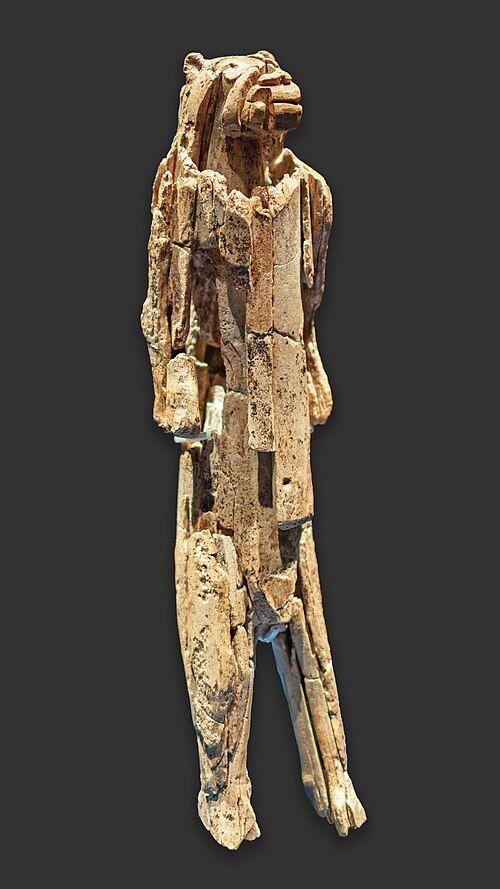
Trivia Question Study Fact: Within the broader history of Western art, the earliest known artistic expressions in Europe originate in the Upper Paleolithic period, manifesting as portable rock art, cave paintings, and petroglyphs. This prehistoric art predates written records and spans the time between the Paleolithic and Iron Ages, representing the initial phase of visual art on the continent.
Trivia Question Explanation: The earliest forms of visual art in Europe, dating to the Upper Paleolithic period, were not permanent structures but rather portable artworks like rock carvings and paintings found within caves, representing a foundational stage in the development of Western artistic traditions.
Return to Question
Study Hint 5
Question: In the context of England, the Upper Paleolithic is considered significant primarily for what reason?
Trivia Question Study Fact: Archaeological evidence indicates that modern humans first inhabited the area now known as England during the Upper Paleolithic period, demonstrating early human presence on the island long before the arrival of the Angles, the Germanic tribe from whom England derives its name.
Trivia Question Explanation: The provided text explicitly states that the area now called England was first inhabited by modern humans during the Upper Paleolithic, establishing it as a period of initial human presence.
Return to Question
Study Hint 6
Question: In the context of the History of Music, the Upper Paleolithic period is considered significant primarily because it marks the earliest confirmed evidence of:
Trivia Question Study Fact: Archaeological evidence, specifically the discovery of bone flutes, firmly dates the presence of music in prehistoric cultures to approximately 38,000 BC, a period within the Upper Paleolithic era. While earlier traces might exist from the Middle Paleolithic, our current understanding of music in prehistoric societies is limited to these rudimentary instruments and percussion, demonstrating its existence within groups like the Xia dynasty and the Indus Valley civilisation.
Trivia Question Explanation: The provided text explicitly states that bone flutes, discovered in archaeological sites, provide the earliest firm dating of music to the Upper Paleolithic period, around 38,000 BC. This demonstrates the presence of musical instruments during that time.
Return to Question
Study Hint 7
Question: In the context of the Mesolithic, Upper Paleolithic hunting practices are considered to have undergone what primary change?
Trivia Question Study Fact: The Mesolithic period, situated between the Upper Paleolithic and the Neolithic, represents a transitional phase for hunter-gatherer cultures in Eurasia and North Africa. This era saw a shift from the large-game hunting characteristic of the Paleolithic to a more diverse hunter-gatherer lifestyle, accompanied by the development of smaller, more refined stone tools.
Trivia Question Explanation: The Mesolithic period is characterized by a move away from the specialized large-game hunting of the Paleolithic towards a broader range of food sources and the creation of smaller, more sophisticated stone tools.
Return to Question
Study Hint 8
Question: In the context of the Middle Paleolithic, the Upper Paleolithic is considered…
Trivia Question Study Fact: The Upper Paleolithic is chronologically positioned as the period that directly followed the Middle Paleolithic across Europe, Africa, and Asia, beginning approximately between 50,000 and 40,000 years ago. This transition marks a significant shift in the Old Stone Age, succeeding a period that spanned from roughly 300,000 to 50,000 years ago.
Trivia Question Explanation: The Upper Paleolithic directly followed the Middle Paleolithic, beginning between 50,000 and 40,000 years ago, representing a later stage in the Old Stone Age.
Return to Question
Study Hint 9
Question: In the context of the peopling of the Americas, Upper Paleolithic populations are believed to have initially accessed the continent through what geographical feature?
Trivia Question Study Fact: The peopling of the Americas is understood to have begun with Paleo-Indians, hunter-gatherers from North Asia, who migrated across the Beringia land bridge during the Last Glacial Maximum. This migration occurred when sea levels were lower, exposing a land connection between Siberia and Alaska, and these early populations followed megafauna herds southward, eventually populating both North and South America.
Trivia Question Explanation: During the Last Glacial Maximum, a land bridge known as Beringia formed between Siberia and Alaska due to lowered sea levels, allowing Paleo-Indians to migrate from North Asia into North America and begin the peopling of the Americas.
Return to Question
Study Hint 10
Question: In the context of African archaeology, Upper Paleolithic classifications, commonly used in Europe, are instead considered…
Trivia Question Study Fact: While European and North African archaeological periods are commonly categorized into Lower, Middle, and Upper Paleolithic stages, archaeology in Sub-Saharan Africa utilizes a different classification system, dividing the Paleolithic into the Early, Middle, and Later Stone Age. This reflects distinct regional developments and archaeological findings.
Trivia Question Explanation: Sub-Saharan African archaeological classifications diverge from the European model, replacing the Lower, Middle, and Upper Paleolithic with the Early, Middle, and Later Stone Age to better reflect the region’s unique archaeological record.
Return to Question