Materials covered in this trivia questions quiz
Study Hint 1
Question: In the context of the Epipalaeolithic Near East, Upper Paleolithic tool technology is considered…
Trivia Question Study Fact: Following the Upper Paleolithic period in the Near East, the Epipaleolithic saw a shift towards more numerous and better-preserved archaeological sites, coinciding with a warming climate and a gradual increase in population and economic activity. A key characteristic of this period was the use of microliths – small, refined stone blades incorporated into composite tools.
Trivia Question Explanation: The Epipalaeolithic is distinguished by more numerous and better-preserved sites than the Upper Paleolithic, and its characteristic microliths represent a more sophisticated stone tool technology.
Return to Question
Study Hint 2
Question: In the context of Pre-Columbian America, the Upper Paleolithic is considered…
Trivia Question Study Fact: The pre-Columbian era in the Americas, spanning from the initial peopling of the continents during the Upper Paleolithic period to the arrival of Europeans in 1492, represents a vast history of Indigenous cultures developing complex societies, agriculture, and monumental architecture before significant European contact. This period saw the rise and, in some cases, decline of civilizations, with knowledge preserved through archaeological research, oral histories, and surviving written records like those of the Maya.
Trivia Question Explanation: The pre-Columbian era is defined as beginning with the initial peopling of the Americas, which occurred during the Upper Paleolithic period, marking the start of Indigenous history on the continents before European contact.
Return to Question
Study Hint 3
Question: In the context of Cro-Magnon, Upper Paleolithic archaeological significance is most directly linked to…
Trivia Question Study Fact: The Cro-Magnon rock shelter in France is a significant Upper Paleolithic site because it yielded some of the earliest discovered remains of anatomically modern humans, dating back approximately 28,000 years. This discovery helped establish a clearer understanding of early human presence and behavior in Europe during this period, and the term 'Cro-Magnon' became associated with early modern humans.
Trivia Question Explanation: The Cro-Magnon site is renowned for being the location where remains of early modern humans were first identified, providing crucial evidence for understanding human evolution and migration patterns during the Upper Paleolithic period.
Return to Question
Study Hint 4
Question: In the context of the Initial Upper Paleolithic, what significant demographic event characterized this period?
Trivia Question Study Fact: The Initial Upper Paleolithic represents the earliest phase of the Upper Paleolithic period, a time marked by the expansion of modern human populations across Eurasia. This period is generally dated between approximately 50,000 and 40,000 years Before Present (BP).
Trivia Question Explanation: The Initial Upper Paleolithic is specifically defined by the expansion of modern human populations across the continent of Eurasia, marking a key moment in human history and migration.
Return to Question
Study Hint 5
Question: In the context of the Aurignacian, the Upper Paleolithic is considered to be characterized by…
Trivia Question Study Fact: The Aurignacian archaeological industry marks the arrival of Early European Modern Humans (EEMH) in Europe, representing the first known culture created by *Homo sapiens* after their migration from the Levant, and succeeding the Mousterian culture previously associated with Neanderthals. It existed between roughly 43,000 and 26,000 years ago.
Trivia Question Explanation: The Aurignacian industry is specifically associated with the arrival and cultural expression of Early European Modern Humans, making it the first identifiable culture created by *Homo sapiens* in Europe.
Return to Question
Study Hint 6
Question: In the context of the Epigravettian, the Upper Paleolithic is considered to have experienced a notable regional variation as…
Trivia Question Study Fact: The Epigravettian culture represents a continuation of the Gravettian archaeological industry in Europe following the Last Glacial Maximum, specifically emerging around 21,000 BP. While the Solutrean culture replaced the Gravettian in much of France and Spain during this period, the Epigravettian developed primarily in Italy, demonstrating a regional divergence within the broader Upper Paleolithic.
Trivia Question Explanation: Following the Last Glacial Maximum, the Epigravettian developed as a continuation of the Gravettian tradition, particularly in Italy, while other regions like France and Spain saw the rise of the Solutrean culture, indicating a divergence in Upper Paleolithic cultural expression.
Return to Question
Study Hint 7
Question: In the context of the Solutrean industry, Upper Paleolithic flint tool-making is considered to be…
Trivia Question Study Fact: The Solutrean industry represents a distinct flint tool-making style within the Upper Paleolithic period, specifically appearing during the Final Gravettian between approximately 22,000 and 17,000 years Before Present, and is geographically associated with regions like France, Spain, and Portugal.
Trivia Question Explanation: The Solutrean industry is characterized as a sophisticated flint tool-making technique that emerged during a specific phase of the Upper Paleolithic known as the Final Gravettian, placing it within a defined timeframe and archaeological context.
Return to Question
Study Hint 8
Question: In the context of Magdalenian cultures, Upper Paleolithic societies are primarily distinguished by their reliance on what subsistence strategy?
Trivia Question Study Fact: The Magdalenian culture, a later phase of the Upper Paleolithic and Mesolithic periods in Western Europe, is characterized by a lifestyle heavily reliant on hunting large mammals like reindeer, red deer, and wild horses, particularly during the final stages of the Last Glacial Period. This is evidenced by extensive faunal remains found at Magdalenian archaeological sites.
Trivia Question Explanation: Magdalenian sites contain substantial evidence of hunting large mammals, including reindeer, red deer, and wild horses, indicating this was a primary means of survival for these Upper Paleolithic peoples.
Return to Question
Study Hint 9
Question: In the context of the Mesolithic, the Upper Paleolithic is considered…
Trivia Question Study Fact: The Mesolithic period, situated between the Upper Paleolithic and the Neolithic, represents a transitional phase for hunter-gatherer cultures in Eurasia and North Africa. This era saw a shift from the large-game hunting characteristic of the Paleolithic to a more diverse hunter-gatherer lifestyle, accompanied by the development of smaller, more refined stone tools.
Trivia Question Explanation: The Mesolithic period is defined as the archaeological period between the Upper Paleolithic and the Neolithic, and it is characterized by a shift away from the large-game hunting practices common during the Paleolithic.
Return to Question
Study Hint 10
Question: In the context of prehistoric religion, the emergence of demonstrable religious practices like shamanism is most closely associated with which Paleolithic period?
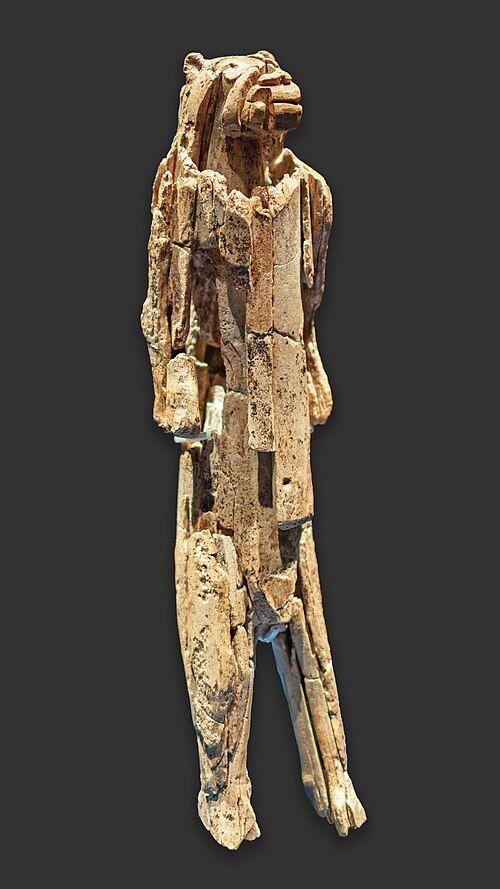
Trivia Question Study Fact: While evidence suggests potential ritualistic behavior as early as the Middle Paleolithic, definitive religious practices, including those potentially involving shamanic leaders and trance states, demonstrably emerged with the Upper Paleolithic period around 50,000 years ago, coinciding with a flourishing of artistic expression like cave paintings and Venus figurines.
Trivia Question Explanation: The development of identifiable religious practices, including potential shamanism, is specifically linked to the Upper Paleolithic period beginning around 50,000 years ago, as evidenced by the increased complexity of artistic expression during that time.
Return to Question