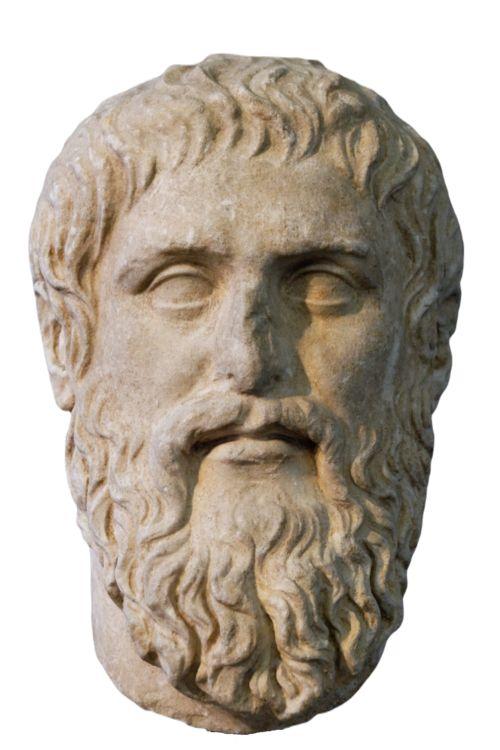
Materials covered in this trivia questions quiz
Study Hint 1
Question: In the context of Classical Athens, Plato is considered a significant figure primarily due to his association with what key institution?
Trivia Question Study Fact: During the classical period of ancient Greece, Athens emerged as a prominent center for intellectual pursuits, including philosophy. This environment fostered the establishment of Plato's Academy and Aristotle's Lyceum, institutions dedicated to philosophical research and education, alongside being the birthplace of Socrates.
Trivia Question Explanation: Plato founded the Academy in Athens, which became a central hub for philosophical thought and education during the classical period, solidifying his legacy within the city’s intellectual landscape.
Return to Question
Study Hint 2
Question: In the context of Tragedy, Plato is considered a figure primarily associated with which aspect of the genre?
Trivia Question Study Fact: Throughout history, tragedy has served as a significant subject of analysis and critique for numerous philosophers, including Plato. This demonstrates that the genre's exploration of human suffering and sorrowful events has consistently prompted philosophical inquiry and debate across various cultural and historical periods.
Trivia Question Explanation: The provided text explicitly states that a long line of philosophers, including Plato, have analyzed, speculated upon, and criticized the genre of tragedy, indicating his involvement in its philosophical examination rather than its performance, creation, or specific narrative elements.
Return to Question
Study Hint 3
Question: In the context of ancient Greek philosophy, Plato is most notably recognized as the founder of what enduring institution?
Trivia Question Study Fact: Plato, a central figure in ancient Greek philosophy, established the Platonic Academy in Athens, a school dedicated to the study and development of his philosophical theories, collectively known as Platonism. This academy significantly shaped the course of Western philosophical thought and served as a hub for intellectual inquiry for centuries.
Trivia Question Explanation: Plato founded the Platonic Academy in Athens as a center for philosophical research and teaching, where his ideas and the principles of Platonism were cultivated and disseminated.
Return to Question
Study Hint 4
Question: In the context of the Platonic Academy, which prominent philosopher spent twenty years as a student there before founding his own institution?
Trivia Question Study Fact: Plato established the Academy around 387 BC in Athens, which served as a center for philosophical learning and skepticism for centuries. Notably, Aristotle was a student at the Academy for two decades before establishing his own school, the Lyceum. The original Academy ceased operation in 83 BC, but experienced a revival in 410 AD focused on Neoplatonism before its final closure in 529 AD.
Trivia Question Explanation: Aristotle studied at the Academy for twenty years, from 367 BC to 347 BC, before departing to establish his own school, the Lyceum, demonstrating the Academy’s role in fostering future philosophical leaders.
Return to Question
Study Hint 5
Question: In the context of Aristotle, Plato’s Academy is considered to be the place where Aristotle…
Trivia Question Study Fact: Aristotle was a student of Plato's Academy for twenty years, beginning around the age of eighteen, before departing after Plato's death to pursue tutoring Alexander the Great and establish his own school, the Peripatetic school, at the Lyceum. This transition marked a shift in philosophical focus and the beginning of the Aristotelian tradition.
Trivia Question Explanation: Aristotle joined Plato’s Academy at eighteen and remained there for twenty years, receiving his philosophical education before embarking on his own path and establishing his own school.
Return to Question
Study Hint 6
Question: In the context of the Lyceum, which deity was the temple originally dedicated to before becoming associated with philosophical instruction?
Trivia Question Study Fact: The Lyceum, a temple in Athens dedicated to Apollo Lyceus, gained prominence as the location of Aristotle's Peripatetic school of philosophy, established in 334 BC. Though Aristotle left Athens in 323 BC, the institution persisted under various leaders until its destruction by Roman general Sulla in 86 BC.
Trivia Question Explanation: The Lyceum's initial purpose was as a temple, and the source text explicitly states it was dedicated to Apollo Lyceus, also known as Apollo the wolf-god, prior to its association with Aristotle's philosophical school.
Return to Question
Study Hint 7
Question: In the context of Socrates, Plato is considered most significant for what contribution?
Trivia Question Study Fact: While Socrates authored no written works himself, his philosophical ideas and methods are primarily known through the writings of his student, Plato. Plato's dialogues, which are among the most extensive surviving accounts of Socrates, explore philosophical areas like epistemology and ethics, and are instrumental in shaping our understanding of the Socratic method and Socratic irony.
Trivia Question Explanation: The provided text explicitly states that Plato's dialogues are among the most comprehensive accounts of Socrates and are the primary way we know of his philosophical ideas, as Socrates himself wrote nothing.
Return to Question
Study Hint 8
Question: In the context of Aristophanes’ comedic works, Plato considered which play particularly damaging due to its portrayal of a prominent Athenian figure?
Trivia Question Study Fact: Plato believed that Aristophanes' play *The Clouds* unfairly portrayed Socrates, contributing to the philosopher's trial and execution. While other satirical playwrights also mocked Socrates, Plato specifically criticized Aristophanes' depiction as slanderous.
Trivia Question Explanation: According to the text, Plato singled out Aristophanes’ play *The Clouds* as slanderous, arguing that it contributed to the trial and death of Socrates. This highlights Plato’s view of the play’s negative impact on public perception of Socrates.
Return to Question
Study Hint 9
Question: In the context of *khôra*, Plato considered what role it played in the relationship between the Theory of Forms and the sensible realm?
Trivia Question Study Fact: In Plato's philosophy, *khôra*, often translated as 'space' or 'receptacle,' functions as an intermediary between the intelligible realm of Forms and the sensible world. It is described as a formless interval, neither being nor non-being, that receives and shapes the Forms, allowing them to be 'copied' into the transient forms we perceive.
Trivia Question Explanation: Plato's *Timaeus* describes *khôra* as a space between being and non-being, essential for the Forms to be received and then manifested in the physical world, acting as a kind of matrix or womb.
Return to Question
Study Hint 10
Question: In the context of Sophia, Plato is considered instrumental in shaping the term’s meaning by associating it with what core philosophical concept?
Trivia Question Study Fact: Within Hellenistic philosophy and Platonism, the concept of Sophia – originally signifying cleverness or skill – evolved to closely resemble *phronesis* (practical wisdom) largely due to its association with Plato’s term *philosophía* (love of wisdom). This shift in meaning demonstrates how Plato’s philosophical inquiries influenced the understanding of wisdom itself.
Trivia Question Explanation: The development of Sophia’s meaning, moving beyond simple cleverness, was significantly influenced by Plato’s use of *philosophía*, which translates to ‘love of wisdom,’ thereby linking the concept directly to his philosophical approach.
Return to Question