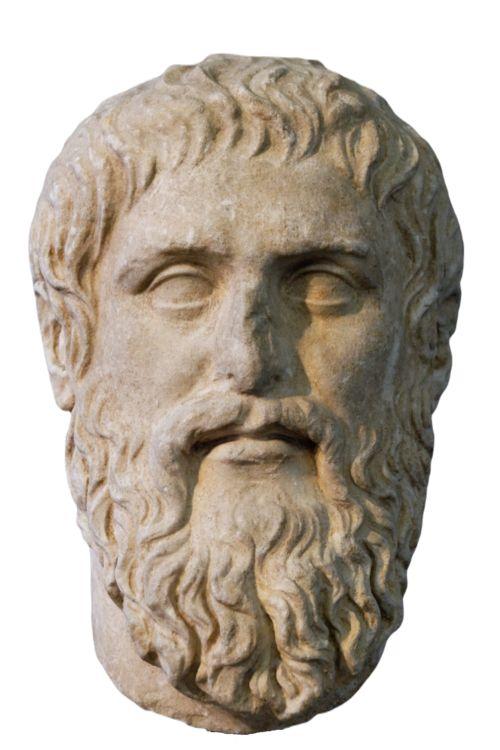
Materials covered in this trivia questions quiz
Study Hint 1
Question: In the context of ancient Greek philosophy, Plato and Aristotle employed the term *rhema* to specifically signify…
Trivia Question Study Fact: Both Plato and Aristotle utilized the Greek term *rhema* – meaning an utterance or something said – not to denote the act of speaking itself, but as a philosophical concept representing a complete proposition or sentence expressing a thought.
Trivia Question Explanation: Within philosophical discourse, *rhema* was adopted by Plato and Aristotle to move beyond simply acknowledging speech and instead focus on the meaning conveyed through a fully formed statement.
Return to Question
Study Hint 2
Question: In the context of lexical innovation, Plato’s influence on the English language is primarily demonstrated through…
Trivia Question Study Fact: Lexical innovation, the process of introducing new words or meanings into a language, often occurs when translating philosophical concepts from one language to another. The English language, for example, gained many new terms through translations of works by philosophers like Plato, originally written in Ancient Greek.
Trivia Question Explanation: The expansion of the English lexicon has been significantly impacted by the translation of philosophical works, including those of Plato, which introduced new concepts and terminology from Ancient Greek.
Return to Question
Study Hint 3
Question: In the context of Essentialism, Plato, via Socrates, questioned the idea of universal essences primarily because of what potential consequence?
Trivia Question Study Fact: Within the framework of Essentialism, Plato, through the character of Socrates in the *Parmenides* dialogue, raised concerns about the logical implications of positing a universal essence for every kind of thing, suggesting that if every quality has an essence, then even trivial categories like 'hair' or 'dirt' would require their own distinct, fundamental forms.
Trivia Question Explanation: Plato, through Socrates, argued that if everything possesses an essence, then even trivial things like 'hair' or 'dirt' would require their own fundamental forms, highlighting a potential absurdity in the concept of universal essences.
Return to Question
Study Hint 4
Question: In the context of the trivium, Plato’s dialogues are notable for demonstrating the importance of…
Trivia Question Study Fact: The foundational subjects of the trivium – grammar, logic, and rhetoric – were considered essential components of a classical education, a concept detailed within the philosophical discussions presented in Plato's dialogues, establishing a precedent for structured learning in ancient Greece.
Trivia Question Explanation: Plato’s dialogues illustrate the significance of grammar, logic, and rhetoric as fundamental subjects within a classical education, which later became the basis for the trivium during the Middle Ages.
Return to Question
Study Hint 5
Question: In the context of *Protagoras*, Plato frames a central philosophical debate as taking place within a specific domestic setting, utilizing this location to facilitate the discussion between key figures. Where does the primary argument between Socrates and Protagoras unfold?
Trivia Question Study Fact: Plato's dialogue *Protagoras* centers around a debate between Socrates and Protagoras, a renowned sophist, exploring fundamental philosophical questions. This conversation unfolds at the home of Callias, who is hosting Protagoras during his visit, and delves into topics like whether virtue can be taught and the connection between pleasure and goodness.
Trivia Question Explanation: The dialogue is explicitly set at the residence of Callias, who extends hospitality to Protagoras while he is visiting Athens, providing the physical space for the philosophical exchange between Socrates and Protagoras.
Return to Question
Study Hint 6
Question: In the context of Christian philosophy, Plato’s influence is considered…
Trivia Question Study Fact: While some scholars argue Christian philosophy lacks originality and simply reinterprets existing ideas, Catholic thinkers like Philotheus Boehner and Étienne Gilson contend that it represents a unique development, building upon but not merely repeating the work of ancient Greek philosophers such as Plato and Aristotle, allowing Greek culture to persist in a transformed way.
Trivia Question Explanation: Catholic scholars like Philotheus Boehner and Étienne Gilson argue that Christian philosophy owes a debt to Greek science, specifically the knowledge developed by Plato and Aristotle, and that Greek culture survives within Christian philosophy in an organic form.
Return to Question
Study Hint 7
Question: In the context of *The Passions of the Soul*, Plato is considered…
Trivia Question Study Fact: René Descartes's *The Passions of the Soul* builds upon a philosophical tradition examining 'the passions' – experiences akin to modern emotions – that dates back to Plato, seeking to understand their influence on rational beings and reconcile them with reason.
Trivia Question Explanation: Descartes’s work acknowledges a historical lineage of philosophical debate concerning passions, tracing its origins back to the time of Plato and other early thinkers who first explored these experiences.
Return to Question
Study Hint 8
Question: In the context of reincarnation, Plato and other ancient Greek thinkers conceptualized the soul’s journey after death as what specific process?
Trivia Question Study Fact: The concept of reincarnation, understood as the soul's continuation after death into a new body, was explored by several ancient Greek philosophers, including Plato, who referred to it as *metempsychosis* – the transmigration of the soul. This belief suggests an immortal soul doesn't cease to exist with the physical body but rather moves on to inhabit another form.
Trivia Question Explanation: Plato, along with Pythagoras and Socrates, believed in *metempsychosis*, a term specifically used to describe the migration of the soul from one body to another after death, representing their understanding of reincarnation.
Return to Question
Study Hint 9
Question: In the context of *The School of Athens*, Raphael subtly honored contemporary artists by portraying them as figures from classical antiquity. Which artist is widely believed to be represented by Plato in the fresco?
Trivia Question Study Fact: Raphael's fresco, *The School of Athens*, prominently features Plato and Aristotle at its center, but also includes portraits of contemporary Italian artists believed to be represented as figures from antiquity; specifically, Leonardo da Vinci is thought to be depicted as Plato, and Michelangelo as Heraclitus.
Trivia Question Explanation: Raphael included portraits of his contemporaries within the fresco, and Leonardo da Vinci is commonly identified as the figure representing Plato due to his resemblance to Plato's traditional depiction and the artistic context of the Renaissance.
Return to Question
Study Hint 10
Question: In the context of *Memorabilia*, how does Xenophon’s approach to defending Socrates differ from that found in Plato’s *Apology*?
Trivia Question Study Fact: Xenophon's *Memorabilia* differs from both his own *Apology of Socrates to the Jury* and Plato's *Apology* in its approach to defending Socrates; while the other two works depict Socrates defending himself directly to a jury, *Memorabilia* offers Xenophon's own retrospective defense, illustrated through anecdotes and his personal interpretations of Socrates's dialogues and actions.
Trivia Question Explanation: The *Memorabilia* is described as Xenophon’s own defense of Socrates, offering examples of conversations and commentary, unlike Plato’s *Apology*, which presents Socrates’s direct defense to the jury during his trial.
Return to Question