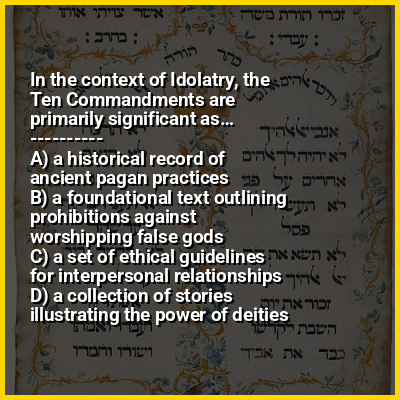
The Ten Commandments (Biblical Hebrew: עֲשֶׂרֶת הַדְּבָרִים, romanized: ʿĂśéreṯ had-Dəḇārîm, lit. 'The Ten Words'), or the Decalogue (from Latin decalogus, from Ancient Greek δεκάλογος, dekálogos, lit. 'ten words'), are religious and ethical directives, structured as a covenant document, that, according to the Hebrew Bible, were given by God to Moses. The text of the Ten Commandments appears in three markedly distinct versions in the Hebrew Bible: at Exodus 20:1–17, Deuteronomy 5:6–21, and the "Ritual Decalogue" of Exodus 34:11–26.
The biblical narrative describes how God revealed the Ten Commandments to the Israelites at Mount Sinai amidst thunder and fire, gave Moses two stone tablets inscribed with the law, which he later broke in anger after witnessing the worship of a golden calf, and then received a second set of tablets to be placed in the Ark of the Covenant. Scholars have proposed a range of dates and contexts for the origins of the Decalogue. Interpretations of its content vary widely, reflecting debates over its legal, political, and theological development, its relation to ancient treaty forms, and differing views on authorship and emphasis on ritual versus ethics.