Sanitation worker in the context of "Blue-collar worker"

Play Trivia Questions online!

or

Skip to study material about Sanitation worker in the context of "Blue-collar worker"

Ad spacer

⭐ Core Definition: Sanitation worker

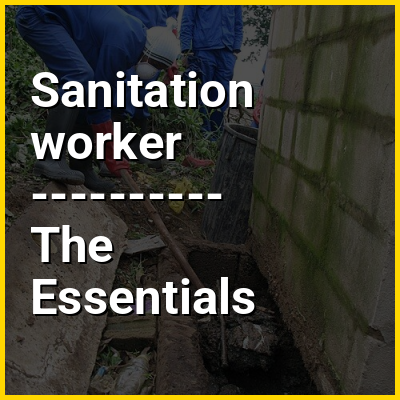
A sanitation worker (or sanitary worker) is a person responsible for cleaning, maintaining, operating, or emptying the equipment or technology at any step of the sanitation chain. This is the definition used in the narrower sense within the WASH sector. More broadly speaking, sanitation workers may also be involved in cleaning streets, parks, public spaces, sewers, stormwater drains, and public toilets. Another definition is: "The moment an individual's waste is outsourced to another, it becomes sanitation work." Some organizations use the term specifically for municipal solid waste collectors, whereas others exclude the workers involved in management of solid waste (rubbish, trash) sector from its definition.

Sanitation workers are essential in maintaining safe sanitation services in homes, schools, hospitals, and other settings and protecting public health but face many health risks in doing so, including from exposure to a wide range of biological and chemical agents. Additionally, they may be at risk of injury from heavy labor, poor and prolonged postures and positions and confined spaces, as well as psychosocial stress. These risks are exacerbated under conditions of poverty, illness, poor nutrition, poor housing, child labor, migration, drug and alcohol abuse, discrimination, social stigma and societal neglect. In many developing countries, sanitation workers are "more vulnerable due to unregulated or unenforced environmental and labor protections, and lack of occupational health and safety".
↓ Menu

>>>PUT SHARE BUTTONS HERE<<<

👉 Sanitation worker in the context of Blue-collar worker

A blue-collar worker is a person who performs manual labor or skilled trades. Blue-collar work may involve skilled or unskilled labor. The type of work may involve manufacturing, warehousing, mining, carpentry, electrical work, custodial work, agriculture, logging, landscaping, food processing, waste collection and disposal, construction, shipping, and many other types of physical work. Blue-collar work often involves something being physically built or maintained. In social status, blue-collar workers generally belong to the working class.

In contrast, the white-collar worker typically performs work in an office environment and may involve sitting at a computer or desk. A third type of work is a service worker (pink collar) whose labor is related to customer interaction, entertainment, sales or other service-oriented work — particularly those service jobs that have been traditionally considered to be women's work, such as secretaries, nurses, teachers, early childhood educators, florists, etc. Many occupations blend blue, white, or pink-collar work and are often paid hourly wage-labor, although some professionals may be paid by the project or salaried. There are a wide range of payscales for such work depending upon field of specialty and experience.

↓ Explore More Topics
In this Dossier

Sanitation worker in the context of Sanitation

Sanitation refers to public health conditions related to clean drinking water and treatment and disposal of human excreta and sewage. Preventing human contact with feces is part of sanitation, as is hand washing with soap. Sanitation systems aim to protect human health by providing a clean environment that will stop the transmission of disease, especially through the fecal–oral route. For example, diarrhea, a main cause of malnutrition and stunted growth in children, can be reduced through adequate sanitation. There are many other diseases which are easily transmitted in communities that have low levels of sanitation, such as ascariasis (a type of intestinal worm infection or helminthiasis), cholera, hepatitis, polio, schistosomiasis, and trachoma, to name just a few.

A range of sanitation technologies and approaches exists. Some examples are community-led total sanitation, container-based sanitation, ecological sanitation, emergency sanitation, environmental sanitation, onsite sanitation and sustainable sanitation. A sanitation system includes the capture, storage, transport, treatment and disposal or reuse of human excreta and wastewater. Reuse activities within the sanitation system may focus on the nutrients, water, energy or organic matter contained in excreta and wastewater. This is referred to as the "sanitation value chain" or "sanitation economy". The people responsible for cleaning, maintaining, operating, or emptying a sanitation technology at any step of the sanitation chain are called "sanitation workers".

↑ Return to Menu

Sanitation worker in the context of Manual scavenging

Manual scavenging is a term used mainly in India for "manually cleaning, carrying, disposing of, or otherwise handling, human excreta in an insanitary latrine or in an open drain or sewer or in a septic tank or a pit". Manual scavengers usually use hand tools such as buckets, brooms and shovels. The workers have to move the excreta, using brooms and tin plates, into baskets, which they carry to disposal locations sometimes several kilometers away. The practice of employing human labour for cleaning of sewers and septic tanks is also prevalent in Bangladesh and Pakistan. These sanitation workers, called "manual scavengers", rarely have any personal protective equipment. The work is regarded as a dehumanizing practice.

The occupation of sanitation work is intrinsically linked with caste in India. All kinds of cleaning are considered lowly and are assigned to people from the lowest rung of the social hierarchy. In the caste-based society, it is mainly the Dalits who work as sanitation workers - as manual scavengers, cleaners of drains, as garbage collectors and sweepers of roads. It was estimated in 2019 that between 40 and 60 percent of the six million households of Dalit sub-castes are engaged in sanitation work. The most common Dalit caste performing sanitation work is the Valmiki (also Balmiki) caste.

↑ Return to Menu