Pharmacokinetics in the context of "Pharmacodynamics"

Play Trivia Questions online!

or

Skip to study material about Pharmacokinetics in the context of "Pharmacodynamics"


⭐ Core Definition: Pharmacokinetics

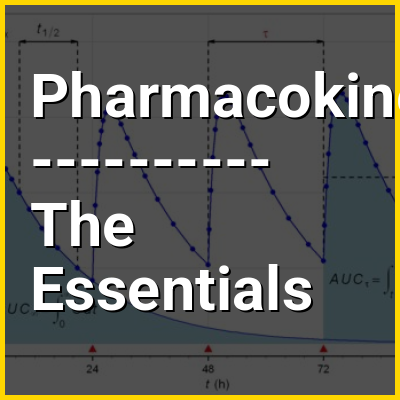
Pharmacokinetics (from Ancient Greek pharmakon 'drug' and kinetikos 'moving, putting in motion'; see chemical kinetics), sometimes abbreviated as PK, is a branch of pharmacology dedicated to describing how the body affects a specific substance after administration. The substances of interest include any chemical xenobiotics such as pharmaceutical drugs, pesticides, food additives, cosmetics, etc. PK attempts to analyze chemical metabolism and discover the fate of a chemical from the moment that it is administered up to the point at which it is completely eliminated from the body. PK is based on mathematical modeling that places great emphasis on the relationship between drug plasma concentration and the time elapsed since the drug's administration. Pharmacokinetics is the study of how an organism affects the drug, whereas pharmacodynamics (PD) is the study of how the drug affects the organism. Both together influence dosing, benefit, and adverse effects, as seen in PK/PD models.

↓ Menu

👉 Pharmacokinetics in the context of Pharmacodynamics

Pharmacodynamics (PD) is the study of the biochemical and physiologic effects of drugs (especially pharmaceutical drugs). The effects can include those manifested within animals (including humans), microorganisms, or combinations of organisms (for example, infection).

Pharmacodynamics and pharmacokinetics are the main branches of pharmacology, being itself a topic of biology interested in the study of the interactions of both endogenous and exogenous chemical substances with living organisms.

↓ Explore More Topics
In this Dossier

Pharmacokinetics in the context of Pharmacology

Pharmacology is the science of drugs and medications, including a substance's origin, composition, pharmacokinetics, pharmacodynamics, therapeutic use, and toxicology. More specifically, it is the study of the interactions that occur between a living organism and chemicals that affect normal or abnormal biochemical function. If substances have medicinal properties, they are considered pharmaceuticals.

The field encompasses drug composition and properties, functions, sources, synthesis and drug design, molecular and cellular mechanisms, organ/systems mechanisms, signal transduction/cellular communication, molecular diagnostics, interactions, chemical biology, therapy, medical applications, and antipathogenic capabilities. The two main areas of pharmacology are pharmacodynamics and pharmacokinetics. Pharmacodynamics studies the effects of a drug on biological systems, and pharmacokinetics studies the effects of biological systems on a drug. In broad terms, pharmacodynamics discusses the chemicals with biological receptors, and pharmacokinetics discusses the liberation, absorption, distribution, metabolism, and excretion (LADME) of chemicals from the biological systems.

↑ Return to Menu

Pharmacokinetics in the context of Distribution (pharmacology)

Distribution in pharmacology is a branch of pharmacokinetics which describes the reversible transfer of a drug from one location to another within the body.

Once a drug enters into systemic circulation by absorption or direct administration, it must be distributed into interstitial and intracellular fluids. Each organ or tissue can receive different doses of the drug and the drug can remain in the different organs or tissues for a varying amount of time. The distribution of a drug between tissues is dependent on vascular permeability, regional blood flow, cardiac output and perfusion rate of the tissue and the ability of the drug to bind tissue and plasma proteins and its lipid solubility. pH partition plays a major role as well. The drug is easily distributed in highly perfused organs such as the liver, heart and kidney. It is distributed in small quantities through less perfused tissues like muscle, fat and peripheral organs. The drug can be moved from the plasma to the tissue until the equilibrium is established (for unbound drug present in plasma).

↑ Return to Menu

Pharmacokinetics in the context of Clearance (medicine)

In pharmacology, clearance () is a pharmacokinetic parameter representing the efficiency of drug elimination. This is the rate of elimination of a substance divided by its concentration. The parameter also indicates the theoretical volume of plasma from which a substance would be completely removed per unit time. Usually, clearance is measured in L/h or mL/min. Excretion, on the other hand, is a measurement of the amount of a substance removed from the body per unit time (e.g., mg/min, μg/min, etc.). While clearance and excretion of a substance are related, they are not the same thing. The concept of clearance was described by Thomas Addis, a graduate of the University of Edinburgh Medical School.

Substances in the body can be cleared by various organs, including the kidneys, liver, lungs, etc. Thus, total body clearance is equal to the sum clearance of the substance by each organ (e.g., renal clearance + hepatic clearance + pulmonary clearance = total body clearance). For many drugs, however, clearance is solely a function of renal excretion. In these cases, clearance is almost synonymous with renal clearance or renal plasma clearance. Each substance has a specific clearance that depends on how the substance is handled by the nephron. Clearance is a function of 1) glomerular filtration, 2) secretion from the peritubular capillaries to the nephron, and 3) reabsorption from the nephron back to the peritubular capillaries. Clearance is variable in zero-order kinetics because a constant amount of the drug is eliminated per unit time, but it is constant in first-order kinetics, because the amount of drug eliminated per unit time changes with the concentration of drug in the blood.

↑ Return to Menu

Pharmacokinetics in the context of Generic drug

A generic drug is a pharmaceutical drug that contains the same chemical substance as a proprietary drug that was originally protected by chemical patents. Generic drugs are allowed for sale after the patents on the original drugs expire. Because the active chemical substance is the same, the medical profile of generics is equivalent in performance compared to their performance at the time when they were patented drugs. A generic drug has the same active pharmaceutical ingredient (API) as the original, but it may differ in some characteristics such as the manufacturing process, formulation, excipients, color, taste, and packaging.

Although they may not be associated with a particular company, generic drugs are usually subject to government regulations in the countries in which they are dispensed. They are labeled with the name of the manufacturer and a generic non-proprietary name such as the United States Adopted Name (USAN) or International Nonproprietary Name (INN) of the drug. A generic drug must contain the same active ingredients as the original brand-name formulation. The U.S. Food and Drug Administration (FDA) requires generics to be identical to or within an acceptable bioequivalent range of their brand-name counterparts, with respect to pharmacokinetic and pharmacodynamic properties.

↑ Return to Menu

Pharmacokinetics in the context of PK/PD models

PKPD modeling (pharmacokinetic pharmacodynamic modeling) (alternatively abbreviated as PK/PD or PK-PD modeling) is a technique that combines the two classical pharmacologic disciplines of pharmacokinetics and pharmacodynamics. It integrates a pharmacokinetic and a pharmacodynamic model component into one set of mathematical expressions that allows the description of the time course of effect intensity in response to administration of a drug dose. PKPD modeling is related to the field of pharmacometrics.

Central to PKPD models is the concentration-effect or exposure-response relationship. A variety of PKPD modeling approaches exist to describe exposure-response relationships. PKPD relationships can be described by simple equations such as linear model, Emax model or sigmoid Emax model. However, if a delay is observed between the drug administration and the drug effect, a temporal dissociation needs to be taken into account and more complex models exist:

↑ Return to Menu

Pharmacokinetics in the context of Pharmacogenomics

Pharmacogenomics, often abbreviated "PGx", is the study of the role of the genome in drug response. Its name (pharmaco- + genomics) reflects its combining of pharmacology and genomics. Pharmacogenomics analyzes how the genetic makeup of a patient affects their response to drugs. It deals with the influence of acquired and inherited genetic variation on drug response, by correlating DNA mutations (including point mutations, copy number variations, and structural variations) with pharmacokinetic (drug absorption, distribution, metabolism, and elimination), pharmacodynamic (effects mediated through a drug's biological targets), and immunogenic endpoints.

Pharmacogenomics aims to develop rational means to optimize drug therapy, with regard to the patients' genotype, to achieve maximum efficiency with minimal adverse effects. It is hoped that by using pharmacogenomics, pharmaceutical drug treatments can deviate from what is dubbed as the "one-dose-fits-all" approach. Pharmacogenomics also attempts to eliminate trial-and-error in prescribing, allowing physicians to take into consideration their patient's genes, the functionality of these genes, and how this may affect the effectiveness of the patient's current or future treatments (and where applicable, provide an explanation for the failure of past treatments). Such approaches promise the advent of precision medicine and even personalized medicine, in which drugs and drug combinations are optimized for narrow subsets of patients or even for each individual's unique genetic makeup.

↑ Return to Menu

Pharmacokinetics in the context of Bioequivalence

Bioequivalence is a term in pharmacokinetics used to assess the expected in vivo biological equivalence of two proprietary preparations of a drug. If two products are said to be bioequivalent it means that they would be expected to be, for all intents and purposes, the same.

One article defined bioequivalence by stating that, "two pharmaceutical products are bioequivalent if they are pharmaceutically equivalent and their bioavailabilities (rate and extent of availability) after administration in the same molar dose are similar to such a degree that their effects, with respect to both efficacy and safety, can be expected to be essentially the same. Pharmaceutical equivalence implies the same amount of the same active substance(s), in the same dosage form, for the same route of administration and meeting the same or comparable standards."

↑ Return to Menu

Pharmacokinetics in the context of Drug delivery

Drug delivery involves various methods and technologies designed to transport pharmaceutical compounds to their target sites helping therapeutic effect. It involves principles related to drug preparation, route of administration, site-specific targeting, metabolism, and toxicity all aimed to optimize efficacy and safety, while improving patient convenience and compliance. A key goal of drug delivery is to modify a drug's pharmacokinetics and specificity by combining it with different excipients, drug carriers, and medical devices designed to control its distribution and activity in the body. Enhancing bioavailability and prolonging duration of action are essential strategies for improving therapeutic outcomes, particularly in chronic disease management. Additionally, some research emphasizes on improving safety for the individuals administering the medication. For example, microneedle patches have been developed for vaccines and drug delivery to minimize the risk of needlestick injuries.

Drug delivery is closely linked with dosage form and route of administration, the latter of which is sometimes considered to be part of the definition. Although the terms are often used interchangeably, they represent distinct concepts. The route of administration refers specifically to the path by which a drug enters the body, such as oral, parenteral, or transdermal. In contrast, the dosage form refers to the physical form in which the drug is manufactured and delivered, such as tablets, capsules, patches, inhalers or injectable solutions. These are various dosage forms and technologies which include but not limited to nanoparticles, liposomes, microneedles, and hydrogels that can be used to enhance therapeutic efficacy and safety. The same route can accommodate multiple dosage forms; for example, the oral route may involve tablet, capsule, or liquid suspension. While the transdermal route may use a patch, gel, or cream. Drug delivery incorporates both of these concepts while encompassing a broader scope, including the design and engineering of systems that operate within or across these routes. Common routes of administration include oral, parenteral (injected), sublingual, topical, transdermal, nasal, ocular, rectal, and vaginal. However, modern drug delivery continue to expand the possibilities of these routes through novel and hybrid approaches.

↑ Return to Menu