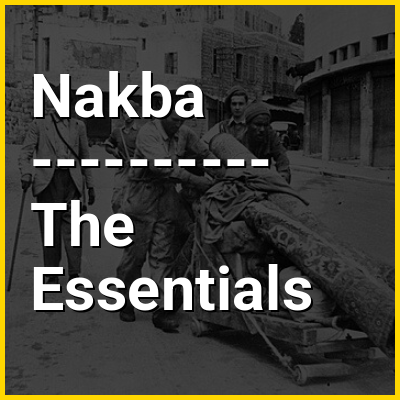
The Nakba (Arabic: النَّكْبَة, romanized: an-Nakba, lit. 'the catastrophe') is the Israeli ethnic cleansing of Palestinian Arabs through their violent displacement and dispossession of land, property, and belongings, along with the destruction of their society and the suppression of their culture, identity, political rights, and national aspirations. The term is used to describe the events of the 1948 Palestine war in Mandatory Palestine as well as Israel's ongoing persecution and displacement of Palestinians. As a whole, it covers the fracturing of Palestinian society and the longstanding rejection of the right of return for Palestinian refugees and their descendants.
During the foundational events of the Nakba in 1948, about half of Palestine's predominantly Arab population – around 750,000 people – were expelled from their homes or made to flee through various violent means, at first by Zionist paramilitaries, and after the establishment of the State of Israel, by its military. Dozens of massacres targeted Palestinian Arabs, and over 500 Arab-majority towns, villages, and urban neighborhoods were depopulated. Many of the settlements were either completely destroyed or repopulated by Jews and given new Hebrew names. Israel employed biological warfare against Palestinians by poisoning village wells. By the end of the war, Israel controlled 78% of the land area of the former Mandatory Palestine.