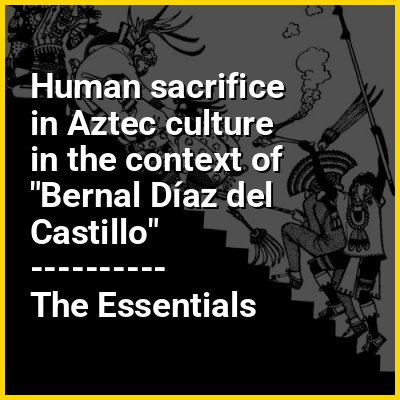
Human sacrifice was a common practice in many parts of Mesoamerica. The rite was not new to the Aztecs when they arrived at the Valley of Mexico, nor was it something unique to pre-Columbian Mexico. Other Mesoamerican cultures, such as the Purépechas and Toltecs, and the Maya performed sacrifices as well, and from archaeological evidence, it probably existed since the time of the Olmecs (1200–400 BC), and perhaps even throughout the early farming cultures of the region. However, the extent of human sacrifice is unknown among several Mesoamerican civilizations. What distinguished Aztec practice from Maya human sacrifice was the way in which it was embedded in everyday life.
Around 1521, when the Aztec capital of Tenochtitlan fell to Hernán Cortés's troops, Cortés and other European explorers and conquistadores made observations of and wrote reports about the practice of human sacrifice. Bernal Díaz del Castillo, who participated in the Cortés expedition, made frequent mention of human sacrifice in his memoir True History of the Conquest of New Spain. There are a number of second-hand accounts of human sacrifices written by Spanish friars that relate to the testimonies of native eyewitnesses. The literary accounts have been supported by archeological research.