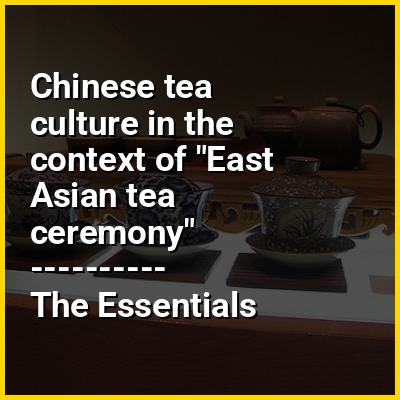
Tea ceremony is a ritualized practice of making and serving tea (茶 cha) in East Asia practiced in the Sinosphere. The original term from China (Chinese: 茶道 or 茶禮 or 茶艺), literally translated as either "way of tea", "etiquette for tea or tea rite", or "art of tea" among the languages in the Sinosphere, is a cultural activity involving the ceremonial preparation and presentation of tea. Korean, Vietnamese and Japanese tea culture were inspired by the Chinese tea culture during ancient and medieval times, particularly after the successful transplant of the tea plant from Tang China to Korea, Vietnam and Japan by traveling Buddhist monks and scholars in 8th century and onwards.
One can also refer to the whole set of rituals, tools, gestures, etc. used in such ceremonies as tea culture. All of these tea ceremonies and rituals contain "an adoration of the beautiful among the sordid facts of everyday life", as well as refinement, an inner spiritual content, humility, restraint and simplicity "as all arts that partake the extraordinary, an artistic artificiality, abstractness, symbolism and formalism" to one degree or another.