COVID-19 pandemic in mainland China in the context of "2019–2020 COVID-19 outbreak in mainland China"

Play Trivia Questions online!

or

Skip to study material about COVID-19 pandemic in mainland China in the context of "2019–2020 COVID-19 outbreak in mainland China"


⭐ Core Definition: COVID-19 pandemic in mainland China

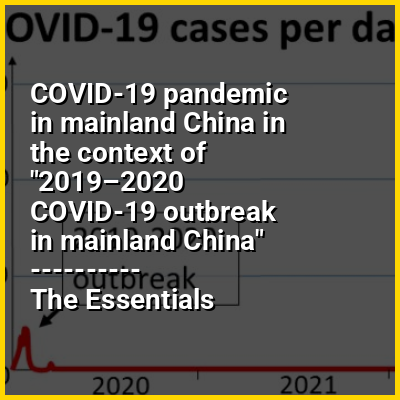
The COVID-19 pandemic in mainland China is part of the worldwide pandemic of coronavirus disease 2019 (COVID-19) caused by severe acute respiratory syndrome coronavirus 2 (SARS-CoV-2). China was where the first COVID outbreak occurred, the first where authorities imposed drastic measures in response (including lockdowns and face mask mandates), and was one of the first countries to bring the outbreak under control, at least temporarily.

The 2019–2020 COVID-19 outbreak in mainland China was the first wave of the disease, and was first manifested as a cluster of mysterious pneumonia cases, mostly related to the Huanan Seafood Market in Wuhan, the capital of Hubei province. It was first reported to the local government on 27 December 2019 and published on 31 December. On 8 January 2020, a new coronavirus (SARS-CoV-2) was identified as the cause of the pneumonia by Chinese scientists. By 29 January, the virus was found to have spread to all provinces of mainland China.
↓ Menu

👉 COVID-19 pandemic in mainland China in the context of 2019–2020 COVID-19 outbreak in mainland China

The 2019–2020 COVID-19 outbreak in mainland China was the first COVID-19 outbreak in that country, and the beginning of the COVID-19 pandemic, caused by severe acute respiratory syndrome coronavirus 2 (SARS-CoV-2). China was the first country to experience an outbreak of the disease, the first to impose drastic measures in response (including lockdowns and face mask mandates), and one of the first countries to bring the outbreak under control.

The outbreak was first manifested as a cluster of mysterious pneumonia cases, mostly related to the Huanan Seafood Market, in Wuhan, the capital of Hubei province. On 8 January 2020, a new coronavirus (SARS-CoV-2) was identified as the cause of the pneumonia by Chinese scientists. During the beginning of the pandemic, the Chinese government showed a pattern of secrecy and top-down control. It censored discussions about the outbreak since the beginning of its spread, from as early as 1 January, worked to censor and counter reporting and criticism about the crisis – which included the detention of several citizen journalists – and portray the official response to the outbreak in a positive light, and restricted and facilitated investigations probing the origins of COVID-19. Several commentators suspected the Chinese government had deliberately under-reported the extent of infections and deaths. However, some academic studies have found no evidence that China manipulates COVID-19 data.

↓ Explore More Topics
In this Dossier

COVID-19 pandemic in mainland China in the context of Censorship in China

Censorship in the People's Republic of China (PRC) is mandated by the country's ruling party, the Chinese Communist Party (CCP). It is one of the strictest censorship regimes in the world. The government censors content for mainly political reasons, such as curtailing political opposition, and censoring events unfavorable to the CCP, such as the 1989 Tiananmen Square protests and massacre, pro-democracy movements in China, the persecution of Uyghurs in China, human rights in Tibet, Falun Gong, pro-democracy protests in Hong Kong, and aspects of the COVID-19 pandemic. Since Xi Jinping became the general secretary of the Chinese Communist Party (de facto paramount leader) in 2012, censorship has been "significantly stepped up".

The government has censorship over all media capable of reaching a wide audience. This includes television, print media, radio, film, theater, text messaging, instant messaging, video games, literature, and the Internet. The Chinese government asserts that it has the legal right to control the Internet's content within their territory and that their censorship rules do not infringe on their citizens' right to free speech. Government officials have access to uncensored information via an internal document system.

↑ Return to Menu