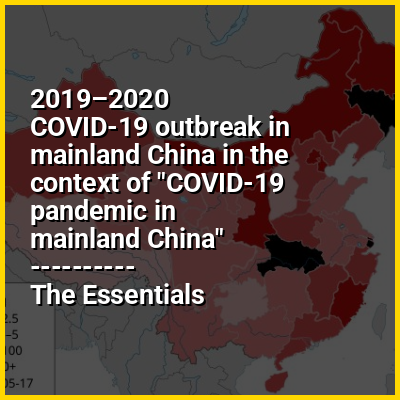
The 2019–2020 COVID-19 outbreak in mainland China was the first COVID-19 outbreak in that country, and the beginning of the COVID-19 pandemic, caused by severe acute respiratory syndrome coronavirus 2 (SARS-CoV-2). China was the first country to experience an outbreak of the disease, the first to impose drastic measures in response (including lockdowns and face mask mandates), and one of the first countries to bring the outbreak under control.
The outbreak was first manifested as a cluster of mysterious pneumonia cases, mostly related to the Huanan Seafood Market, in Wuhan, the capital of Hubei province. On 8 January 2020, a new coronavirus (SARS-CoV-2) was identified as the cause of the pneumonia by Chinese scientists. During the beginning of the pandemic, the Chinese government showed a pattern of secrecy and top-down control. It censored discussions about the outbreak since the beginning of its spread, from as early as 1 January, worked to censor and counter reporting and criticism about the crisis – which included the detention of several citizen journalists – and portray the official response to the outbreak in a positive light, and restricted and facilitated investigations probing the origins of COVID-19. Several commentators suspected the Chinese government had deliberately under-reported the extent of infections and deaths. However, some academic studies have found no evidence that China manipulates COVID-19 data.