Acetal in the context of "1,2,4-trioxane"

Play Trivia Questions online!

or

Skip to study material about Acetal in the context of "1,2,4-trioxane"


⭐ Core Definition: Acetal

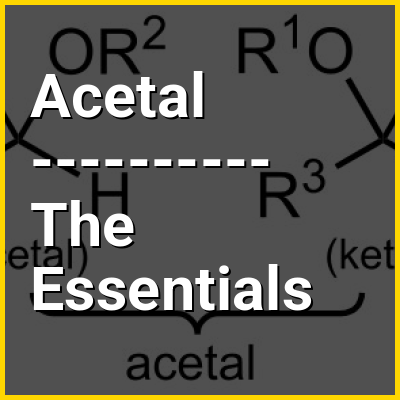
In organic chemistry, an acetal is a functional group with the connectivity R2C(OR')2. Here, the R groups can be organic fragments (a carbon atom, with arbitrary other atoms attached to that) or hydrogen, while the R' groups must be organic fragments not hydrogen. The two R' groups can be equivalent to each other (a "symmetric acetal") or not (a "mixed acetal"). Acetals are formed from and convertible to aldehydes or ketones and have the same oxidation state at the central carbon, but have substantially different chemical stability and reactivity as compared to the analogous carbonyl compounds. The central carbon atom has four bonds to it, and is therefore saturated and has tetrahedral geometry.

The term ketal is sometimes used to identify structures associated with ketones (both R groups organic fragments rather than hydrogen) rather than aldehydes and, historically, the term acetal was used specifically for the aldehyde-related cases (having at least one hydrogen in place of an R on the central carbon). The IUPAC originally deprecated the usage of the word ketal altogether, but has since reversed its decision. However, in contrast to historical usage, ketals are now a subset of acetals, a term that now encompasses both aldehyde- and ketone-derived structures.
↓ Menu

👉 Acetal in the context of 1,2,4-trioxane

1,2,4-Trioxane is one of the isomers of trioxane. It has the molecular formula C3H6O3 and consists of a six membered ring with three carbon atoms and three oxygen atoms. The two adjacent oxygen atoms form a peroxide functional group and the other forms an ether functional group. It is like a cyclic acetal but with one of the oxygen atoms in the acetal group being replaced by a peroxide group.

1,2,4-Trioxane itself has not been isolated or characterized, but rather only studied computationally. However, it constitutes an important structural element of some more complex organic compounds. The natural compound artemisinin, isolated from the sweet wormwood plant (Artemisia annua), and some semi-synthetic derivatives are important antimalarial drugs containing the 1,2,4-trioxane ring. Completely synthetic analogs containing the 1,2,4-trioxane ring are important potential improvements over the naturally derived artemisinins. The peroxide group in the 1,2,4-trioxane core of artemisinin is cleaved in the presence of the malaria parasite leading to reactive oxygen radicals that are damaging to the parasite.

↓ Explore More Topics
In this Dossier

Acetal in the context of Semisynthesis

Semisynthesis, or partial chemical synthesis, is a type of chemical synthesis that uses chemical compounds isolated from natural sources (such as microbial cell cultures or plant material) as the starting materials to produce novel compounds with distinct chemical and medicinal properties. The novel compounds generally have a high molecular weight or a complex molecular structure, more so than those produced by total synthesis from simple starting materials. Semisynthesis is a means of preparing many medicines more cheaply than by total synthesis since fewer chemical steps are necessary.

Drugs derived from natural sources are commonly produced either by isolation from their natural source or, as described here, through semisynthesis of an isolated agent. From the perspective of chemical synthesis, living organisms act as highly efficient chemical factories, capable of producing structurally complex compounds through biosynthesis. In contrast, engineered chemical synthesis, although powerful, tends to be simpler and less chemically diverse than the complex biosynthetic pathways essential to life.

↑ Return to Menu

Acetal in the context of Paraformaldehyde

Paraformaldehyde (PFA) is the smallest polyoxymethylene, the polymerization product of formaldehyde with a typical degree of polymerization of 8–100 units. Paraformaldehyde commonly has a slight odor of formaldehyde due to decomposition. Paraformaldehyde is a poly-acetal.

↑ Return to Menu