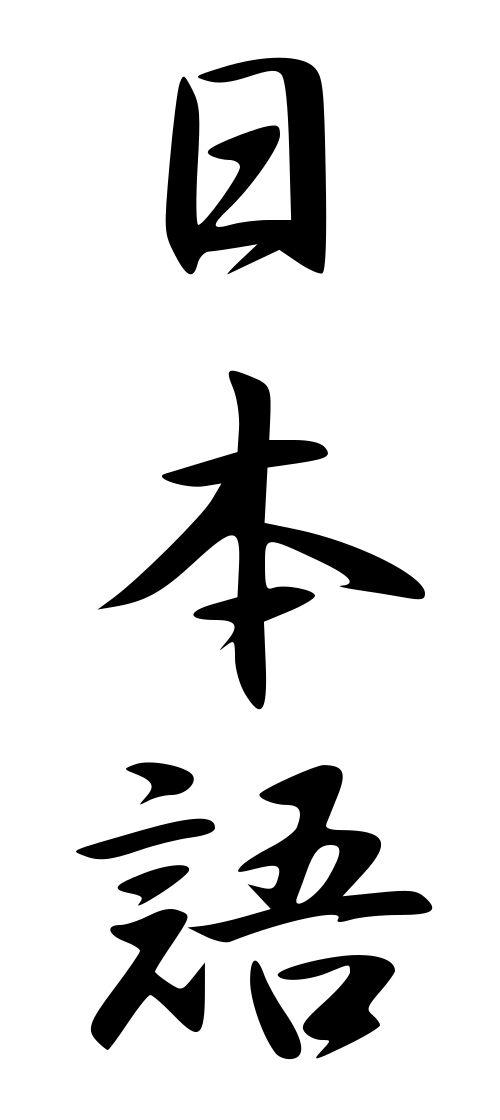
Materials covered in this trivia questions quiz
Study Hint 1
Question: In the context of loanwords, how does the process of linguistic borrowing differ from the creation of a calque within the Japanese language?
Trivia Question Study Fact: In linguistics, a loanword is adopted from a donor language into a recipient language, representing a one-way transfer where the word's form is assimilated into the new language. This differs from calques, which are translations of phrases, and cognates, which share a common ancestral origin rather than being directly borrowed.
Trivia Question Explanation: Loanwords are integrated into a language's structure and pronunciation, while calques involve translating the *meaning* of a phrase word-for-word, rather than adopting the original word itself.
Return to Question
Study Hint 2
Question: In the context of Brahmic scripts, Japanese language is considered to have been influenced by their principles in what specific aspect of its writing system?
Trivia Question Study Fact: Brahmic scripts, originating from ancient India, have influenced writing systems across Asia, including the development of the Japanese kana syllabary. Specifically, the dictionary order (gojūon) used for Japanese kana was derived from the collation principles found within the Brahmic script family.
Trivia Question Explanation: The Brahmic scripts provided the foundational collation system, known as *gojūon*, which dictates the standard order of the Japanese kana syllabary, facilitating organization and learning.
Return to Question
Study Hint 3
Question: In the context of Japanese_yen, the initial valuation of the yen following the New Currency Act of 1871 was directly tied to the weight of what materials?
Trivia Question Study Fact: The Japanese yen, established with the New Currency Act of 1871, was initially defined by its weight in precious metals – specifically 1.5 grams of gold or 24.26 grams of silver – and was divided into 100 *sen* and 1,000 *rin*, replacing older forms of currency like Tokugawa coinage and *hansatsu* paper notes.
Trivia Question Explanation: The yen was originally defined as being equivalent to 1.5 grams of gold or 24.26 grams of silver, establishing a fixed value based on these precious metals when it was introduced in 1871.
Return to Question
Study Hint 4
Question: In the context of Indic scripts, Japanese language is considered to have been influenced by their principles in what specific aspect of its writing system?
Trivia Question Study Fact: Brahmic scripts, originating from ancient India, represent a family of abugida writing systems that have influenced languages across South, East, and Southeast Asia. Notably, the dictionary order (gojūon) of Japanese kana was derived from the collation principles found within these Indic scripts.
Trivia Question Explanation: The collation system, known as *gojūon*, used to organize Japanese kana characters was directly sourced from the ordering principles present in the Brahmic scripts.
Return to Question
Study Hint 5
Question: In the context of Indic scripts, Japanese language is considered to have been influenced by them in what specific way?
Trivia Question Study Fact: Brahmic scripts, originating from ancient India, represent a family of writing systems that have influenced languages across South, East, and Southeast Asia. Notably, these scripts served as the foundation for the dictionary order – the *gojūon* – used in the Japanese *kana* syllabary.
Trivia Question Explanation: The *gojūon*, the standard dictionary order for Japanese *kana*, was directly derived from the collation principles found within the Brahmic scripts.
Return to Question
Study Hint 6
Question: In the context of Amitābha, how is the name of this Buddha typically rendered in the Japanese language?
Trivia Question Study Fact: Amitābha, a central figure in Mahayana Buddhism, is known by different names across East Asia, including Amituofo in Chinese, Amida Butsu in Japanese, and A Di Đà Phật in Vietnamese. These variations reflect the adaptation of the Sanskrit name and associated concepts into the linguistic and cultural contexts of each region.
Trivia Question Explanation: Amitābha is widely venerated in East Asian Buddhism and is known by different names depending on the language. In Japanese, he is specifically referred to as Amida Butsu.
Return to Question
Study Hint 7
Question: In the context of Shinto, *kami* are considered to be most fundamentally connected to…
Trivia Question Study Fact: In Shinto belief, *kami* are not distinct from the natural world but are integral to it, embodying both positive and negative qualities and representing the interconnected energy of the universe known as *musubi*. They are considered models for human behavior and reside in a parallel realm called *shinkai*, mirroring our own.
Trivia Question Explanation: Kami are understood as manifestations of *musubi*, the interconnecting energy of the universe, and are not separate from nature, possessing both positive and negative characteristics inherent in the natural world.
Return to Question
Study Hint 8
Question: In the context of Okinawan people, Japanese language is considered…
Trivia Question Study Fact: Ryukyuan languages, spoken by the indigenous people of the Ryukyu Islands, are considered a branch of the Japonic language family, alongside the Japanese language and its dialects. This linguistic connection highlights a shared ancestry despite distinct cultural and political histories.
Trivia Question Explanation: Both Japanese and Ryukyuan languages originate from the Japonic language family, indicating a common linguistic ancestor and shared developmental path, even as they evolved into distinct languages.
Return to Question
Study Hint 9
Question: In the context of Chan/Zen Buddhism, *kenshō* is considered…
Trivia Question Study Fact: Within Chan/Zen Buddhism, *kenshō* represents an initial, often sudden, realization of one's true nature, which is deeply connected to the concept of *buddha-nature* and ultimate reality. The term itself, originating from Japanese and classical Chinese, literally translates to 'seeing one's nature' and is a crucial step on the path to full Buddhahood, though it requires continued practice to fully integrate into daily life.
Trivia Question Explanation: Kenshō is described as a first glimpse of ultimate reality and buddha-nature, but it is not the end goal; continued training is necessary to deepen the insight and remove remaining defilements.
Return to Question
Study Hint 10
Question: In the context of *satori*, the Japanese words *ken* and *shō*, which form the related concept of *kenshō*, are best understood as representing…
Trivia Question Study Fact: The Japanese term *satori*, central to Zen Buddhism, signifies awakening or comprehension and is rooted in the Japanese verb *satoru*. It's often associated with *kenshō*, a direct experience of one's inherent Buddha-nature, where *ken* denotes 'seeing' and *shō* represents 'nature' or 'essence'.
Trivia Question Explanation: Within the Zen Buddhist tradition, *kenshō*—a deep experience linked to *satori*—is defined by *ken* meaning 'seeing' and *shō* meaning 'nature' or 'essence', thus representing a direct perception of one's Buddha-nature.
Return to Question