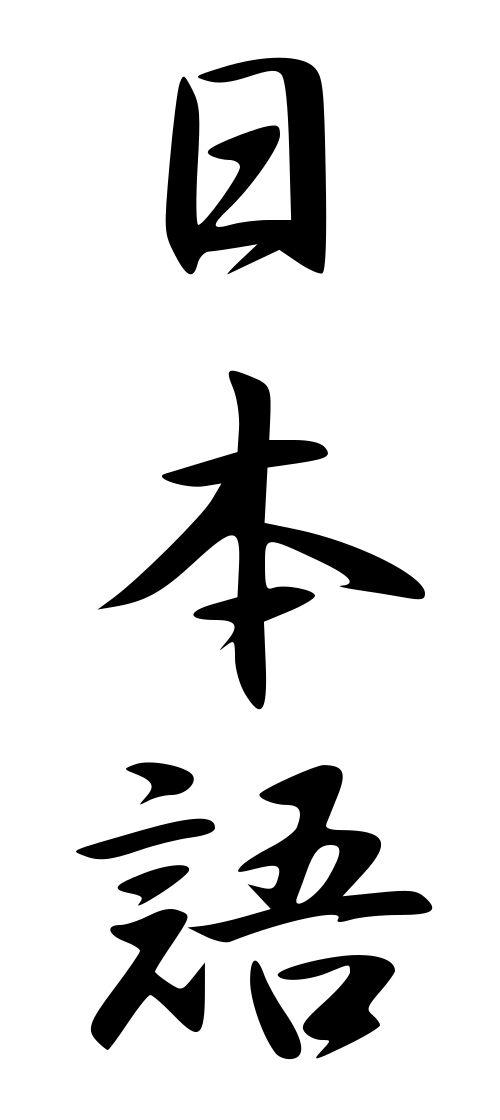
Materials covered in this trivia questions quiz
Study Hint 1
Question: In the context of the Greater Tokyo Area, the commonly used Japanese term for this region, signifying its role as the nation's center, is…
Trivia Question Study Fact: The Greater Tokyo Area, encompassing Tokyo and six surrounding prefectures within the Kantō region plus Yamanashi Prefecture, is commonly referred to as the 'Capital Region' in Japanese, written as 首都圏 (Shuto-ken). This term is one of several used to identify this highly populated and economically significant area within Japan.
Trivia Question Explanation: ‘Shuto-ken’ (首都圏) directly translates to ‘Capital Region’ and is a frequently used designation for the Greater Tokyo Area within Japan, reflecting its status as the country’s political and economic hub.
Return to Question
Study Hint 2
Question: In the context of Honshu, the traditional Japanese name 'Akitsushima' is most accurately understood to mean…
Trivia Question Study Fact: The island of Honshu, the largest of Japan's four main islands, is known in Japanese as 'Honshū' (本州), which literally translates to 'main province'. Historically, it was also referred to as 'Akitsushima' (秋津島), meaning 'dragonfly island'. The Japanese language provides these names, reflecting cultural and historical significance.
Trivia Question Explanation: The historical name 'Akitsushima' for Honshu directly translates from Japanese to 'dragonfly island', reflecting a poetic or symbolic association with the island's landscape or cultural significance.
Return to Question
Study Hint 3
Question: In the context of Chiyoda, Tokyo, which of the following areas is most prominently recognized for its concentration of major corporate headquarters and substantial contribution to Japan's economic output?
Trivia Question Study Fact: The districts of Ōtemachi, Marunouchi, and Yurakucho within Chiyoda, Tokyo, collectively known as 'Daimaruyu,' are significant economic hubs. They house the headquarters of 19 Fortune 500 companies and generated approximately 10% of the combined revenue of all Japanese companies in 2017, contributing roughly a quarter of Japan's GDP.
Trivia Question Explanation: The 'Daimaruyu' area, encompassing Ōtemachi, Marunouchi, and Yurakucho, is specifically highlighted as the location of 19 Fortune 500 company headquarters and a major contributor to Japan's GDP, making it the most economically significant area within Chiyoda.
Return to Question
Study Hint 4
Question: In the context of Shinjuku, the Japanese language is considered essential for understanding…
Trivia Question Study Fact: The name "Shinjuku" is written in Japanese as 新宿区 (Shinjuku-ku), utilizing the Japanese writing system which combines Chinese characters (kanji) with phonetic scripts (hiragana and katakana). The Hepburn romanization provides a standardized way to transliterate Japanese into the Latin alphabet, resulting in "Shinjuku-ku". The pronunciation, represented phonetically, is [ɕiɲdʑɯkɯ].
Trivia Question Explanation: The name 'Shinjuku' itself is a Japanese word, and its accurate representation requires understanding the Japanese writing system and pronunciation, which are then transliterated using systems like Hepburn romanization.
Return to Question
Study Hint 5
Question: In the context of the Japanese archipelago, the term ‘Rettō’ (列島) as part of its Japanese name refers to what geographical characteristic?
Trivia Question Study Fact: The Japanese archipelago, encompassing over 14,000 islands, is geographically divided into three distinct island arcs – the Northeastern Japan Arc, the Southwestern Japan Arc, and the Ryukyu Island Arc – stretching over 3,000 kilometers along the Pacific coast of Eurasia. The name for the archipelago in Japanese is 日本列島 (Nippon/Nihon Rettō).
Trivia Question Explanation: ‘Rettō’ (列島) directly translates to ‘chain of islands’ or ‘archipelago’, accurately describing the composition of the Japanese archipelago as a collection of over 14,000 islands.
Return to Question
Study Hint 6
Question: In the context of Japanese agriculture, the significant decline in its economic importance from the late 19th century through the late 20th century is most directly reflected in what trend?
Trivia Question Study Fact: Historically, agriculture, forestry, and fishing were central to the Japanese economy, employing over 80% of the workforce during the Meiji period in the late 19th century. However, this dominance drastically decreased throughout the 20th century, with agriculture's contribution to the Gross National Product falling from over 4% in 1975 to 3% by 1989, and a corresponding decline in the percentage of the workforce directly employed in these sectors.
Trivia Question Explanation: As Japan industrialized, the proportion of its workforce engaged in agriculture, forestry, and fishing steadily diminished, falling from over 80% in the Meiji period to just over 7% by 1988, indicating a major structural shift in the economy.
Return to Question
Study Hint 7
Question: In the context of Sakoku, the limited Dutch presence at Dejima primarily facilitated the introduction of what into Japan?
Trivia Question Study Fact: During the Sakoku period of Japanese history, the Tokugawa shogunate implemented a policy of strict isolationism, severely limiting foreign interaction. However, Japan wasn't entirely cut off from the world; trade continued with China through Nagasaki, and a limited Dutch presence was permitted at Dejima, which became a crucial conduit for Western knowledge known as Rangaku.
Trivia Question Explanation: The Dutch factory at Dejima served as a key point of contact for Japan to access advancements in Western science, technology, and medicine during the Sakoku period, a practice known as Rangaku ('Dutch learning').
Return to Question
Study Hint 8
Question: In the context of the Perry Expedition, what cultural movement emerged as a direct consequence of increased interaction between Japan and the Western world?
Trivia Question Study Fact: The Perry Expedition, initiated by the United States Navy, prioritized establishing contact with Japan to negotiate trade agreements. This interaction subsequently spurred a cultural phenomenon known as Japonisme, where elements of Japanese culture significantly influenced artistic trends in Europe and America.
Trivia Question Explanation: Following the Perry Expedition's successful opening of Japan to trade, Japanese artistic elements began to inspire and influence artistic styles in Europe and America, giving rise to the cultural trend known as Japonisme.
Return to Question
Study Hint 9
Question: In the context of onomatopoeia, the Japanese language utilizes a specific term to represent the sound of a clock. What is this term?
Trivia Question Study Fact: Across various languages, onomatopoeia adapts to the linguistic system, resulting in diverse representations of the same sound. For instance, the sound of a clock is expressed as 'tick tock' in English, but is represented as 'kachi kachi' within the Japanese language.
Trivia Question Explanation: The linguistic adaptation of onomatopoeia means that different languages use unique sounds to mimic the same phenomena; in Japanese, the sound of a clock is conveyed through the term 'kachi kachi'.
Return to Question
Study Hint 10
Question: In the context of morae, Japanese language syllables are considered…
Trivia Question Study Fact: In the Japanese language, units of timing called morae are distinct from syllables because a single syllable can contain multiple morae. This is due to the presence of long vowels, where a lengthened vowel sound counts as two morae instead of one, and certain consonants can also function as individual morae. Consequently, the pronunciation of a word like 'Ōsaka' has more morae than syllables.
Trivia Question Explanation: Japanese syllables can be composed of one, two, or even three morae, depending on whether they contain long vowels or standalone consonants, which contribute to the timing and rhythm of the language.
Return to Question