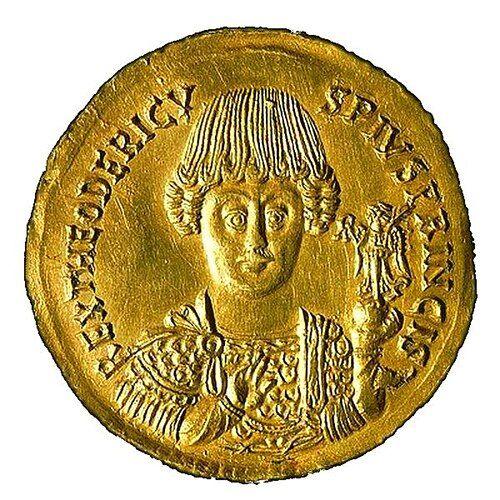
Materials covered in this trivia questions quiz
Study Hint 1
Question: In the context of Justinian I, the Ostrogothic Kingdom is considered significant primarily for what reason?
Trivia Question Study Fact: Under Justinian I, the Ostrogothic Kingdom was conquered by Roman generals like Belisarius and Narses after more than half a century of Ostrogothic rule. This reconquest brought Dalmatia, Sicily, Italy, and Rome back under Roman control, significantly boosting the Empire's annual revenue.
Trivia Question Explanation: Justinian I's military campaigns, including the conquest of the Ostrogothic Kingdom, were instrumental in restoring territories to the Roman Empire. The recovery of regions like Italy and Sicily brought in over a million solidi annually, significantly increasing the Empire's financial resources.
Return to Question
Study Hint 2
Question: In the context of Italy in the Middle Ages, what political entity maintained influence alongside the Byzantine Empire during the period of late antiquity?
Trivia Question Study Fact: Following the collapse of the Western Roman Empire, Italy experienced a period of transition marked by the presence of the Ostrogothic Kingdom and the Byzantine Empire. This era, known as late antiquity, persisted until the mid-8th century, during which the Byzantine Papacy held influence before the weakening of the Byzantine Empire and the subsequent Lombard conquest of Ravenna.
Trivia Question Explanation: The source text explicitly states that the Ostrogothic Kingdom, alongside the Byzantine Empire, characterized the period of late antiquity in Italy following the fall of the Western Roman Empire.
Return to Question
Study Hint 3
Question: In the context of Goths, the establishment of the Ostrogothic Kingdom is considered a result of what significant historical event?
Trivia Question Study Fact: The emergence of the Ostrogothic Kingdom in Italy during the 5th century was a direct consequence of the pressures exerted by the Huns and Alans on Gothic populations, leading to a westward migration and eventual independence from Hunnic rule. This allowed Theodoric the Great to establish a new kingdom centered in Ravenna.
Trivia Question Explanation: The westward movement of the Alans and Huns displaced the Goths, forcing them to seek refuge near the Roman border and eventually leading to the Ostrogoths gaining independence and establishing their kingdom in Italy.
Return to Question
Study Hint 4
Question: In the context of Ravenna, the Ostrogothic Kingdom is considered…
Trivia Question Study Fact: Following the collapse of the Western Roman Empire in 476, Ravenna transitioned from being the capital of the Western Roman Empire to becoming the capital of the Ostrogothic Kingdom, demonstrating a continuity of political importance despite the change in ruling power.
Trivia Question Explanation: Ravenna served as the capital of the Ostrogothic Kingdom immediately after the fall of the Western Roman Empire, inheriting the administrative and political functions previously held by the Roman government in the city.
Return to Question
Study Hint 5
Question: In the context of the Gothic War (535–554), the primary impetus for the Byzantine Empire’s campaign against the Ostrogothic Kingdom was to…
Trivia Question Study Fact: The Gothic War (535-554) was initiated by the Byzantine Empire under Justinian I with the goal of reclaiming territories previously held by the Western Roman Empire, which had been lost during the Migration Period to various barbarian groups, including the Ostrogoths who established a kingdom in Italy. This conflict represented a continuation of earlier 'Gothic wars' against the Roman Empire.
Trivia Question Explanation: Justinian I aimed to restore the boundaries of the Roman Empire by reconquering provinces lost to barbarian tribes during the Migration Period, and the Ostrogothic Kingdom in Italy was a key target in this effort.
Return to Question
Study Hint 6
Question: In the context of Boethius’ life, the Ostrogothic Kingdom is considered the setting for which significant aspect of his career?
Trivia Question Study Fact: Boethius, a prominent Roman philosopher and statesman, achieved significant political positions – senator, consul, and advisor to Theodoric the Great – within the Ostrogothic Kingdom following the fall of the Western Roman Empire. His fluency in both Latin and Greek allowed him to become a key figure in translating Greek classics into Latin, influencing later scholastic thought.
Trivia Question Explanation: Boethius rose to become a senator, consul, and advisor to Theodoric the Great specifically while serving within the Ostrogothic Kingdom, demonstrating his political career flourished under their rule.
Return to Question
Study Hint 7
Question: In the context of Narses’ military achievements, the Ostrogothic Kingdom is considered to have been decisively impacted by which of his actions?
Trivia Question Study Fact: Narses, a Roman general of Armenian origin, played a pivotal role in the decline of the Ostrogothic Kingdom through successful military campaigns in Italy during the Gothic War. His victories at the Battles of Taginae and Mons Lactarius were particularly decisive, ultimately leading to the kingdom's collapse and the restoration of Roman control over the region.
Trivia Question Explanation: Narses’ campaigns in Italy, culminating in victories at Taginae and Mons Lactarius, directly led to the end of the Ostrogothic Kingdom and the re-establishment of Roman authority in the region, marking a significant turning point in its history.
Return to Question
Study Hint 8
Question: In the context of the Italian peninsula, the establishment of the Ostrogothic Kingdom under Theodoric the Great was directly preceded by what significant political event?
Trivia Question Study Fact: The Ostrogothic Kingdom, established in 493 by Theodoric the Great, arose from a power vacuum created after Odoacer deposed the last Western Roman Emperor, Romulus Augustulus, in 476. Theodoric then defeated and killed Odoacer, establishing his own rule over Italy and surrounding territories, and consciously sought to govern both Gothic and Roman populations.
Trivia Question Explanation: Theodoric the Great rose to power after defeating Odoacer, who had previously overthrown Romulus Augustulus, the final emperor of the Western Roman Empire, creating the conditions for the Ostrogothic Kingdom to emerge.
Return to Question
Study Hint 9
Question: In the context of the Ostrogoths, the establishment of the Ostrogothic Kingdom in Italy under Theodoric the Great was significantly aided by what external factor?
Trivia Question Study Fact: The Ostrogothic Kingdom, founded in 493 by Theodoric the Great, emerged from a larger population of Ostrogoths who had resided in the Balkans for over a century prior, and was strategically supported by the Byzantine emperor Zeno to establish control in Italy following the defeat of Odoacer.
Trivia Question Explanation: Theodoric the Great received crucial support from Byzantine Emperor Zeno, who authorized and assisted his invasion of Italy, ultimately leading to the founding of the Ostrogothic Kingdom after defeating Odoacer.
Return to Question
Study Hint 10
Question: In the context of Petrus Marcellinus Felix Liberius’ career, the Ostrogothic Kingdom is notable for being one of the realms where he…
Trivia Question Study Fact: Petrus Marcellinus Felix Liberius distinguished himself through a remarkably long and varied career, serving as a high-ranking official under both the Ostrogothic Kingdom of Italy and the Eastern Roman Empire, holding the highest governmental positions in Italy, Gaul, and Egypt – a feat comparable to that of Julius Caesar and Napoleon Bonaparte.
Trivia Question Explanation: Liberius’ career was characterized by holding the highest governmental positions in multiple empires, including the Ostrogothic Kingdom of Italy, alongside roles in Gaul and Egypt, demonstrating his significant administrative influence.
Return to Question