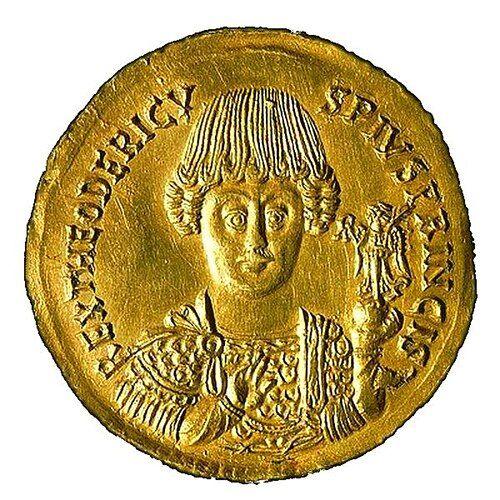
Materials covered in this trivia questions quiz
Study Hint 1
Question: In the context of the History of Sicily, the Ostrogothic Kingdom is considered…
Trivia Question Study Fact: Throughout its extensive history, Sicily has been dominated by a diverse array of powers, including the Ostrogoths, who held control of the island for a period alongside Carthaginians, Greeks, Romans, Vandals, Byzantines, Arabs, Normans, and others. This constant shift in power reflects Sicily's strategic importance in the Mediterranean.
Trivia Question Explanation: Sicily’s central location in the Mediterranean made it a desirable target for numerous empires and kingdoms, and the Ostrogoths were among those who controlled the island at various points in its history.
Return to Question
Study Hint 2
Question: In the context of Medieval Italy, the Ostrogothic Kingdom is considered a bridge between what two distinct periods?
Trivia Question Study Fact: Following the collapse of the Western Roman Empire, the Ostrogothic Kingdom represented a period of continued Roman traditions and governance within Italy, extending the characteristics of late antiquity into the 7th century before being supplanted by the Byzantine Empire and later, the Lombards.
Trivia Question Explanation: The Ostrogothic Kingdom emerged after the fall of the Western Roman Empire and maintained elements of Roman culture and administration, effectively prolonging late antiquity until the Lombards gained control of much of Italy.
Return to Question
Study Hint 3
Question: In the context of the Kingdom of Italy (Holy Roman Empire), what groups directly preceded Frankish rule in controlling the Italian peninsula after the fall of the Western Roman Empire?
Trivia Question Study Fact: Following the fall of the Western Roman Empire in 476, Italy experienced a period of rule by various groups, initially including the Ostrogoths and later the Lombards, before Charlemagne and the Franks established control over much of the peninsula in 774. This period preceded the formation of the Kingdom of Italy as a constituent part of the Holy Roman Empire.
Trivia Question Explanation: After the Western Roman Empire's collapse, Italy was first governed by the Ostrogoths, and subsequently by the Lombards, before Charlemagne's Frankish forces invaded and took control, setting the stage for the Kingdom of Italy within the Holy Roman Empire.
Return to Question
Study Hint 4
Question: In the context of praetorian prefects, the Ostrogothic Kingdom is considered to have utilized this office for what purpose until the 7th century AD?
Trivia Question Study Fact: The position of praetorian prefect, originally a military command overseeing the Praetorian Guard in the Roman Empire, continued to be utilized by both the Eastern Roman Empire and the Ostrogothic Kingdom for administrative purposes well into the 7th century AD, functioning as chief ministers before undergoing further reforms.
Trivia Question Explanation: Following the decline of the Roman Empire, the Ostrogothic Kingdom adopted the office of praetorian prefect, adapting it from a military role to a key administrative position within their governance structure, similar to its function in the Eastern Roman Empire.
Return to Question
Study Hint 5
Question: In the context of Justinian’s reign, the Ostrogothic Kingdom is considered…
Trivia Question Study Fact: Justinian I, through his generals Belisarius and Narses, initiated campaigns that led to the conquest of the Ostrogothic Kingdom, effectively restoring Roman control over territories like Dalmatia, Sicily, and Italy after over fifty years of Ostrogothic rule. This was part of his broader ambition to restore the Roman Empire to its former glory.
Trivia Question Explanation: Justinian I aimed to restore the Roman Empire, and the conquest of the Ostrogothic Kingdom by his generals Belisarius and Narses was a significant early success in achieving this goal, marking the beginning of the *renovatio imperii*.
Return to Question
Study Hint 6
Question: In the context of Theodoric the Great, the Ostrogothic Kingdom is considered by some historians to have functioned as…
Trivia Question Study Fact: Theodoric the Great, while officially King of the Ostrogoths, exerted influence and power comparable to a Western Roman Emperor, controlling a vast territory and even receiving imperial regalia from Constantinople. This allowed him to exercise imperial powers, like appointing consuls, and was recognized as such by both the Eastern Roman Empire and the Italian aristocracy.
Trivia Question Explanation: Theodoric the Great received Western Roman imperial regalia from Constantinople and exercised imperial powers, leading some scholars to view his kingdom as a continuation of the former Western Roman Empire despite officially holding the title of King.
Return to Question
Study Hint 7
Question: In the context of Totila’s reign, the recovery of territories in Italy by the Ostrogothic Kingdom is best understood as a reversal of gains made by which opposing power?
Trivia Question Study Fact: Totila, the penultimate king of the Ostrogothic Kingdom, significantly altered the course of the Gothic War by successfully reclaiming much of the Italian peninsula from the Eastern Roman Empire by 543. This reversal of fortune occurred after a series of military victories, including the Battle of Faventia, and demonstrated his skill as both a military and political leader.
Trivia Question Explanation: Totila’s military campaigns were specifically focused on regaining control of Italian territories that had previously been captured by the Eastern Roman Empire during the Gothic War, effectively reversing their advances.
Return to Question
Study Hint 8
Question: In the context of the Gothic War (535–554), the primary impetus for the Byzantine Empire’s campaign against the Ostrogothic Kingdom was to…
Trivia Question Study Fact: The Gothic War (535-554) was initiated by the Byzantine Empire under Justinian I with the goal of reclaiming territories previously held by the Western Roman Empire, territories that had been lost during the Migration Period to various barbarian groups, including the Ostrogoths who established a kingdom in Italy. This conflict represented a continuation of earlier 'Gothic wars' against the Roman Empire.
Trivia Question Explanation: Justinian I aimed to restore the territories once belonging to the Western Roman Empire, which had been lost to barbarian invasions during the Migration Period, and the Ostrogothic Kingdom occupied a significant portion of these lands.
Return to Question