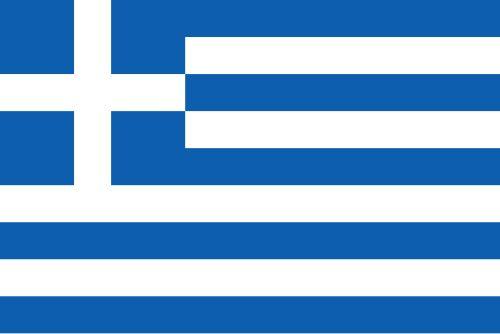
Materials covered in this trivia questions quiz
Study Hint 1
Question: In the context of Greece, Athens is considered a significant contributor to Western civilization primarily due to its advancements in which area?
Trivia Question Study Fact: While Greece is renowned as the birthplace of democracy, Athens, as a prominent city-state within ancient Greece, played a pivotal role in developing and practicing democratic principles. Its influence extended far beyond its borders, significantly impacting the political and philosophical landscape of Ancient Rome and contributing to the foundations of Western civilization.
Trivia Question Explanation: Athens's prominence as a hub for democratic ideals, artistic expression, intellectual pursuits, and philosophical inquiry profoundly shaped the course of Western civilization, leaving a lasting legacy that resonated throughout Ancient Rome and beyond.
Return to Question
Study Hint 2
Question: In the context of cities and towns in Greece, which of the following statements accurately reflects the population distribution within the country's largest metropolitan areas?
Trivia Question Study Fact: While Greece boasts numerous cities and towns, a significant majority of its population resides in urban centers, with Athens and Thessaloniki being the dominant metropolitan areas. Athens, the largest, has a metropolitan population of around four million, while Thessaloniki follows with approximately 990,000 inhabitants, demonstrating a concentration of the Greek population in these two cities.
Trivia Question Explanation: The data indicates Athens has a metropolitan population of approximately four million, while Thessaloniki has around 990,000, meaning Athens' population is approximately four times larger.
Return to Question
Study Hint 3
Question: In the context of Greece, which of the following best describes the initial organizational structure of the Ancient Greeks before the unification efforts of Philip II of Macedon?
Trivia Question Study Fact: Throughout history, Greece has served as a crucial nexus for cultural and intellectual development, acting as the birthplace of numerous foundational elements of Western civilization, including democracy, philosophy, literature, and scientific principles. This influence extended across the Mediterranean and Black Seas, initially through independent city-states and later through the conquests of Alexander the Great, shaping the ancient world and leaving a lasting legacy.
Trivia Question Explanation: The source text explicitly states that the Ancient Greeks were organized into independent city-states, known as *poleis*, which extended across the Mediterranean and Black Seas. This decentralized structure predates the unification under Philip II and the subsequent conquests of Alexander the Great.
Return to Question
Study Hint 4
Question: In the context of Attica, the administrative region of Greece is considered…
Trivia Question Study Fact: The modern administrative region of Attica in Greece not only includes the city of Athens, the nation's capital and largest city, but also encompasses a larger geographical area than the historically defined region of Attica, and is coextensive with the former Attica Prefecture within the broader Central Greece geographic region.
Trivia Question Explanation: The administrative region of Attica covers a greater area than the historical region of Attica and aligns perfectly with the boundaries of the previous Attica Prefecture, which was part of Central Greece.
Return to Question
Study Hint 5
Question: In the context of the Municipality of Athens, Greece is considered…
Trivia Question Study Fact: While the Municipality of Athens encompasses a relatively small area of 38.96 square kilometers, it represents a crucial administrative unit within the much larger urban area of Athens, which extends across the Attica region and boasts a population exceeding 3.6 million, ranking it among the largest urban centers in the European Union.
Trivia Question Explanation: The provided text explicitly states that the Municipality of Athens is a 'small administrative unit' of the larger urban area, which includes the Attica region and a population significantly larger than the municipality itself.
Return to Question
Study Hint 6
Question: In the context of Classical Athens, the prolonged stability of its political system, established by Cleisthenes, lasted for approximately how many years before its end in 322 BC?
Trivia Question Study Fact: During the classical period (480–323 BC), Athens served as the leading city-state in Greece and spearheaded the Delian League against Sparta in the Peloponnesian War. This period also saw the establishment of a remarkably stable democratic system under Cleisthenes in 508 BC, lasting for 180 years with only brief interruptions.
Trivia Question Explanation: The source text states that the Athenian democratic system, established in 508 BC, remained in place for 180 years until 322 BC, with only brief interruptions.
Return to Question
Study Hint 7
Question: In the context of a *polis*, what distinguished it from the surrounding *chóra*?
Trivia Question Study Fact: In ancient Greece, the *polis* wasn't simply a city as understood today; it encompassed the entire native land and demanded the complete loyalty of its citizens, functioning as a self-governing entity with its own constitution. The surrounding countryside was referred to as *chóra*, but this was distinct from the *polis* itself and did not represent a broader 'country' in the modern sense.
Trivia Question Explanation: The *polis* was considered the native land and the core of a citizen’s identity, requiring their complete allegiance, whereas the *chóra* referred only to the agricultural areas surrounding the city and lacked the same political and social significance.
Return to Question
Study Hint 8
Question: In the context of ancient Rome, the Greek culture of southern Italy, known as Magna Graecia, is considered what in Rome’s broader expansion?
Trivia Question Study Fact: The expansion of ancient Rome involved the assimilation of various cultures, notably absorbing the Greek culture of Magna Graecia in southern Italy. This cultural integration occurred as Rome gained control of the Italian Peninsula through military strength and treaties, marking a significant step in its rise to dominance in the Mediterranean region.
Trivia Question Explanation: The source text explicitly states that Rome assimilated the Greek culture of Magna Graecia as it expanded across the Italian Peninsula, demonstrating a process of cultural integration rather than destruction or isolation.
Return to Question
Study Hint 9
Question: In the context of Greeks, the longest continuous linguistic presence has been maintained around which bodies of water?
Trivia Question Study Fact: Historically, Greeks have maintained a strong presence around the Aegean and Ionian Seas, with evidence of the Greek language being spoken in these regions since the Bronze Age. While Greek communities have been established throughout the Mediterranean and Black Seas, and even extending into areas like Egypt and Anatolia, the core of Greek culture and language has consistently been centered on these island seas.
Trivia Question Explanation: The source text specifies that the Greek language has been spoken around the Aegean and Ionian Seas since the Bronze Age, indicating a long-standing and central linguistic presence in those regions.
Return to Question
Study Hint 10
Question: In the context of Thessaloniki, Greece, what historical role is it considered to have played alongside Constantinople within the Byzantine Empire?
Trivia Question Study Fact: Historically, Thessaloniki held a unique position within the Byzantine Empire, functioning as the 'co-reigning' city (Symvasilévousa) alongside Constantinople. This designation reflected its status as a shared capital, signifying a dual power structure within the empire.
Trivia Question Explanation: The source text explicitly states that Thessaloniki was known as 'Symvasilévousa,' meaning 'co-reigning,' and served as the 'co-capital' alongside Constantinople, indicating a shared power dynamic within the Byzantine Empire.
Return to Question