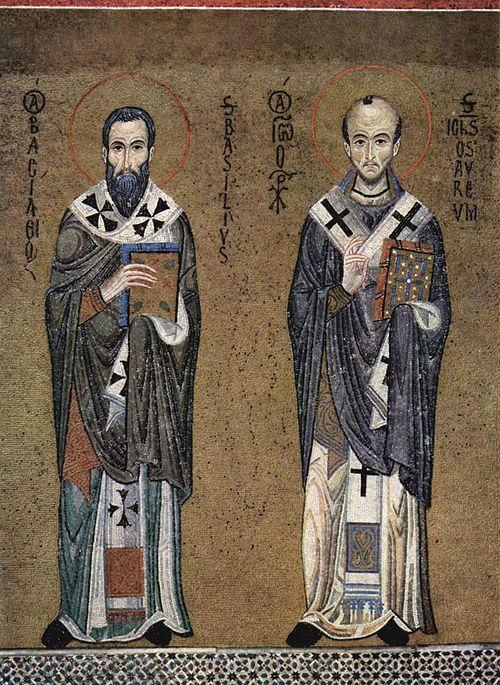
Materials covered in this trivia questions quiz
Study Hint 1
Question: In the context of the Eastern Orthodox Church, the Divine Liturgy is considered…
Trivia Question Study Fact: Within the Eastern Orthodox Church, the Divine Liturgy is the liturgical celebration of the Eucharist, considered the principal sacrament. This liturgy is performed within a synaxis, a gathering of the faithful, and involves the consecration of bread and wine by a priest, believed to transform them into the body and blood of Christ through an epiclesis, an invocation of the Holy Spirit.
Trivia Question Explanation: The Divine Liturgy is specifically described as the liturgical celebration of the Eucharist, a central sacrament in the Eastern Orthodox Church, where bread and wine are consecrated to become the body and blood of Christ.
Return to Question
Study Hint 2
Question: In the context of Divine Liturgy, what fundamental belief distinguishes it from a purely symbolic ritual within Eastern Christian traditions?
Trivia Question Study Fact: Within the Eastern Orthodox, Eastern Catholic, and Eastern Lutheran traditions, the Divine Liturgy is not merely a symbolic ritual, but is believed to make present an unseen reality, uniting worshippers with departed saints and angels in a shared worship experience within the Kingdom of God.
Trivia Question Explanation: Eastern Orthodox, Eastern Catholic, and Eastern Lutheran churches hold that the Divine Liturgy transcends the material world, creating a connection between the living, the departed saints, and the angels, thereby embodying a spiritual reality beyond mere symbolism.
Return to Question
Study Hint 3
Question: In the context of Hagia Sophia, the Byzantine liturgical tradition was most prominently expressed through its role as…
Trivia Question Study Fact: For over nine centuries, Hagia Sophia functioned as the primary cathedral of Constantinople within the Byzantine liturgical tradition, serving as the central church for the Ecumenical Patriarch of Constantinople. This period of continuous use was interrupted only briefly during the Latin Empire (1204-1261) when a Latin hierarchy was imposed.
Trivia Question Explanation: Hagia Sophia served as the cathedral of Constantinople for nearly a thousand years, making it the central church within the Byzantine liturgical tradition and the seat of the Ecumenical Patriarch.
Return to Question
Study Hint 4
Question: In the context of Liturgy, Divine Liturgy is considered…
Trivia Question Study Fact: Divine Liturgy, as a form of worship, is fundamentally a communal response to the sacred, expressed through rituals encompassing praise, thanksgiving, remembrance, supplication, and repentance. These activities are undertaken to establish or reinforce a relationship with God or the divine.
Trivia Question Explanation: Liturgy is defined as the customary public ritual of worship performed by a religious group, representing a shared participation in the sacred through activities like praise and supplication.
Return to Question
Study Hint 5
Question: In the context of the Byzantine Rite, the Divine Liturgy is considered…
Trivia Question Study Fact: Within the Byzantine Rite, the Divine Liturgy is characterized by a highly ritualized and extended practice of making the sign of the cross, often accompanied by bowing, occurring frequently—more than a hundred times—during the service itself, alongside a strong emphasis on venerating icons and communal interaction.
Trivia Question Explanation: The Byzantine Rite's Divine Liturgy is notable for its elaborate rituals, including the repeated making of the sign of the cross—over a hundred times—and a significant practice of venerating icons, fostering a communal and visually rich worship experience.
Return to Question
Study Hint 6
Question: In the context of Liturgies, Divine Liturgy is considered a manifestation of…
Trivia Question Study Fact: Divine Liturgy, as a form of worship, is fundamentally a communal response to the sacred, expressed through rituals encompassing praise, thanksgiving, remembrance, supplication, and repentance. These activities are undertaken to establish or reinforce a relationship with God or the divine.
Trivia Question Explanation: Liturgy, by definition, represents a shared, public ritual performed by a religious group, signifying a collective engagement with the divine through established practices.
Return to Question
Study Hint 7
Question: In the context of Eastern Orthodox Churches, the Divine Liturgy is most significantly associated with the practice of…
Trivia Question Study Fact: The Eastern Orthodox Church, comprised of autocephalous churches, utilizes a liturgical framework for worship, with the Divine Liturgy being central to its sacramental life. Within this liturgical practice, the Eucharist is considered the most important sacrament, and through a process of consecration invoked by a priest, the bread and wine are believed to become the body and blood of Christ.
Trivia Question Explanation: The Divine Liturgy is the liturgical framework within which the Eucharist, considered the principal sacrament, is celebrated and consecrated, transforming the bread and wine into the body and blood of Christ according to Eastern Orthodox belief.
Return to Question
Study Hint 8
Question: In the context of Liturgical practices, Divine Liturgy is considered…
Trivia Question Study Fact: Divine Liturgy, as a form of worship, is fundamentally a communal response to the sacred, expressed through rituals encompassing praise, thanksgiving, remembrance, supplication, and repentance. These activities are understood by participants as a means of establishing or reinforcing a relationship with God or the divine.
Trivia Question Explanation: Liturgy, by definition, represents a shared, public ritual performed by a religious group, signifying a collective engagement with the divine through established practices.
Return to Question
Study Hint 9
Question: In the context of the Alexandrian Rite, the Divine Liturgy is notably influenced by the contributions of which group of figures?
Trivia Question Study Fact: The Divine Liturgy within the Alexandrian rites incorporates liturgical elements attributed to several prominent saints, including Mark the Evangelist, traditionally considered the first bishop of Alexandria, alongside Basil the Great, Cyril of Alexandria, and Gregory of Nazianzus, demonstrating a historical continuity and synthesis of early Christian worship traditions.
Trivia Question Explanation: The Alexandrian rite’s Divine Liturgy specifically draws upon elements originating from the liturgical works and traditions associated with Saints Mark the Evangelist, Basil the Great, Cyril of Alexandria, and Gregory of Nazianzus, reflecting a blend of early Christian theological and liturgical heritage.
Return to Question
Study Hint 10
Question: In the context of the Roman Mass, Divine Liturgy is considered…
Trivia Question Study Fact: While the term 'Mass' is prevalent in Western Christian traditions like Catholicism and Lutheranism for the central Eucharistic service, churches within Eastern Christianity—including Eastern Catholic Churches—generally utilize alternative terms to describe their equivalent worship service, such as 'Divine Liturgy', 'Holy Qurbana', or 'Badarak'.
Trivia Question Explanation: Eastern Christian denominations, including Eastern Catholic Churches, typically employ terms like 'Divine Liturgy', 'Holy Qurbana', and 'Badarak' to refer to their Eucharistic celebration, differing from the 'Mass' commonly used in the West.
Return to Question