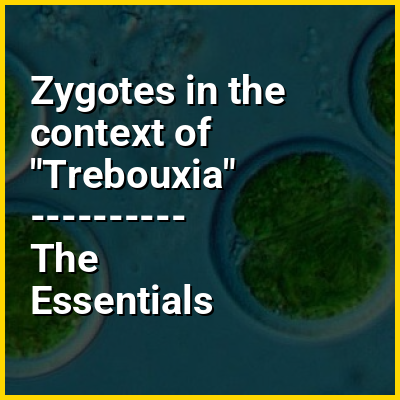
Trebouxia is a unicellular green alga. It is a photosynthetic organism that can exist in almost all habitats found in polar, tropical, and temperate regions. It can either exist in a symbiotic relationship with fungi in the form of lichen or it can survive independently as a free-living organism alone or in colonies. Trebouxia is the most common photobiont in extant lichens. It is a primary producer of marine, freshwater and terrestrial ecosystems. It uses carotenoids and chlorophyll a and b to harvest energy from the sun and provide nutrients to various animals and insects.
An ancestor of Trebouxia may have introduced photosynthesis into terrestrial habitats approximately 450 million years ago. It is also a bioindicator of habitat disturbances, freshwater quality, air pollution, carbon dioxide concentration, and climate change. Furthermore, its life cycle is complex and much research needs to be done to characterize it more completely. For decades, the presence of sexual reproduction was unknown. However, recent (2000s) molecular evidence of recombination and the observation of sexual fusions of gametes to form zygotes suggest that sexual reproduction occurs.