Zawiya of Sidi Bel Abbes in the context of "Walls of Marrakesh"

Play Trivia Questions online!

or

Skip to study material about Zawiya of Sidi Bel Abbes in the context of "Walls of Marrakesh"

Ad spacer

⭐ Core Definition: Zawiya of Sidi Bel Abbes

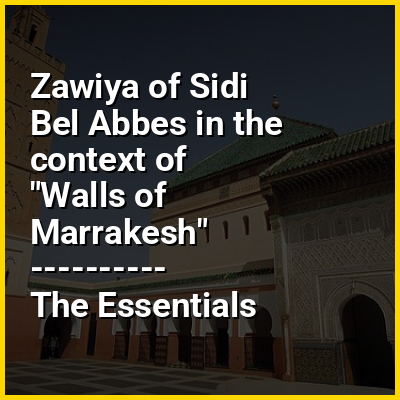
The Zawiya of Sidi Bel Abbes (Arabic: زاوية سيدي بلعباس) is a zawiya (Islamic Sufi religious complex) in Marrakesh, Morocco. The complex is centered around the mausoleum of Abu al-Abbas al-Sabti (or Sidi Bel Abbes), a Sufi teacher who died in 1204. He is the most venerated of the Seven Saints of Marrakesh, generally considered the "patron saint" of the city.

The zawiya's architecture dates in part to the late Saadian period (early 17th century) but has been modified and restored multiple times during the Alawi period from the late 17th to 19th centuries. The complex includes many buildings of various functions arranged around two courtyards or plazas. The most important elements include the saint's mausoleum and a mosque, along with a madrasa, an asylum/hospice, and other facilities.
↓ Menu

>>>PUT SHARE BUTTONS HERE<<<

👉 Zawiya of Sidi Bel Abbes in the context of Walls of Marrakesh

The Walls of Marrakesh are a set of defensive ramparts which enclose the historic medina districts of Marrakesh, Morocco. They were first laid out in the early 12th century by the Almoravid dynasty which founded the city in 1070 CE as their new capital. The walls have since been expanded several times by the addition of the Kasbah to the south at the end of the 12th century and by a later extension to encompass the northern neighbourhood around the Zawiya of Sidi Bel Abbes.

The Gates of Marrakesh were for the most part established since the original Almoravid construction of the city walls, but most have been modified during later periods. Other gates were also added when the Almohads created the Kasbah, which itself has been expanded and re-worked many times since.

↓ Explore More Topics
In this Dossier