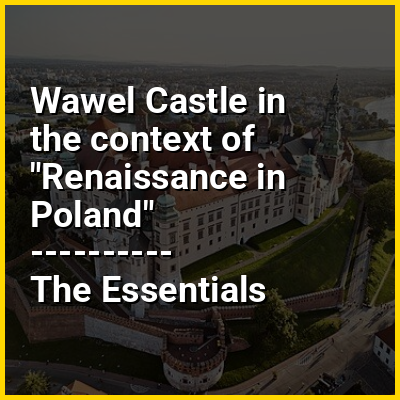
The Wawel Royal Castle (Polish pronunciation: [ˈvavɛl] ; Zamek Królewski na Wawelu) and the Wawel Hill on which it sits constitute the most historically and culturally significant site in Poland. A fortified residency on the Vistula River in Kraków, it was established on the orders of King Casimir III the Great and enlarged over the centuries into a number of structures around a Polish Renaissance courtyard. It represents nearly all European architectural styles of the Medieval, Renaissance and Baroque periods.
The castle is part of a fortified architectural complex erected atop a limestone outcrop on the left bank of the Vistula River, at an altitude of 228 metres (748 ft) above sea level. The complex consists of numerous buildings of great historical and national importance, including the Wawel Cathedral where Polish monarchs were crowned and buried. Some of Wawel's oldest stone buildings can be traced back to 970 CE, in addition to the earliest examples of Romanesque and Gothic architecture in Poland. The current castle was built in the 14th century, and expanded over the next hundreds of years. In 1978, Wawel was declared the first World Heritage Site as part of the Historic Centre of Kraków.