Washington Irving in the context of "F. O. C. Darley"

Play Trivia Questions online!

or

Skip to study material about Washington Irving in the context of "F. O. C. Darley"

Ad spacer

⭐ Core Definition: Washington Irving

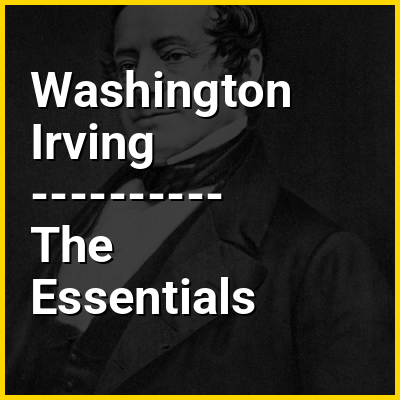
Washington Irving (April 3, 1783 – November 28, 1859) was an American short-story writer, essayist, biographer, historian, and diplomat of the early 19th century. He wrote the short stories "Rip Van Winkle" (1819) and "The Legend of Sleepy Hollow" (1820), both of which appear in his collection The Sketch Book of Geoffrey Crayon, Gent. His historical works include biographies of Oliver Goldsmith, Muhammad, and George Washington, as well as several histories of 15th-century Spain that deal with subjects such as the Alhambra, Christopher Columbus, and the Moors. Irving served as the American ambassador to Spain in the 1840s.

Irving was born and raised in Manhattan to a merchant family. He made his literary debut in 1802 with a series of observational letters to the Morning Chronicle, written under the pseudonym Jonathan Oldstyle. He temporarily moved to England for the family business in 1815, where he achieved fame with the publication of The Sketch Book of Geoffrey Crayon, Gent. which was serialized from 1819 to 1820. He continued to publish regularly throughout his life, and he completed a five-volume biography of George Washington just eight months before his death at age 76 in Tarrytown, New York.
↓ Menu

>>>PUT SHARE BUTTONS HERE<<<

👉 Washington Irving in the context of F. O. C. Darley

Felix Octavius Carr Darley (June 23, 1822 – March 27, 1888), often credited as F. O. C. Darley, was an American illustrator, known for his illustrations in works by well-known 19th-century authors, including James Fenimore Cooper, Charles Dickens, Mary Mapes Dodge, Nathaniel Hawthorne, Washington Irving, George Lippard, Henry Wadsworth Longfellow, Donald Grant Mitchell, Clement Clarke Moore, Francis Parkman, Harriet Beecher Stowe and Nathaniel Parker Willis.

↓ Explore More Topics
In this Dossier

Washington Irving in the context of American literature

American literature is literature written or produced in the United States of America and in the British colonies that preceded it. The American literary tradition is part of the broader tradition of English-language literature, but also includes literature produced in languages other than English.

The American Revolutionary Period (1775–1783) is notable for the political writings of Benjamin Franklin, Alexander Hamilton, Thomas Paine, and Thomas Jefferson. An early novel is William Hill Brown's The Power of Sympathy, published in 1791. The writer and critic John Neal in the early-to-mid-19th century helped to advance America toward a unique literature and culture, by criticizing his predecessors, such as Washington Irving, for imitating their British counterparts and by influencing writers such as Edgar Allan Poe, who took American poetry and short fiction in new directions. Ralph Waldo Emerson pioneered the influential Transcendentalism movement; Henry David Thoreau, the author of Walden, was influenced by this movement. The conflict surrounding abolitionism inspired writers, like Harriet Beecher Stowe, and authors of slave narratives, such as Frederick Douglass. Nathaniel Hawthorne's The Scarlet Letter (1850) explored the dark aspects of human nature, as did Herman Melville's Moby-Dick (1851). Major American poets of the 19th century include Walt Whitman, Melville, and Emily Dickinson. Mark Twain was the first major American writer to be born in the West. Henry James achieved international recognition with novels like The Portrait of a Lady (1881).

↑ Return to Menu

Washington Irving in the context of Rip Van Winkle

"Rip Van Winkle" (Dutch pronunciation: [ˈrɪp fɑŋ ˈʋɪŋkəl]) is a short story by the American author Washington Irving, first published in 1819. It follows a Dutch-American villager in colonial America named Rip Van Winkle who meets mysterious Dutchmen, imbibes their strong liquor and falls deeply asleep in the Catskill Mountains. He awakes 20 years later to a very changed world, having missed the American Revolution.

Inspired by a conversation on nostalgia with his American expatriate brother-in-law, Irving wrote the story while temporarily living in Birmingham, England. It was published in his collection, The Sketch Book of Geoffrey Crayon, Gent. While the story is set in New York's Catskill Mountains near where Irving later took up residence, he admitted, "When I wrote the story, I had never been on the Catskills."

↑ Return to Menu

Washington Irving in the context of A Christmas Carol

A Christmas Carol. In Prose. Being a Ghost Story of Christmas, commonly known as A Christmas Carol, is a novella by Charles Dickens, first published in London by Chapman & Hall in 1843 and illustrated by John Leech. It recounts the story of Ebenezer Scrooge, an elderly miser who is visited by the ghost of his former business partner Jacob Marley and the spirits of Christmas Past, Present and Yet to Come. In the process, Scrooge is transformed into a kinder, gentler man.

Dickens wrote A Christmas Carol during a period when the British were exploring and re-evaluating past Christmas traditions, including carols, and newer customs such as cards and Christmas trees. He was influenced by the experiences of his own youth and by the Christmas stories of other authors, including Washington Irving and Douglas Jerrold. Dickens had written three Christmas stories prior to the novella, and was inspired following a visit to the Field Lane Ragged School, one of several establishments for London's street children. The treatment of the poor and the ability of a selfish man to redeem himself by transforming into a more sympathetic character are the key themes of the story. There is discussion among academics as to whether this is a fully secular story or a Christian allegory.

↑ Return to Menu

Washington Irving in the context of Alhambra

The Alhambra (/ælˈhæmbrə/, Spanish: [aˈlambɾa]; Arabic: الْحَمْرَاء, romanizedal-ḥamrāʼ ) is a palace and fortress complex located in Granada, Spain. It is one of the most famous monuments of Islamic architecture and one of the best-preserved palaces of the historic Islamic world. Additionally, the palace contains notable examples of Spanish Renaissance architecture.

The complex was begun in 1238 by Muhammad I Ibn al-Ahmar, the first Nasrid emir and founder of the Emirate of Granada, the last Muslim state of al-Andalus. It was built on the Sabika hill, an outcrop of the Sierra Nevada which had been the site of earlier fortresses and of the 11th-century palace of Samuel ibn Naghrillah. Later Nasrid rulers continuously modified the site. The most significant construction campaigns, which gave the royal palaces much of their defining character, took place in the 14th century during the reigns of Yusuf I and Muhammad V. After the conclusion of the Christian Reconquista in 1492, the site became the Royal Court of Ferdinand and Isabella (where Christopher Columbus received royal endorsement for his expedition), and the palaces were partially altered. In 1526, Charles V commissioned a new Renaissance-style palace in direct juxtaposition with the Nasrid palaces, but it was left uncompleted in the early 17th century. The Alhambra fell into disrepair over the following centuries, with its buildings occupied by squatters. The troops of Napoleon destroyed parts of it in 1812. After this, the Alhambra became an attraction for British, American, and other European Romantic travellers. The most influential of them was Washington Irving, whose Tales of the Alhambra (1832) brought international attention to the site. The Alhambra was one of the first Islamic monuments to become the object of modern scientific study and has been the subject of numerous restorations since the 19th century. It is now one of Spain's major tourist attractions and a UNESCO World Heritage Site.

↑ Return to Menu

Washington Irving in the context of The Sketch Book of Geoffrey Crayon, Gent.

The Sketch Book of Geoffrey Crayon, Gent., commonly referred to as The Sketch Book, is a collection of 34 essays and short stories written by the American author Washington Irving. It was published serially throughout 1819 and 1820. The collection includes two of Irving's best-known stories, attributed to the fictional Dutch historian Diedrich Knickerbocker: "The Legend of Sleepy Hollow" and "Rip Van Winkle". It also marks Irving's first use of the pseudonym Geoffrey Crayon, which he would continue to employ throughout his literary career.

The Sketch Book, along with James Fenimore Cooper's Leatherstocking Tales, was among the first widely read works of American literature in Britain and Europe. It also helped advance the reputation of American writers with an international audience.

↑ Return to Menu

Washington Irving in the context of Tales of the Alhambra

Tales of the Alhambra: A Series of Tales and Sketches of the Moors and Spaniards is an 1832 collection of essays, verbal sketches and stories by American author Washington Irving (1783–1859) inspired by, and partly written during, his 1828 visit to the palace/fortress complex known as the Alhambra in Granada, Andalusia, Spain.

↑ Return to Menu

Washington Irving in the context of The Legend of Sleepy Hollow

"The Legend of Sleepy Hollow" is an 1820 short story by American author Washington Irving contained in his collection of 34 essays and short stories titled The Sketch Book of Geoffrey Crayon, Gent. Irving wrote the story while living in Birmingham, England.

Along with Irving's companion piece "Rip Van Winkle", "The Legend of Sleepy Hollow" is among the earliest examples of American fiction with enduring popularity, especially during Halloween because of a character known as the Headless Horseman believed to be a Hessian soldier who was decapitated by a cannonball in battle.

↑ Return to Menu

Washington Irving in the context of Oliver Goldsmith

Oliver Goldsmith (10 November 1728 – 4 April 1774) was an Anglo-Irish poet, novelist, playwright, and hack writer. He produced literary works in a variety of genres and is regarded among the most versatile writers of the Georgian era. His works are known for their realistic depictions of British society, and his comedy plays for the English stage are considered second in importance only to those of playwright William Shakespeare. Credited with introducing sentimentalism in English literature in 18th-century Great Britain, several of Goldsmith's publications are popular classics of the period, including his only novel, The Vicar of Wakefield (1766), and the comedy play She Stoops to Conquer (1771).

He wrote the play The Good-Natur'd Man (1768) and is additionally thought by commentators such as Washington Irving to have written the children's novel The History of Little Goody Two-Shoes (1765), one of the earliest classical works of children's literature. Goldsmith also produced a number of poems during his career, such as The Deserted Village (1770), and contributed to the flourishing of idyllic poetry during the Georgian era.

↑ Return to Menu