Pope Julius II (Latin: Iulius II; Italian: Giulio II; born Giuliano della Rovere; 5 December 1443 – 21 February 1513) was head of the Catholic Church and ruler of the Papal States from 1503 to his death, in February 1513. Nicknamed the Warrior Pope, the Battle Pope or the Fearsome Pope, it is often speculated that he had chosen his papal name not in honor of Pope Julius I but in emulation of Julius Caesar. One of the most powerful and influential popes, Julius II was a central figure of the High Renaissance and left a significant cultural and political legacy. As a result of his policies during the Italian Wars, the Papal States increased their power and centralization, and the office of the papacy continued to be crucial, diplomatically and politically, during the entirety of the 16th century in Italy and Europe.
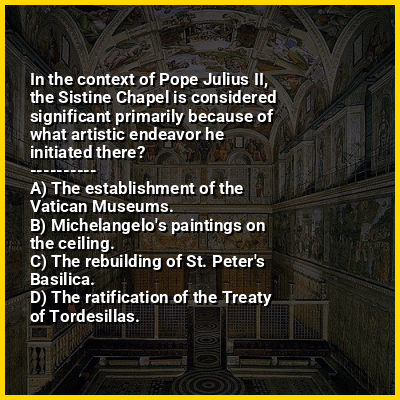
In 1506, Julius II established the Vatican Museums and initiated the rebuilding of the St. Peter's Basilica. The same year he organized the famous Swiss Guard for his personal protection and commanded a successful campaign in Romagna against local lords. The interests of Julius II lay also in the New World, as he ratified the Treaty of Tordesillas, establishing the first bishoprics in the Americas and beginning the Catholicization of Latin America. In 1508, he commissioned the Raphael Rooms and Michelangelo's paintings in the Sistine Chapel.