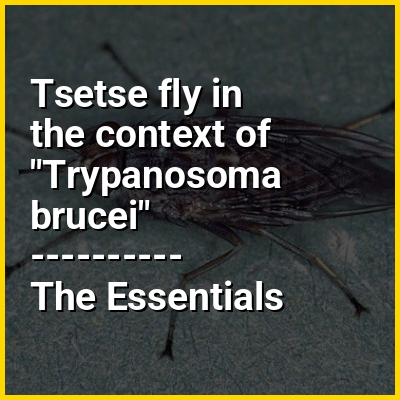
Tsetse flies (/ˈsiːtsi/ SEET-see, UK: /ˈtsɛtsə/ TSET-sə or US: /ˈtsiːtsi/ TSEET-see) (sometimes spelled tzetze; also known as tik-tik flies) are large biting flies that inhabit much of tropical Africa. Tsetse flies include all the species in the genus Glossina, which are placed in their own family, Glossinidae. The tsetse is an obligate parasite that lives by feeding on the blood of vertebrate animals. Tsetse flies have been extensively studied because of their role in transmitting disease. They have pronounced economic and public health impacts in sub-Saharan Africa as the biological vectors of trypanosomes, causing human and animal trypanosomiasis.
Tsetse flies can be distinguished from other large flies by two easily-observed features: primarily, tsetse flies fold their wings over their abdomens completely when they are resting (so that one wing rests directly on top of the other); Secondly, tsetse flies also have a long proboscis, extending directly forward, which is attached by a distinct bulb to the bottom of their heads.