Tribe of Benjamin in the context of "Gibeah"

Play Trivia Questions online!

or

Skip to study material about Tribe of Benjamin in the context of "Gibeah"

Ad spacer

⭐ Core Definition: Tribe of Benjamin

According to the Torah, the Tribe of Benjamin (Hebrew: בִּנְיָמִן, romanizedBinyāmīn) was one of the Twelve Tribes of Israel. The tribe was descended from Benjamin, the youngest son of the patriarch Jacob (later given the name Israel) and his wife Rachel. In the Samaritan Pentateuch the name appears as Binyamēm (Samaritan Hebrew: ࠁࠪࠍࠬࠉࠣࠌࠜࠉࠌࠬ).

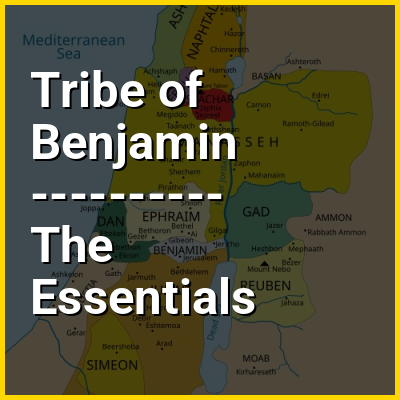
The Tribe of Benjamin, whose allocated territory was to the north of the Tribe of Judah but to the south of the later Kingdom of Israel, is significant in biblical narratives as a source of various Israelite leaders, including the first Israelite king, Saul, as well as earlier tribal leaders in the period of the Judges. In the period of the Judges, they feature in an episode in which a civil war results in their near-extinction as a tribe. After the brief period of the United Kingdom of Israel, Benjamin became part of the southern Kingdom of Judah following the split into two kingdoms. After the destruction of the northern kingdom, Benjamin was fully absorbed into the southern kingdom. After Judah's revolts against Babylon, it was destroyed by the Neo-Babylonian Empire in the early sixth century BCE, and its population deported, Benjamin as an organized tribe faded from history.
↓ Menu

>>>PUT SHARE BUTTONS HERE<<<
In this Dossier

Tribe of Benjamin in the context of Jewish

Jews (Hebrew: יְהוּדִים, ISO 259-2: Yehudim, Israeli pronunciation: [jehuˈdim]), or the Jewish people, are an ethnoreligious group and nation, originating from the Israelites of ancient Israel and Judah. They traditionally adhere to Judaism. Jewish ethnicity, religion, and community are highly interrelated, as Judaism is an ethnic religion, though many ethnic Jews do not practice it. Religious Jews regard converts to Judaism as members of the Jewish nation, pursuant to the long-standing conversion process.

The Israelites emerged from the pre-existing Canaanite peoples to establish Israel and Judah in the Southern Levant during the Iron Age. Originally, Jews referred to the inhabitants of the kingdom of Judah and were distinguished from the gentiles and the Samaritans. According to the Hebrew Bible, these inhabitants predominately originate from the tribe of Judah, who were descendants of Judah, the fourth son of Jacob. The tribe of Benjamin were another significant demographic in Judah and were considered Jews too. By the late 6th century BCE, Judaism had evolved from the Israelite religion, dubbed Yahwism (for Yahweh) by modern scholars, having a theology that religious Jews believe to be the expression of the Mosaic covenant between God and the Jewish people. After the Babylonian exile, Jews referred to followers of Judaism, descendants of the Israelites, citizens of Judea, or allies of the Judean state. Jewish migration within the Mediterranean region during the Hellenistic period, followed by population transfers, caused by events like the Jewish–Roman wars, gave rise to the Jewish diaspora, consisting of diverse Jewish communities that maintained their sense of Jewish history, identity, and culture.

↑ Return to Menu

Tribe of Benjamin in the context of Jewish diaspora

The Jewish diaspora (Hebrew: גוֹלָה gōlā), alternatively the dispersion (תְּפוּצָה təfūṣā) or the exile (גָּלוּת gālūṯ; Yiddish: גלות gōləs), consists of Jews who reside outside of the Land of Israel. Historically, it refers to the expansive scattering of the Israelites out of their homeland in the Southern Levant and their subsequent settlement in other parts of the world, which gave rise to the various Jewish communities.

In the Hebrew Bible, the term gālūṯ (lit.'exile') denotes the fate of the Twelve Tribes of Israel over the course of two major exilic events in ancient Israel and Judah: the Assyrian captivity, which occurred after the Kingdom of Israel was conquered by the Neo-Assyrian Empire in the 8th century BCE; and the Babylonian captivity, which occurred after the Kingdom of Judah was conquered by the Neo-Babylonian Empire in the 6th century BCE. While those who were taken from Israel dispersed as the Ten Lost Tribes, those who were taken from Judah—consisting of the Tribe of Judah and the Tribe of Benjamin—became known by the identity "Jew" (יְהוּדִי Yehūdī, lit.'of Judah') and were repatriated following the Persian conquest of Babylonia.

↑ Return to Menu

Tribe of Benjamin in the context of Davidic line

The Davidic line refers to the descendants of David, who established the House of David (Hebrew: בֵּית דָּוִד Bēt Dāwīḏ) in the Kingdom of Israel and the Kingdom of Judah. In Judaism, the lineage is based on texts from the Hebrew Bible, as well as on later Jewish traditions.

According to the biblical narrative, David of the tribe of Judah engaged in a protracted conflict with Ish-bosheth of the Tribe of Benjamin after the latter succeeded his father Saul to become the second king of an amalgamated Israel and Judah. Amidst this struggle, Yahweh had sent his prophet Samuel to anoint David as the true king of the Israelites. Following Ish-bosheth's assassination at the hands of his own army captains, David officially acceded to the throne around 1010 BCE, replacing the House of Saul with his own and becoming the Israelite third king. He was succeeded by his son Solomon, whose mother was Bathsheba. Solomon's death led to the rejection of the House of David by most of the Twelve Tribes of Israel, with only Judah and Benjamin remaining loyal: the dissenters chose Jeroboam as their monarch and formed the Kingdom of Israel in the north (Samaria); while the loyalists kept Solomon's son Rehoboam as their monarch and formed the Kingdom of Judah in the south (Judea). With the success of Jeroboam's Revolt having severed Israel's connection to the House of David, only the Judahite monarchs, except Athaliah, were part of the Davidic line.

↑ Return to Menu

Tribe of Benjamin in the context of Kingdom of Israel (Samaria)

The Kingdom of Israel (Biblical Hebrew: מַמְלֶכֶת יִשְׂרָאֵל, romanized: Mamleḵeṯ Yiśrāʾēl), also called the Kingdom of Samaria or the Northern Kingdom, was an Israelite kingdom that existed in the Southern Levant during the Iron Age. Its beginnings date back to the first half of the 10th century BCE. It controlled the areas of Samaria, Galilee and parts of Transjordan; the former two regions underwent a period in which a large number of new settlements were established shortly after the kingdom came into existence. It had four capital cities in succession: Shiloh, Shechem, Tirzah, and the city of Samaria. In the 9th century BCE, the House of Omri ruled it, whose political centre was the city of Samaria.

According to the Hebrew Bible, the territory of the Twelve Tribes of Israel was once amalgamated under a Kingdom of Israel and Judah, which was ruled by the House of Saul and then by the House of David. However, upon the death of Solomon, who was the son and successor of David, there was discontent over his son and successor Rehoboam, whose reign was only accepted by the Tribe of Judah and the Tribe of Benjamin. The unpopularity of Rehoboam's reign among the rest of the Israelites, who sought Jeroboam as their monarch, resulted in Jeroboam's Revolt, which led to the establishment of the Kingdom of Israel in the north (Samaria), whereas the loyalists of Judah and Benjamin kept Rehoboam as their monarch and established the Kingdom of Judah in the south (Judea), ending Israelite political unity. While the existence of Israel and Judah as two independent kingdoms is not disputed, some historians and archaeologists reject the historicity of a United Monarchy of Israel and Judah.

↑ Return to Menu

Tribe of Benjamin in the context of Twelve Tribes of Israel

The Twelve Tribes of Israel (Hebrew: שִׁבְטֵי־יִשְׂרָאֵל, romanizedŠīḇṭēy Yīsrāʾēl, lit.'Staffs of Israel') are described in the Hebrew Bible as being the descendants of Jacob, a Hebrew patriarch who was a son of Isaac and thereby a grandson of Abraham. Jacob, later known as Israel, had a total of twelve sons, from whom each tribe's ancestry and namesake is derived: Reuben, Simeon, Levi, Judah, Dan, Naphtali, Gad, Asher, Issachar, Zebulun, Joseph, and Benjamin. Collectively known as the Israelites, they inhabited a part of Canaan—the Land of Israel—during the Iron Age. Their history, society, culture, and politics feature heavily in the Abrahamic religions, especially Judaism.

In the biblical narrative, after Moses oversaw the Israelites' departure from Egypt, he died and was succeeded by Joshua, who led the conquest of Canaan and subsequently allotted territory for all but the Tribe of Levi, which was instead dedicated 48 cities. This development culminated in the establishment of Israel and Judah, purportedly beginning with a Kingdom of Israel and Judah before splitting into the Kingdom of Israel in the north and the Kingdom of Judah in the south.

↑ Return to Menu

Tribe of Benjamin in the context of Tribe of Judah

According to the Hebrew Bible, the tribe of Judah (שֵׁבֶט יְהוּדָה‎, Shevet Yehudah) was one of the twelve Tribes of Israel, named after Judah, the son of Jacob. Judah was one of the tribes to take its place in Judea, occupying its southern part. Jesse and his sons, including King David, belonged to this tribe.

Judah played a central role in the Deuteronomistic history, which encompasses the books of Deuteronomy through II Kings. After the death of King Solomon, the Tribe of Judah, the Tribe of Benjamin, the Tribe of Dan, and the Levites formed the Southern Kingdom of Judah, with Jerusalem and Hebron as its capital. The kingdom lasted until its conquest by Babylon in c. 586 BCE.

↑ Return to Menu