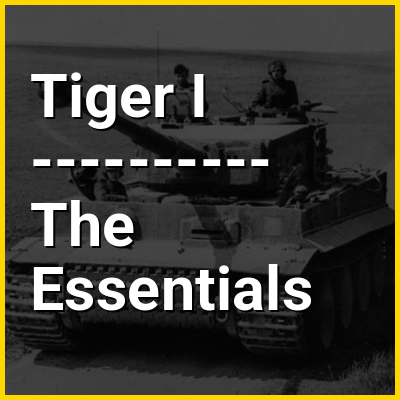
The Tiger I (German: [ˈtiːɡɐ] ) was a German heavy tank of World War II that began operational duty in 1942 in Africa and in the Soviet Union, usually in independent heavy tank battalions. It gave the German Army its first armoured fighting vehicle that mounted the 8.8 cm (3.5 in) KwK 36 gun (derived from the 8.8 cm Flak 36, the famous "eighty-eight" feared by Allied troops). 1,347 were built between August 1942 and August 1944. After August 1944, production of the Tiger I was phased out in favour of the Tiger II.
While the Tiger I has been called an outstanding design for its time, it has also been criticized for being overengineered, and for using expensive materials and labour-intensive production methods. In the early period, the Tiger was prone to certain types of track failures and breakdowns. It was expensive to maintain, but generally mechanically reliable. It was difficult to transport and vulnerable to immobilisation when mud, ice, and snow froze between its overlapping and interleaved Schachtellaufwerk-pattern road wheels, often jamming them solid.