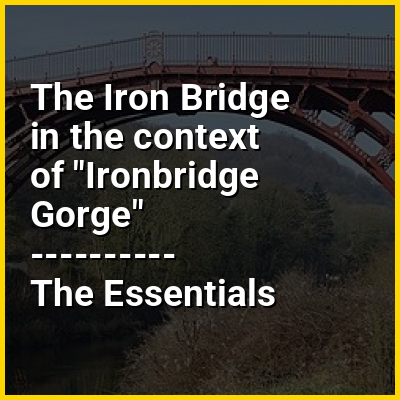
The Iron Bridge is a cast iron arch bridge that crosses the River Severn in Shropshire, England. Opened in 1781, it was the first major bridge in the world to be made of cast iron. Its success inspired the widespread use of cast iron as a structural material, and today the bridge is celebrated as a symbol of the Industrial Revolution.
The geography of the deep Ironbridge Gorge, formed by glacial action during the last ice age, meant that there are industrially useful deposits of coal, iron ore, limestone and fire clay present near the surface where they are readily mined, but also that it was difficult to build a bridge across the river at this location. To cope with the instability of the banks and the need to maintain a navigable channel in the river, a single span iron bridge was proposed by Thomas Farnolls Pritchard. After initial uncertainty about the use of iron, construction took place over two years, with Abraham Darby III responsible for the ironwork. The bridge crosses the Ironbridge Gorge with a main span of 100 ft 6 in (30.63 m), allowing sufficient clearance for boats to pass underneath.