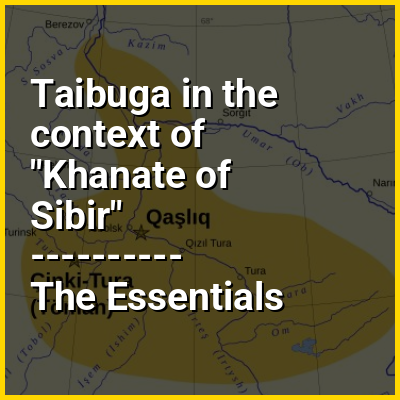
The Khanate of Sibir (Siberian Tatar: Себер Ҡаннығы, romanized: Seber Qannïq; Russian: Сибирское царство, Сибирский юрт, romanized: Sibirskoye tsarstvo, Sibirsky yurt) was a Tatar state in western Siberia. It was founded at the end of the 15th century, following the break-up of the Golden Horde. Throughout its history, members of the Shaybanid and Taibugid dynasties often contested the rulership over the Khanate between each other; both of these competing tribes were direct patrilineal descendants of Genghis Khan through his eldest son Jochi and Jochi's fifth son Shayban (Shiban) (died 1266). The area of the Khanate had once formed an integral part of the Mongol Empire, and later came under the control of the White Horde, and under the Golden Horde from 1242 to 1468.
The Khanate of Sibir had an ethnically diverse population of Turkic peoples – Siberian Tatars and various Uralic peoples – including the Khanty, the Mansi, and the Selkup. The Sibir Khanate was the northernmost Muslim state in recorded history. Its defeat by Yermak Timofeyevich in 1582 marked the beginning of the Russian conquest of Siberia.