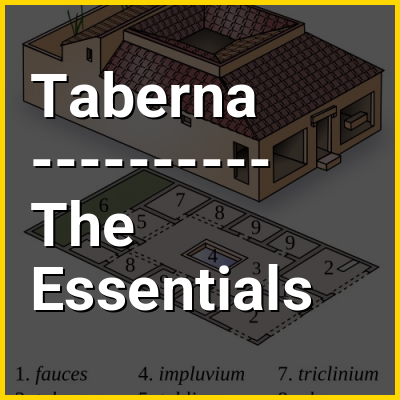
A taberna (pl.: tabernae) was a type of shop or stall in Ancient Rome. Originally meaning a single-room shop for the sale of goods and services, tabernae were often incorporated into domestic dwellings on the ground level flanking the fauces, the main entrance to a home, but with one side open to the street. As the Roman Empire became more prosperous, tabernae were established within great indoor markets and were often covered by a barrel vault. Each taberna within a market had a window above it to let light into a wooden attic for storage and had a wide doorway. A famous example of such an indoor market is the Markets of Trajan in Rome, built in the early 2nd century by Apollodorus of Damascus.
According to the Cambridge Ancient History, a taberna was a "retail unit" within the Roman Empire and was where many economic activities and many service industries were provided, including the sale of cooked food, wine, and bread.