Swampy Cree in the context of "Treaty 1"

Play Trivia Questions online!

or

Skip to study material about Swampy Cree in the context of "Treaty 1"

Ad spacer

⭐ Core Definition: Swampy Cree

The Swampy Cree people, also known by their autonyms Néhinaw, Maskiki Wi Iniwak, Mushkekowuk, Maškékowak, Maskegon or Maskekon (and therefore also Muskegon and Muskegoes) or by exonyms including West Main Cree, Lowland Cree, and Homeguard Cree, are a division of the Cree Nation occupying lands located in northern Manitoba, along the Saskatchewan River in northeastern Saskatchewan, along the shores of Hudson Bay and adjoining interior lands south and west as well as territories along the shores of Hudson and James Bay in Ontario. They are geographically and to some extent culturally split into two main groupings, and therefore speak two dialects of the Swampy Cree language, which is an "n-dialect":

  • Western Swampy Cree called themselves: Mushkego, Mushkegowuk (or Maškēkowak), also called Lowland (Half-Homeguard) Cree, speak the western dialect of the Swampy Cree language, while the s/š distinction is kept in the eastern dialect, the western dialect have merged both into s
  • Eastern Swampy Cree / Western James Bay Cree called themselves: Omaškêkowak, Omushkego, Omushkegowak, together with the Moose Cree also called Lowland Cree, Lowland (Homeguard) Cree, West Main Cree, James Bay Mushkego, because they were living along the western shores of the Hudson and James Bay they were oft also known as Western James Bay Cree, reflecting their position in contrast to the (Eastern) James Bay Cree, speak the eastern dialect of the Swampy Cree language, which kept the s/š distinction
↓ Menu

>>>PUT SHARE BUTTONS HERE<<<

👉 Swampy Cree in the context of Treaty 1

Treaty 1 (also known as the "stone fort treaty") is an agreement established on August 3, 1871, between the Crown and the Anishinaabe and Swampy Cree, Canadian based First Nations. The first of a series of treaties called the Numbered Treaties that occurred between 1871 and 1921, this accord has been held to be essentially about peace and friendship. However, the eight days of treaty-making ended with the Indigenous groups agreeing to "cede, release, surrender and yield up to Her Majesty the Queen and successors forever all the lands" in southern Manitoba to the Crown, in exchange for an annual annuity and material goods such as clothing and agricultural supplies. Indigenous treaty delegates and other leaders did not intend any cession, release, or surrender of the land in question.

Within a year of the agreement, however, the indigenous communities approached the Canadian government declaring that a number of the items promised, which would become known as the "Outside Promises", within the treaty had not been handed over to them yet, although subjects of the Crown continued to settle the land-based upon the agreed-upon Treaty. On April 30, 1875, a council of the federal government passed an order stating that it must be ensured that all of the Outside Promises were to be fulfilled and considered a part of the main agreements within Treaty 1. However, due to the different intentions and understandings of the Canadian officials and the indigenous communities at the time of its creation, this treaty continues to be considered controversial well into the 21st century.

↓ Explore More Topics
In this Dossier

Swampy Cree in the context of Kashechewan First Nation

Kashechewan First Nation, locally known as Kash, is a Cree First Nation located on the northern shore of the Albany River in Northern Ontario, Canada, within territory covered by Treaty 9. The community is located on the west coast of James Bay. Kashechewan came into being when most of the Anglican families of Fort Albany on the south shore of the river moved north in 1958–1961. Kashechewan was granted its own band council under the Indian Act in 1977, though the two still share a reserve, Fort Albany 67. The population was estimated to be about 2,000 as of 2024, according to the CBC, and as of October 2024, the total population of Kashechewan and Fort Albany, which are reported together by CIRNAC, was 5,597.

The First Nation was the subject of international media attention due to the discovery of E. coli in the community's water in October 2005, which brought popular consciousness to the health, housing, and economic crises facing the community.

↑ Return to Menu

Swampy Cree in the context of Cree

The Cree are a North American Indigenous people, numbering more than 350,000 in Canada, where they form one of the country's largest First Nations macro-communities. There are numerous Cree peoples and several nations closely related to the Cree, these being the Plains Cree, Woodland Cree, Rocky Cree, Swampy Cree, Moose Cree, and East Cree with the Atikamekw, Innu, and Naskapi being closely related. Also closely related to the Cree are the Oji-Cree and Métis, both nations of mixed heritage, the former with Ojibweg (Chippewa) and the latter with European fur traders. Cree homelands account for a majority of eastern and central Canada, from Eeyou Istchee in the east in what is now Quebec to northern Ontario, much of the Canadian Prairies, and up into British Columbia and the Northwest Territories. Although a majority of Cree live in Canada, there are small communities in the United States, living mostly in Montana where they share Rocky Boy's Indian Reservation with the Ojibwe people.

The Cree are in a variety of treaty relations with the Canadian state. Most notable are the Numbered Treaties which cover a majority of Cree homelands. In Quebec, the East Cree (along with the Inuit of Nunavik) entered into one of the first modern treaties: the James Bay and Northern Quebec Agreement which formalized relations between the province and both Eeyou Istchee and the Nunavik region of Inuit Nunangat. A documented westward migration, over time, has been strongly associated with their roles as traders and hunters in the North American fur trade.

↑ Return to Menu

Swampy Cree in the context of Canadian Aboriginal syllabics

Canadian syllabic writing, or simply syllabics, is a family of writing systems used with a number of indigenous Canadian languages of the Algonquian, Eskaleut, and (formerly) Athabaskan language families. These languages had no formal writing system previously. They are valued for their distinctiveness from the Latin script and for the ease with which literacy can be achieved. For instance, by the late 19th century the Cree had achieved what may have been one of the highest rates of literacy in the world. Syllabics are an abugida, where glyphs represent consonant–vowel pairs, determined by the rotation of the glyphs. They were created by linguist and missionary James Evans working with the Cree and Ojibwe.

Canadian syllabics are currently used to write all of the Cree languages, including Eastern Cree, Plains Cree, Swampy Cree, Woods Cree, and Naskapi. They are used regionally for the other large Canadian Algonquian language, Ojibwe, as well as for Blackfoot. Among the Athabaskan languages further to the west, syllabics have been used at one point or another to write Dakelh (Carrier), Chipewyan, Slavey, Tłı̨chǫ (Dogrib), and Dane-zaa (Beaver). Syllabics have occasionally been used in the United States by communities that straddle the border. Among Inuit languages and dialects of the Canadian Arctic, they are used to write Inuktitut and are co-official with the Latin script in the territory of Nunavut.

↑ Return to Menu

Swampy Cree in the context of Swampy Cree language

Swampy Cree (variously known as Maskekon, Maskegon and Omaškêkowak, and often anglicized as Omushkego) is a variety of the Algonquian language, Cree. It is spoken in a series of Swampy Cree communities in northern Manitoba, central northeast of Saskatchewan along the Saskatchewan River and along the Hudson Bay coast and adjacent inland areas to the south and west, and Ontario along the coast of Hudson Bay and James Bay. Within the group of dialects called "West Cree", it is referred to as an "n-dialect", as the variable phoneme common to all Cree dialects appears as "n" in this dialect (as opposed to y, r, l, or ð; all of the phonemes are considered a linguistic reflex of Proto-Algonquian *r).

It had approximately 4,500 speakers in a population of 5,000 as of 1982 according to the 14th edition of the Ethnologue. Canadian census data does not identify specific dialects of Cree (all estimates now current rely on extrapolations from specific studies), and currently, no accurate census of any Algonquian language exists.

↑ Return to Menu

Swampy Cree in the context of Moose Cree

The Moose Cree people (Cree: Mōsonī or Ililiw) are also known as Moosonee (Monsoni), and together with the Eastern Swampy Cree also known as Central Cree, West James Bay Cree or West Main Cree. They speak the l-dialect of the Cree language.

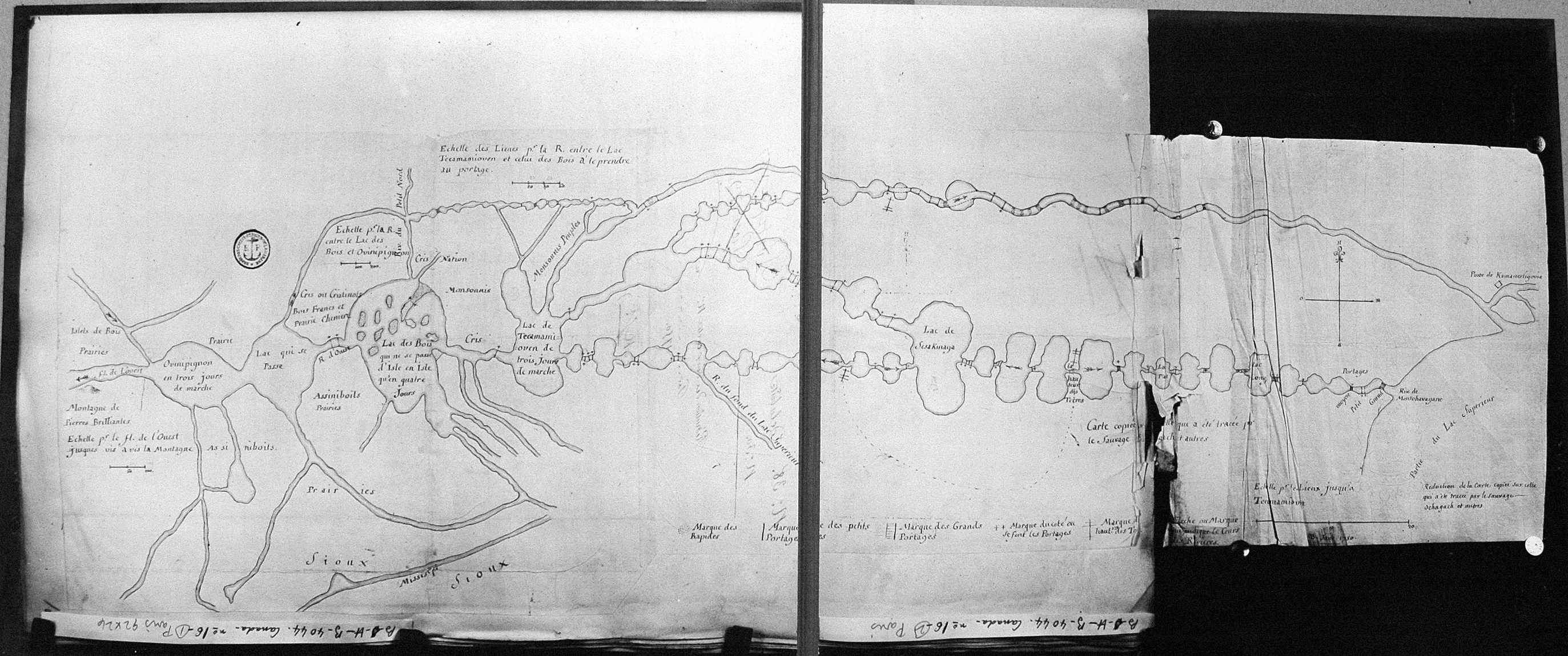
The Moose Cree were first noted in Jesuit Relations for 1671, along the shores of James Bay and along the Moose River. On the Ochagach map (c. 1728), they (as "Monsonnis") were noted as far inland as the Rainy Lake region.

↑ Return to Menu

Swampy Cree in the context of Oji-Cree

The Anisininew or Oji-Cree are a First Nation in the Canadian provinces of Ontario and Manitoba, residing in a band extending from the Missinaibi River region in Northeastern Ontario at the east to Lake Winnipeg at the west.

The Oji-Cree people are descended from historical intermarriage between the Ojibwa and Cree cultures, but constitute a distinct nation. They are considered one of the component groups of Anishinaabe, and reside primarily in a transitional zone between traditional Ojibwa lands to their south and traditional Cree lands to their north. Historically, the Oji-Cree were identified by the British and Canadian governments as "Cree." The Oji-Cree have identified with the Cree (or more specifically, the Swampy Cree) and not with the Ojibwa located to the south of them. Traditionally, they were called Noopiming-ininiwag (People in the Woods) by the Ojibwe. Oji-Cree at Round Lake First Nation were known as Ajijaakoons (little cranes), due to their chief's name, Ajijaak. Many Oji-Cree identify by the autonym Anishinaabe or Anishinini (Original Human).

↑ Return to Menu