Smolensk in the context of "Time of Troubles"

Play Trivia Questions online!

or

Skip to study material about Smolensk in the context of "Time of Troubles"

Ad spacer

⭐ Core Definition: Smolensk

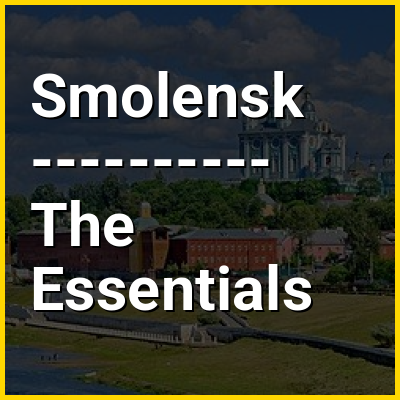
Smolensk is a city and the administrative center of Smolensk Oblast, Russia, located on the Dnieper River, 360 kilometers (220 mi) west-southwest of Moscow. It has a population of 316,570 (2021 census).

First mentioned in 863, it is one of the oldest cities in Russia. It has been a regional capital for most of the past millennium, beginning as the capital of the Principality of Smolensk in the 11th-15th centuries, then the Smolensk Voivodeship of Lithuania and the Polish–Lithuanian Commonwealth, and Smolensk Governorate and Oblast within Russia. It was the main stronghold of the Smolensk Gate, a geostrategically significant pass between the Daugava and Dnieper rivers, and as such was an important point of contention in the struggle for dominance in Eastern Europe, passing at various times between Lithuania, Poland and Russia. In more recent history, it was the site of two battles in 1812 and 1941 during the French invasion of Russia and Operation Barbarossa respectively on their paths towards Moscow. It was the place of the Smolensk air disaster of 2010.
↓ Menu

>>>PUT SHARE BUTTONS HERE<<<

👉 Smolensk in the context of Time of Troubles

The Time of Troubles (Russian: Смутное время, romanizedSmutnoye vremya), also known as Smuta (Russian: Смута, lit.'troubles'), was a period of political crisis in Russia which began in 1598 with the death of Feodor I, the last of the House of Rurik, and ended in 1613 with the accession of Michael I of the House of Romanov at the 1613 Zemsky Sobor.

It was a period of deep social crisis and lawlessness following the death of Feodor I, a weak and possibly intellectually disabled ruler who died without an heir. His death ended the Rurik dynasty, leading to a violent succession crisis with numerous usurpers and false Dmitrys (impostors) claiming the title of tsar. Russia experienced the famine of 1601–1603, which killed almost a third of the population, within three years of Feodor's death. Russia was also occupied by the Polish–Lithuanian Commonwealth during the Polish–Russian War and lost Smolensk.

↓ Explore More Topics
In this Dossier

Smolensk in the context of Dnieper

The Dnieper or Dnepr (/(də)ˈnpər/ (də-)NEE-pər), also called the Dnipro. is one of the major transboundary rivers of Europe, rising in the Valdai Hills near Smolensk, Russia, before flowing through Belarus and Ukraine to the Black Sea. Approximately 2,200 km (1,400 mi) long, with a drainage basin of 504,000 square kilometres (195,000 sq mi), it is the longest river of Ukraine and Belarus and the fourth-longest river in Europe, after the Volga, Danube, and Ural rivers.

In antiquity, the river was part of the Amber Road trade routes. During the Ruin in the later 17th century, the area was contested between the Polish–Lithuanian Commonwealth and the Russian Empire, dividing what is now Ukraine into areas described by its right and left banks. During the Soviet period, the river became noted for its major hydroelectric dams and large reservoirs. The 1986 Chernobyl disaster occurred on the Pripyat River, a tributary of the Dnieper, just upstream from its confluence with the Dnieper. The Dnieper is an important navigable waterway for the economy of Ukraine and is connected by the Dnieper–Bug Canal to other waterways in Europe. During the 2022 Russian invasion of Ukraine, certain segments of the river were made part of the defensive lines between territory controlled by the Russians and the Ukrainians.

↑ Return to Menu

Smolensk in the context of Assumption Cathedral in Smolensk

The Cathedral Church of the Dormition (Russian: Успенский собор), dominating the city of Smolensk, Russia, from Cathedral Hill, has been the principal church of the Smolensk bishopric for 800 years.

↑ Return to Menu

Smolensk in the context of Dnieper River

The Dnieper or Dnepr (/(də)ˈnpər/ (də-)NEE-pər), also called the Dnipro, is one of the major transboundary rivers of Europe, rising in the Valdai Hills near Smolensk, Russia, before flowing through Belarus and Ukraine to the Black Sea. Approximately 2,200 km (1,400 mi) long, with a drainage basin of 504,000 square kilometres (195,000 sq mi), it is the longest river of Ukraine and Belarus and the fourth-longest river in Europe, after the Volga, Danube, and Ural rivers.

In antiquity, the river was part of the Amber Road trade routes. During the Ruin in the later 17th century, the area was contested between the Polish–Lithuanian Commonwealth and the Russian Empire, dividing what is now Ukraine into areas described by its right and left banks. During the Soviet period, the river became noted for its major hydroelectric dams and large reservoirs. The 1986 Chernobyl disaster occurred on the Pripyat River, a tributary of the Dnieper, just upstream from its confluence with the Dnieper. The Dnieper is an important navigable waterway for the economy of Ukraine and is connected by the Dnieper–Bug Canal to other waterways in Europe. During the 2022 Russian invasion of Ukraine, certain segments of the river were made part of the defensive lines between territory controlled by the Russians and the Ukrainians.

↑ Return to Menu

Smolensk in the context of Lech Kaczyński

Lech Aleksander Kaczyński (Polish: [ˈlɛx alɛkˈsandɛr kaˈt͡ʂɨj̃skʲi] ; 18 June 1949 – 10 April 2010) was a Polish politician who served as the city mayor of Warsaw from 2002 until 2005, and as President of Poland from 2005 until his death in 2010 in a plane crash in the vicinity of the Russian city of Smolensk. The aircraft carrying him and senior Polish officials had crashed while they were travelling to attend ceremonies marking the 70th anniversary of the Katyn massacre. Prior to his tenure as president, Kaczyński served as President of the Supreme Audit Office from 1992 to 1995 and later Minister of Justice and Public Prosecutor General in Jerzy Buzek's cabinet from 2000 until his dismissal in July 2001.

Born in Warsaw, he starred in a 1962 Polish film, The Two Who Stole the Moon, with his identical twin brother Jarosław. Kaczyński was a graduate of law and administration of Warsaw University. In 1980, he was awarded his Ph.D. by Gdańsk University. In 1990, he completed his habilitation in labour and employment law. He later assumed professorial positions at Gdańsk University and Cardinal Stefan Wyszyński University in Warsaw.

↑ Return to Menu

Smolensk in the context of Smolensk Oblast

Smolensk Oblast (Russian: Смоленская область, romanizedSmolenskaya oblastʹ), informally also called Smolenshchina (Смоленщина), is a federal subject of Russia (an oblast). Its administrative centre is the city of Smolensk. As of the 2021 Census, its population was 888,421.

↑ Return to Menu

Smolensk in the context of Battle of Smolensk (1812)

The Battle of Smolensk was the first major battle of the French invasion of Russia. It took place on 16–18 August 1812 and involved about 45,000 men of the Grande Armée under Emperor Napoleon I against about 30,000 Russian troops under General Barclay de Tolly. Napoleon occupied Smolensk by driving out Prince Pyotr Bagration's Second Army. The French artillery bombardment burned the city to the ground. Of 2,250 buildings, 84% were destroyed with only 350 surviving intact. Of the city's 15,000 inhabitants, about 1,000 were left at the end of the battle inside the smoking ruins. With over 15,000 casualties, it was one of the bloodiest battles of the invasion.

↑ Return to Menu

Smolensk in the context of Battle of Smolensk (1941)

The first Battle of Smolensk (German: Kesselschlacht bei Smolensk, lit. 'Cauldron-battle at Smolensk'; Russian: Смоленская стратегическая оборонительная операция, romanizedSmolenskaya strategicheskaya oboronitelnaya operatsiya, lit.'Smolensk strategic defensive operation') was a battle during the second phase of Operation Barbarossa, the Axis invasion of the Soviet Union, in World War II. It was fought around the city of Smolensk between 10 July and 10 September 1941, about 400 km (250 mi) west of Moscow. The Ostheer had advanced 500 km (310 mi) into the USSR in the 18 days after the invasion on 22 June 1941.

The Soviet 16th, 19th and the 20th armies were encircled and destroyed just to the east of Smolensk, though many of the men from the 19th and 20th armies managed to escape the pocket. While the battle was a stunning operational success for the Germans, the rapid advances into Soviet territory led to supply and logistics crises of increasing severity, as German supply lines were stretched to their limit.

↑ Return to Menu

Smolensk in the context of Smolensk air disaster

On 10 April 2010, a Tupolev Tu-154 aircraft operating Polish Air Force Flight PLF 101 crashed near the Russian city of Smolensk, killing all 96 people on board. Among the victims were the president of Poland, Lech Kaczyński, and his wife, Maria; the former president of Poland-in-exile, Ryszard Kaczorowski; the chief of the Polish General Staff and other senior Polish military officers; the president of the National Bank of Poland; Polish government officials; 18 members of the Polish parliament; senior members of the Polish clergy; and relatives of victims of the Katyn massacre. The group was arriving from Warsaw to attend an event commemorating the 70th anniversary of the massacre, which took place not far from Smolensk.

The pilots were attempting to land at Smolensk North Airport — a former military airbase — in fog, with visibility reduced to about 400 metres (about 400 yards). The aircraft descended far below the normal approach path until it struck trees, rolled, inverted and crashed into the ground, coming to rest in a wooded area a short distance from the runway.

↑ Return to Menu