Sirwah in the context of "Jabal Tiyal"

Play Trivia Questions online!

or

Skip to study material about Sirwah in the context of "Jabal Tiyal"

Ad spacer

⭐ Core Definition: Sirwah

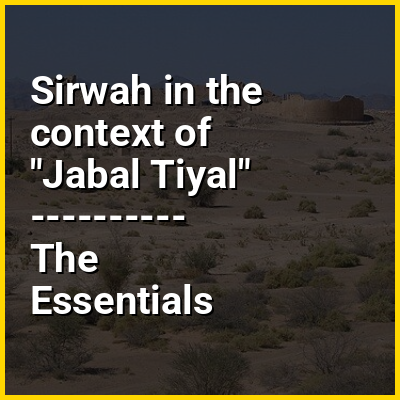
Sirwah (OSA: Ṣrwḥ, Arabic: صرواح خولان Ṣirwāḥ Ḫawlān) was, after Ma'rib, the most important economical and political center of the Kingdom of Saba at the beginning of the 1st century BC, on the Arabian Peninsula. Ṣirwāḥ was surrounded by a fortified wall. The city layout inside the oasis included a number of large buildings. It’s also a part of Khawlan.

The ruins of Ṣirwāḥ are located 40 km west of Ma'rib. The town was well protected by its position in the mountains, but at the same time put limits on its development. As a result, Ṣirwāḥ quickly lost its position as a capital, which was taken over by Ma’rib, which was in an important economical center since it was located on the incense route. The town nevertheless remained an important centre for the Sabaeans, as shown by the large number of temple buildings. It was also the site chosen by King Yada'il Dharih I to build an important temple to Almaqah about the year 700 BC.
↓ Menu

>>>PUT SHARE BUTTONS HERE<<<

👉 Sirwah in the context of Jabal Tiyal

Jabal Tiyal (Arabic: جَبَل ٱلطِّيَال, romanizedJabal aṭ-Ṭiyāl), also known as Jabal Adiyah, is a Sarawat mountain located near Sana'a, the capital city of Yemen. At 11,532 feet (3,515 metres), it is Yemen's second highest peak, after Jabal An-Nabi Shu'ayb, as well as the second highest of the Arabian Peninsula.

It is located midway between Sana'a and Sirwah to the east.

↓ Explore More Topics
In this Dossier

Sirwah in the context of Sabaeans

Sheba, or Saba, was an ancient South Arabian kingdom that existed in Yemen before 275 BCE. It likely began to exist between c. 1000 BCE and c. 800 BCE. Its inhabitants were the Sabaeans, who, as a people, were indissociable from the kingdom itself for much of the 1st millennium BCE. Modern historians agree that the heartland of the Sabaean civilization was located in the region around Marib and Sirwah. In some periods, they expanded to much of modern Yemen and even parts of the Horn of Africa, particularly Eritrea and Ethiopia. The kingdom's native language was Sabaic, which was a variety of Old South Arabian.

Among South Arabians and Abyssinians, Sheba's name carried prestige, as it was widely considered to be the birthplace of South Arabian civilization as a whole. The first Sabaean kingdom lasted from the 8th century BCE to the 1st century BCE: this kingdom can be divided into the "mukarrib" period, where it reigned supreme over all of South Arabia; and the "kingly" period, a long period of decline to the neighbouring kingdoms of Ma'in, Hadhramaut, and Qataban, ultimately ending when a newer neighbour, Himyar, annexed them. Sheba was originally confined to the region of Marib (its capital city) and its surroundings. At its height, it encompassed much of the southwestern parts of the Arabian Peninsula before eventually declining to the regions of Marib. However, it re-emerged from the 1st to 3rd centuries CE. During this time, a secondary capital was founded at Sanaa, which is also the capital city of modern Yemen. Around 275 CE, the Sabaean civilization came to a permanent end in the aftermath of another Himyarite annexation.

↑ Return to Menu

Sirwah in the context of Sheba

Sheba, or Saba, was an ancient South Arabian kingdom that existed in Yemen before 275 CE. It likely began to exist between c. 1000 BCE and c. 800 BCE. Its inhabitants were the Sabaeans, who, as a people, were indissociable from the kingdom itself for much of the 1st millennium BCE. Modern historians agree that the heartland of the Sabaean civilization was located in the region around Marib and Sirwah. In some periods, they expanded to much of modern Yemen and even parts of the Horn of Africa, particularly Eritrea and Ethiopia. The kingdom's native language was Sabaic, which was a variety of Old South Arabian.

Among South Arabians and Abyssinians, Sheba's name carried prestige, as it was widely considered to be the birthplace of South Arabian civilization as a whole. The first Sabaean kingdom lasted from the 8th century BCE to the 1st century BCE: this kingdom can be divided into the "mukarrib" period, where it reigned supreme over all of South Arabia; and the "kingly" period, a long period of decline to the neighbouring kingdoms of Ma'in, Hadhramaut, and Qataban, ultimately ending when a newer neighbour, Himyar, annexed them. Sheba was originally confined to the region of Marib (its capital city) and its surroundings. At its height, it encompassed much of the southwestern parts of the Arabian Peninsula before eventually declining to the regions of Marib. However, it re-emerged from the 1st to 3rd centuries CE. During this time, a secondary capital was founded at Sanaa, which is also the capital city of modern Yemen. Around 275 CE, the Sabaean civilization came to a permanent end in the aftermath of another Himyarite annexation.

↑ Return to Menu