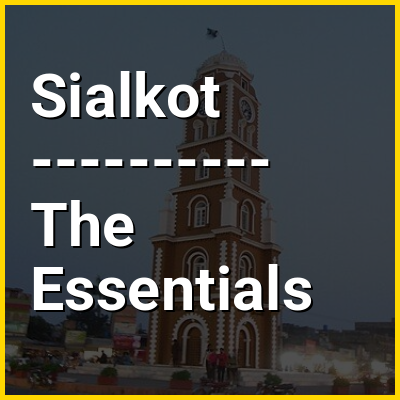
Sialkot (Punjabi, Urdu: سيالكوٹ) is a city located in Punjab, Pakistan. It is the capital of the Sialkot District and the 12th most populous city in Pakistan. The boundaries of Sialkot are joined by Jammu in the north east, the districts of Narowal in the southeast, Gujranwala in the southwest and Gujrat in the northwest.
Sialkot is believed to be the successor city of Sagala, the capital of the Madra kingdom which was destroyed by Alexander the Great in 326 BCE. It was made capital of the Indo-Greek kingdom by Menander I in the 2nd century BCE — a time during which the city greatly prospered as a major center for trade and Buddhist thought. In the 6th century CE, it again become capital of the Taank Kingdom, which ruled Punjab for the next two centuries. Sialkot continued to be a major political center until it was eclipsed by Lahore around the turn of the first millennium CE. Sialkot was the capital of the Punjabi Muslim ruler Jasrat Khokhar who reigned over most of Punjab and Jammu in the early 15th century. Under the Mughal Empire, especially Mughal emperor, Aurangzeb's reign, Sialkot became known as a great centre of Islamic scholarship and thought, and attracted scholars because of the widespread availability of paper in the city.